ADDIS ABABA
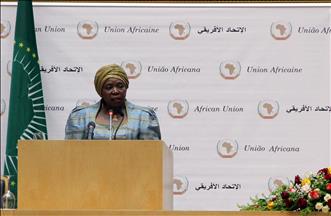
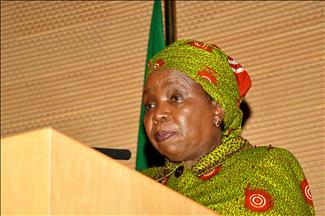
African Union (A.U.) Commission Chairperson Ncosazana Dlamini-Zuma has called on African countries to fill the human-resources gap in the continent's ongoing fight against the Ebola virus.
"The biggest gap we can see to date in [terms of] Ebola activities in the three affected countries is the shortage of human resources," Dlamini-Zuma said at a Thursday press briefing.
"The infrastructure issue is being dealt with by Britain in Liberia and by France in Sierra Leone," she said. "We need more volunteers."
Dlamini-Zuma went on to note that the A.U. Commission had sent letters to African heads of state requesting more human resources to combat Ebola.
She said that a first batch of 100 volunteers had been deployed as part of an A.U.-run program dubbed "Support to Ebola Outbreak in West Africa" (ASEOWA).
The ASEOWA mission head arrived in Liberian capital Monrovia on September 15 to prepare for the arrival of the rest of the team.
"We also have to mobilize businesspeople [as part of the anti-Ebola effort]," Dlamini-Zuma said. "We have to take care of the expenses of the volunteers [as they discharge their duties in the three affected countries]."
A.U. Commissioner for Social Affairs Mustapha Sidiki Kaloko, for his part, said culture and misconceptions were still hindering anti-Ebola efforts.
"[The problem] is tied up with the culture and cultural practice," he said. "We are trying to get into the minds of people by not just talking to them, but by talking with them."
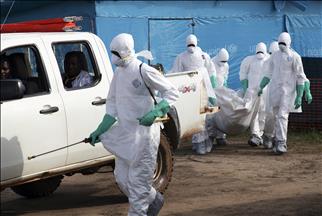
In recent months, Ebola – a contagious disease for which there is no known treatment or cure – has killed more than 4,400 people in West Africa, including more than 2,200 in Liberia alone, according to the World Health Organization.
A tropical fever that first appeared in 1976 in Sudan and the Democratic Republic of Congo, Ebola can be transmitted to humans from wild animals. It can also spread through contact with the body fluids of infected persons or of those who have succumbed to the virus.
www.aa.com.tr/en