By M. Bilal Kenasari
WASHINGTON
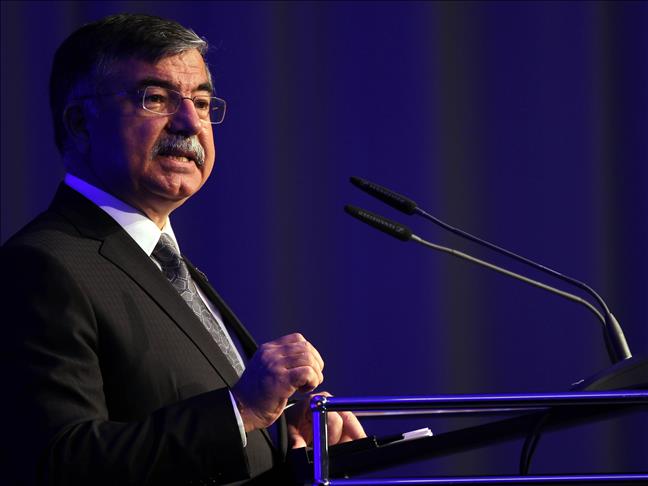
Turkey has, since January, deported 1,112 foreign fighters who were trying to join the Islamic State of Iraq and the Levant, Turkish Defense Minister Ismet Yilmaz said Thursday.
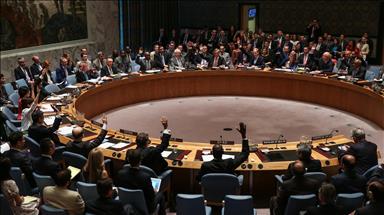
Yilmaz spoke at a meeting in Washington that focused on the evolving foreign terrorist fighter threat, which took place on the sidelines of a White House summit on countering violent extremism.
Yilmaz said that 27 percent of those who are on Turkey’s "no entry list" are from European and North American countries, while 46 percent are from North Africa and the Middle East and 23 percent are from other regions.
"When we receive timely and actionable intelligence, we are able to stop or deport them," Yilmaz said. "Foreign fighters are our common enemy."
Three suspected terrorists who were traveling illegally through Turkey in March 2014 killed three security personnel and one civilian, while injuring others. Also, a female foreign terrorist carried out a suicide attack in Istanbul and killed one police officer in January.
According to the United Nations, more than 13,000 fighters from more than 80 countries have joined ISIL and other militant groups in Syria and Iraq.
Washington is working on a collective effort to challenge this dangerous menace that threatens global peace and stability, U.S. Secretary of State John Kerry said Thursday during the summit.
Participants included Albania, Australia, Denmark, France, Germany, Singapore, the U.K. and other countries.
Turkey will produce new air defence system
The air missile defense system project will be used in Turkey's own defense without integrating NATO.
"The system is to be integrated with the national systems to be used for Turkey's defense rather than integrating with NATO," Yilmaz said, responding to deputies' questions on the missile defence system project in a written statement.
The proposal evaluation process for the project is finalized, Yilmaz also said.
The Turkish Long-Range Missile Defense System Project is one of the biggest projects of the defense industry, and Chinese, American and Italian-French companies are seeking to participate in it. Negotiations are currently in the hands of Defense Industry Undersecretariat.
Last August, the Defense Industry Undersecretariat announced the project called T-LORAMIDS, for the country's air and missile defense program. This has been continued, as of Dec. 31 of last year, by the ministry which will negotiate further with a number of companies.
Work is to start on the preliminary design stage for Turkey's next generation air-to-air combat fighter, which is called the TFX, a fifth-generation jet fighter.
Turkey's Defense Industry Executive Committee in 2010 started the TFX project to replace Turkey’s F-16, and to design, develop, and manufacture a fleet that would work together with the Stealth F-35.
The country, which has been a partner in the U.S. Joint Strike Fighter program from the concept development phase, has contributed to system development and demonstration and production and follow-on development phases.
Turkey faced unprecedented pressure from NATO and the U.S. to back away from a deal with state-run Chinese firm CPMIEC, because the Chinese system is incompatible with NATO systems.
The Turkish Defense Industry High Coordination Council will gather in April to discuss the development of these projects.