The global rating agency Fitch Ratings on Friday said that the anti-government protests in Turkey were not a threat to the sovereign's 'BBB-' rating at present.
According to a written statement by Fitch, "The level of unrest is well within the tolerance of political stability embedded in the current rating, and the economic impact so far is minor."
"Low political stability and, in particular, low World Bank voice accountability indicators (the latter falling well short of the 'BBB' median) have long been a feature of Turkey's sovereign credit profile and are already considered weaknesses in our sovereign rating assessment," Fitch underlined.
The statement said that the years 2014-2015 have a busy election schedule and underlined, "The secular opposition in Turkey have difficulties to make themself heard. The parallels with the Arab Spring should not be overplayed. The demonstrations have attracted educated, middle-class Turks rather than disaffected workers or the unemployed. The Justice and Development (AK) Party has democratic legitimacy and a strong parliamentary majority, good poll ratings, and has delivered much of its original mandate over three electoral terms. Nevertheless, the protests may yet cause the government to reassess its stance on constitutional reform and enhanced powers for the presidency, and advocates of a more cautious approach should get a greater hearing."
Fitch Ratings noted, "Similarly, the demonstrations have not been on the scale that would bring about the kind of economic dislocation that has occurred in parts of the Arab world in recent years. The Turkish economy has performed well, inflation has come down, and unemployment in 2012 was at a seven-year low of 9.2 precent. Although Turkey’s current account deficit and short-term debt are large, financing has proved resilient throughout the post-Lehman Brothers collapse and eurozone crises."
"Much will depend on how the authorities respond to the protests. Poorly handled, the situation could escalate, with adverse consequences for the economy. Persistent political and social unrest could deter tourism, destabilise short-term capital inflows, drive up inflation and damage economic growth," Fitch Ratings warned.
Fitch Ratings upgraded Turkey to ‘BBB-’ from ‘BB+’ in November.
Turkey was resistant to capital flow decreases, says Rawkins of Fitch
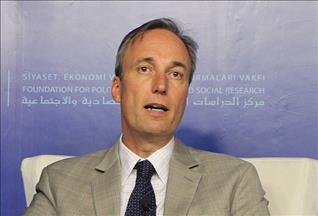
Paul Rawkins, senior director at Fitch Ratings Institute stated, Turkey was resistant to a possible decrease in the capital flow due to protests.
Replying the questions of Anadolu Agency, Rawkins said, "As end of April, Turkey has 114 billion USD worth of international reserve. Turkey can use its own reserve in the case of sudden stances in capital flows. International reserves work like a buffer for Turkey."
Rawkins underscored that current levels of the Taksim Gezi Park protests do not make a rating pressure and added, "In the past few years, we saw that Turkey was resistant to capital flow decreases. Turkey did not come across a sudden stance of any funds during Euro crisis. Turkey has proved its resistance towards decrease in capital flows."
Fitch director drew attention to the importance of the coming up term and stated, "In the case of capitals leaving Turkey due to protests, then the foreign exchange rates will incline."
Furthermore, Fitch Ratings released a statement earlier saying, "The level of unrest is well within the tolerance of political stability embedded in the current rating, and the economic impact so far is minor."
englishnews@aa.com.tr