Grandchildren of Canakkale war hero are proud
On March 18, 1915, Corporal Seyit famously carried 3 heavy artillery shells which hit Britain's HMS Ocean 18 March 2016•Update: 09 May 2022
MERSIN, Turkey
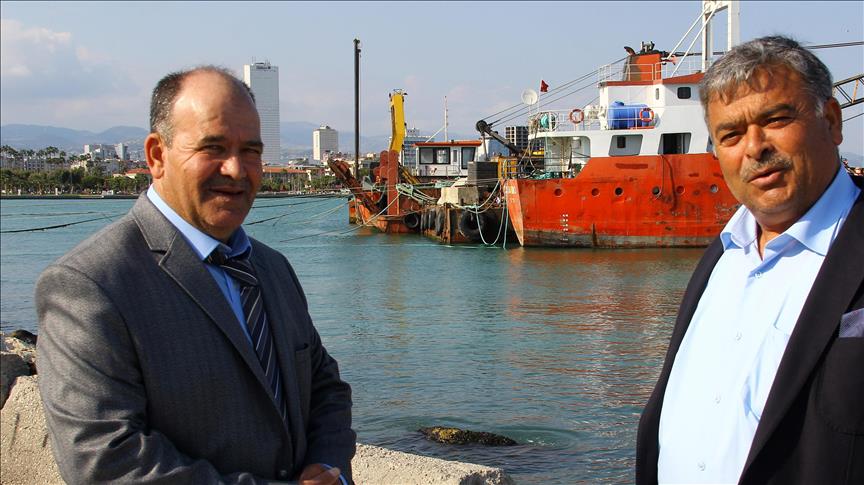
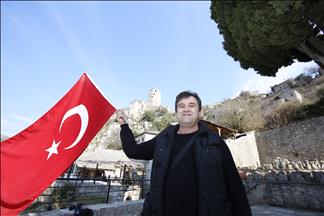
The grandchildren of Canakkale war hero Corporal Seyit (Seyit Onbasi), seen as pivotal in the historic victory, told Anadolu Agency on Friday that they are proud of their famous forebear.
On March 18, 1915 – 101 years ago – Seyit carried 3 heavy artillery shells which hit a British ship, the HMS Ocean.
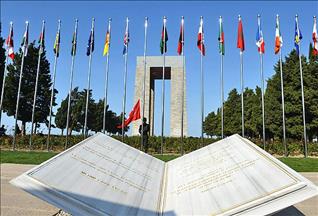
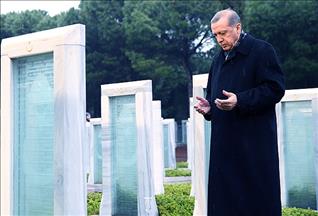
On the occasion of Martyrs' Memorial Day and the 101st anniversary of the Battle of Canakkale, Corporal Seyit’s grandchildren Bayram Ozcetin and Saban Cabuk came to Mersin at the invitation of the municipality.
Ozcetin said his famous grandfather came back to his hometown Balikesir’s Havran district after 9 years of military service and sold coal that he got from the woods, and worked in an oil factory during the winter, and later caught pneumonia and died.
“Being the grandchildren of Corporal Seyit is an honor for us,” he added.
Cabuk said that when Mustafa Kemal Ataturk asked Seyit whether he would lift the artillery shells again, he said, “If war breaks out again, I'll carry [them] again." He added, “That type of honor would not be granted to everyone.”
The events leading up to the momentous Battle of Canakkale started in February 1915, when Britain and France decided to launch the Canakkale Strait campaign, in order to knock the Ottoman Empire out of the war as quickly as possible by reaching and capturing its capital, Istanbul.
They started their attack on March 18, but the waters were filled with a network of mines laid by Ottoman vessels.
The mines sank the HMS Irresistible, HMS Ocean, and the French battleship Bouvet – a major defeat for the allied powers, including Britain and France.
The 1915 battle took place in the Canakkale Strait in Canakkale’s Gelibolu district.
The victory gave Turkey a massive morale boost that enabled it to wage a war of independence and eventually, in 1923, form a republic from the ashes of the Ottoman Empire.
The conflict is also accepted as one of the greatest Ottoman victories of World War I and a major Allied Forces failure – but there were many casualties on both sides after eight months of fighting.
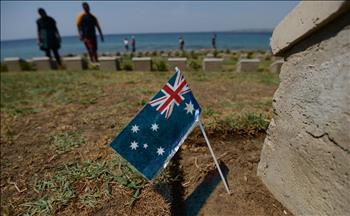
Around 13,000 New Zealanders and 50,000 Australians fought during the war, and at least 2,700 New Zealanders and 8,700 Australians were killed.
Ottoman forces lost almost 60,000 soldiers. Around 1,700 Indian soldiers, fighting for the British crown also lost their lives.