ISTANBUL
Turkey will block and arrest foreign fighters from trying to enter Syria and Iraq if it is informed beforehand, said Turkey’s president Friday.
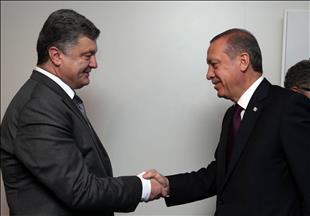
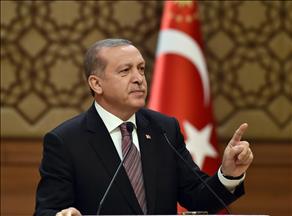
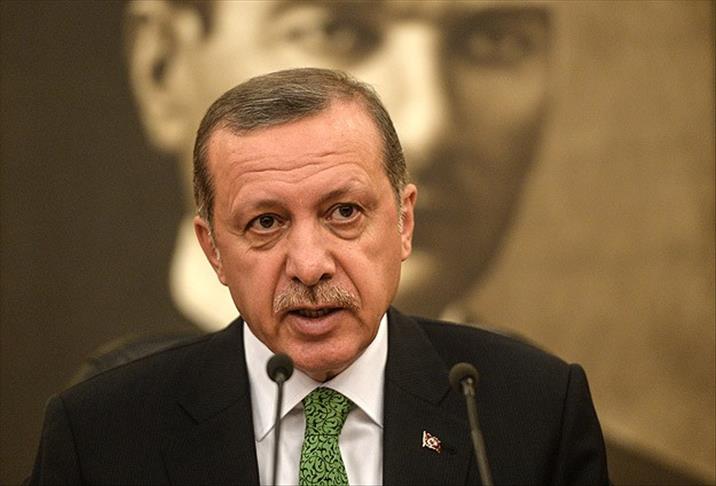
President Recep Tayyip Erdogan, asked about foreign fighters at press conference in Istanbul before his official visit to Ukraine, said Turkey was blocking them if earlier informed.
"If we are informed earlier, we will certainly block them and send them back," Erdogan said.
Turkish foreign minister said last week more than 12,500 people have been blocked from entering Turkey, and that Ankara deported more than 1,150 people since January.
"This means Turkey is doing its part and will continue to do so," Erdogan said.
Turkey has been said to be a transit country for foreign fighters who go to Syria and Iraq to join Daesh. Certain western media outlets have blamed Ankara for not doing enough to prevent the flow of these foreigners into Syria.
Tunisa’s Bardo Museum attack a 'massacre'
President Erdogan also condemned the Bardo Museum attack in Tunisia, which left 23 people dead and said: "This is a massacre, a crime."
Erdogan added that all nations, all people should stand together against this "massacre."
Ukraine visit
Regarding the crisis in Ukraine, President Erdogan said Turkey supported the full implementation of the Feb. 12 Minsk cease-fire.
Clashes, observed by international monitors, are ongoing in eastern Ukraine between government forces and pro-Russia separatists despite a cease-fire signed in Minsk.
"We believe that a lasting solution can only be found through peaceful means. During this process, all diplomatic possibilities should be exhausted and any opportunity of achieving permanent stability should be utilized to its full extent," Erdogan said.
The president said that Ankara was concerned about the Ahiska Turks and Crimean Tatars living in Ukraine and Crimea, who -- like the rest of the society -- bore the brunt of months of fighting between government forces and separatist rebels.
Erdogan disapproves of monitoring group for solution process
Turkish President Recep Tayyip Erdogan also said that he was not in favor of a monitoring group for the Kurdish solution process.
"I learned about it in the newspapers. I know nothing about it. Let me say clearly I am not favor of this issue," Erdogan told reporters at Ataturk Airport, Istanbul, before his departure for Ukraine.

Erdogan said that it is primarily the duty of the intelligence services to oversee the solution process. "Will such a step be taken? I do not approve of it."
On March, 18, at The Anadolu Agency editors meeting, Deputy Prime Minister Yalcin Akdogan said that the government would create a team of up to six people to monitor meetings and statements by the parties involved in what is shaping up to be a critical moment in the nearly two-year-old process.
The deputy prime minister added that the decision regarding the monitoring group lies with Prime Minister Ahmet Davutoglu, whom he indicated could make a statement next week.
On Thursday, Turkish Deputy Prime Minister Yalcin Akdogan called for people not to rely on any reports of appointments to the solution process monitoring group until an official government explanation is published.
The “solution process” officially began in 2013 in an effort to bring an end to the decades-old conflict with the outlawed Kurdistan Workers' Party, or PKK, which is listed by Turkey, U.S. and the European Union as a terrorist organization.

contact_the_ombudsman
is_there_an_error_in_this_story