KUTAHYA, Turkey
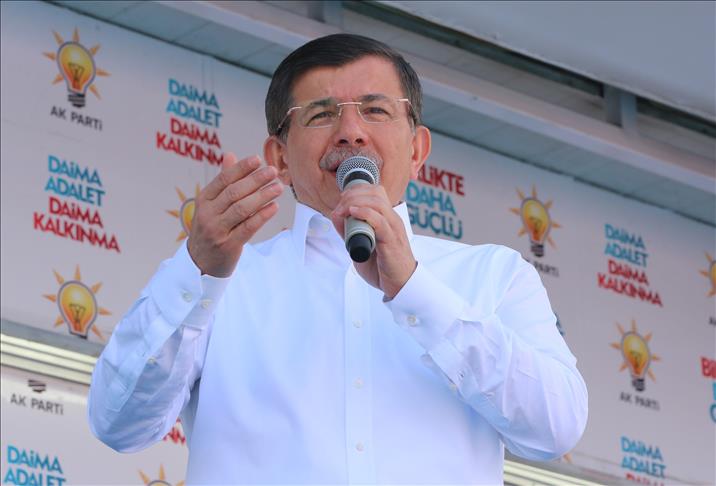
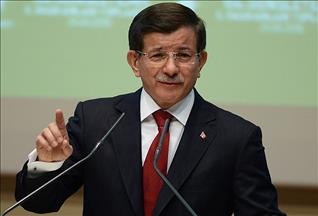
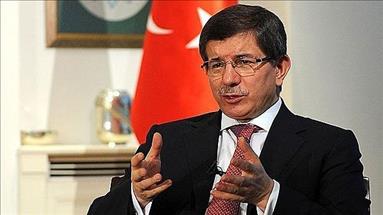
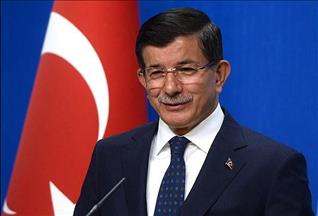
Turkish Prime Minister Ahmet Davutoglu has pledged to wipe out all remains and marks of military coups in Turkey.
His remarks on Wednesday came a day after the funeral of Kenan Evren, the mastermind of the bloodiest military coup in Turkish history in 1980, who passed away on Saturday at the age of 97 at a hospital in the Turkish capital of Ankara.
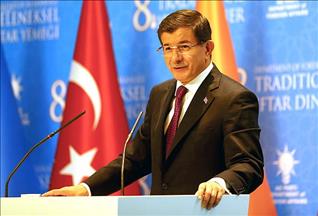
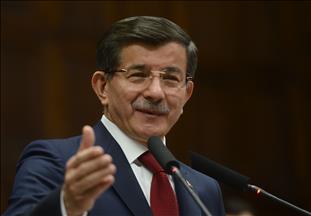
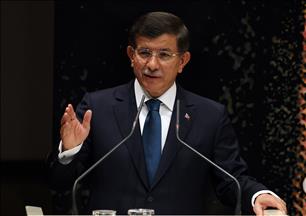
"We will erase all reminders of the coups," Davutoglu said on Wednesday at an election rally of his Justice and Development, or AK, Party in western Kutahya province.
Turkey underwent major military coups in May 27, 1960 and Sept. 12, 1980 and was also subject to several coup attempts.
Former Prime Minister Adnan Menderes was jailed following the 1960 military coup and stood trial before a court on Yassiada Island in Marmara Sea, before being executed along with his two ministers -- Hasan Polatkan and Fatin Rustu Zorlu.
Davutoglu said on Tuesday in Istanbul that a signing ceremony would be held on Thursday for a major project to turn Yassiada into an international congress and tourism center in memory of the executed PM and his ministers.
He said: "The symbol of the disgrace of Turkish democracy and the time that marked the fall of democracy in Turkey is what a martyr premier and two ministers experienced on Yassiada."
The Turkish PM accused opposition parties of hypocrisy for "presenting themselves as anti-coup politicians" upon the death of the 1980 coup leader but never displaying a "true stance" against military coups.
"Where were you on May 27, 1960? Where were you when Adnan Menderes was executed?" he asked.
Davutoglu also said the three opposition parties represented in the Turkish Parliament had cast "no" votes when the AK Party proposed an amendment package to the parliament which would allow judicial trial for the 1980 coup leaders.
Because of constitutional limitations, coup leaders General Kenan Evren and General Tahsin Sahinkaya could not be held accountable for their actions until 2010.
After the annulment of provisional article No. 15 in Turkey’s constitution -- the article which was used to give immunity to generals -- through a referendum on Sept. 12, 2010, the road to opening a case against Evren and Sahinkaya began.
An Ankara high criminal court sentenced Evren to life imprisonment on June 18, 2014, along with ex-general Tahsin Sahinkaya, for their roles in the 1980 coup.
The trial of Evren and Sahinkaya began in April 2012 with the prosecution claiming that the two had attempted to "eliminate" the Turkish constitution and override the parliament; both generals were also demoted to the rank of private.
The two ex-generals had not attended court proceedings against them, citing poor health, and instead appeared via video link from the hospital.
Both defendants also lodged an appeal against their sentences with the Supreme Court of Appeals, which has yet to announce its final verdict in the case.
The Sept. 12, 1980, military coup, led by Evren, was known as the bloodiest military intervention in Turkey's history, and claimed hundreds of lives.
For the following three years, the Turkish Armed Forces ruled the country directly through the National Security Council -- the formal name of the junta -- before general elections were held, installing a new parliament that elected Evren as Turkey’s seventh president in November 1982, a post he held until the end of his rule in November 1989.
More than 650,000 people were detained during the 1980 coup period, while 230,000 were put on trial, mostly for political reasons, and 50 were executed. A further 299 died because of torture and unhealthy prison conditions.