The U.S. is mulling its responses to the rising tide of militant Sunni insurgency in Iraq led by the Islamic State of Iraq and the Levant, commonly known as ISIL.
The militant group has taken over two major cities in Iraq’s north in June alone --Mosul and Tikrit -- and had previously taken over much of western Iraq’s Anbar Province in late December.
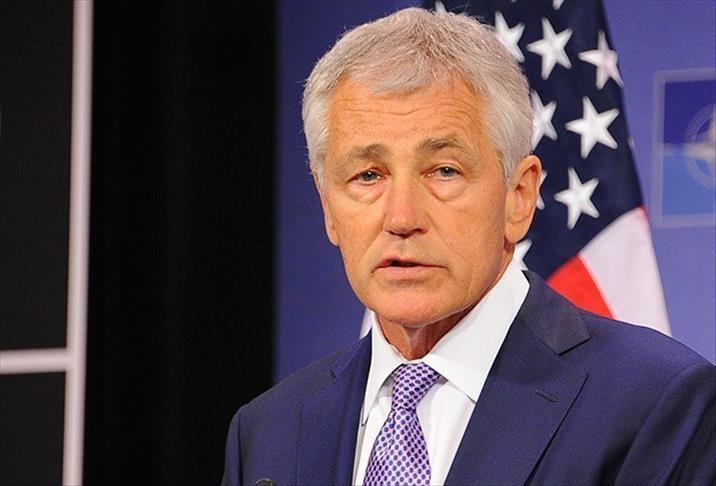
ISIL's rapid advances are due, in part, to the Iraqi government’s failure to govern inclusively, according to U.S. Secretary of Defense Chuck Hagel.
"This current government in Iraq has never fulfilled the commitments it made to bring a unity government together with the Sunnis, the Kurds and the Shi'a," Hagel said while testifying before the Senate Appropriations Defense Subcommittee Wednesday.
"We have worked hard with them within the confines of our ability to help them do that, but we can't dictate to them."
Martin Dempsey, the chairman of the U.S. Joint Chiefs of Staff said that he has "frequently" warned Iraq’s leadership of the dangers posed by division within the country. Still, the Iraqi government has resorted to "changing military leadership, cronyism, just all forms of sectarianism that have led us to where we are today" as ISIL has risen over the past year.
Dempsey’s warnings were met by what he described as "a volume of conspiracy theories."
He acknowledged to lawmakers that the U.S. has a request for air power from the Iraqi government. It is unclear if the administration is willing to follow through with air support, however.
It is also uncertain what role, if any, regional players will have in any U.S. response.
U.S. Senator Lindsey Graham cautiously acknowledged that the U.S. may have to talk with Iran on security issues in such an effort, which Hagel agreed with.
John Boehner, the U.S. speaker of the House of Representatives, told reporters at a media stakeout Wednesday that he does "absolutely not" agree with cooperating with Iran to end Iraq’s ongoing tumult.
"I can just imagine what our friends in the region, our allies, will be thinking by reaching out to Iran at a time when they continue to pay for terrorists and foster terrorism, not only in Syria and in Lebanon but in Israel as well," he said.
U.S. President Barack Obama met with congressional leaders Wednesday, including Boehner, Senate Majority Leader Harry Reid, House Minority Leader Nancy Pelosi, and Senate Minority Leader Mitch McConnell Wednesday afternoon to discuss Iraq.
During their meeting, Obama updated congressional leaders on Washington’s efforts to respond to the threat from ISIL by urging Iraq’s leaders to set aside “sectarian agendas” and govern inclusively, according to a readout of the meeting released by the White House. The U.S. president also reviewed his country's efforts to bolster Iraq’s security forces, including options for increased security assistance.
Following their meeting, McConnell told reporters at the Capitol that Obama "basically just briefed us on the situation in Iraq and indicated he didn't feel he had any need for authority from us for the steps that he might take."
Pelosi added in a statement released after the meeting that she does not believe that the president requires “any further legislative authority to pursue the particular options for increased security assistance discussed today." She did not outline which options were disucssed.
Obama has publicly ruled out deploying U.S. troops to the country to put down the insurgency.
U.S. Vice President Joe Biden spoke on Wednesday with Iraqi Prime Minister Nouri al-Maliki, Iraqi Speaker of Parliament Osama al-Nujaifi, and President of the Iraqi Kurdistan Region Masoud Barzani, according to the White House.
During his calls the vice president stressed the need for all of Iraq’s leaders to unite to meet the threat posed by ISIL, and for Iraq’s leaders to coordinate their response to continued security issues.
Biden also discussed additional steps that the U.S. could take to assist Iraq under the Strategic Framework Agreement, which establishes the principles of cooperation between the two nations, including defense and security cooperation.
U.S. conservatives urge Obama not to cooperate with Iran. However, some action by the U.S. should be taken to "to fill the power vacuum in Iraq otherwise the Iranians will do it", said US Republican Senator John McCain speaking at a Washington based think tank, American Entreprenuers Institute on Wednesday.
Touching upon similar concerns, McCain General Jack Keane, former vice chief of staff of the US Army said that it is of no interest for U.S. to cooperate with Iran.
General Keane said that if Iran got in, Iraqi PM Nouri al-Maliki would preserve his post as a client to Iran and ISIS would not be removed as well, as it would serve Iranians cause to remain in Iraq.
John Boehner, the republican speaker of the House of Representatives, told reporters at a media stakeout Wednesday that he does "absolutely not" agree with cooperating with Iran to end Iraq’s ongoing tumult.
"I can just imagine what our friends in the region, our allies, will be thinking by reaching out to Iran at a time when they continue to pay for terrorists and foster terrorism, not only in Syria and in Lebanon but in Israel as well," he said.
aa.com.tr/en