By Michael Hernandez
WASHINGTON
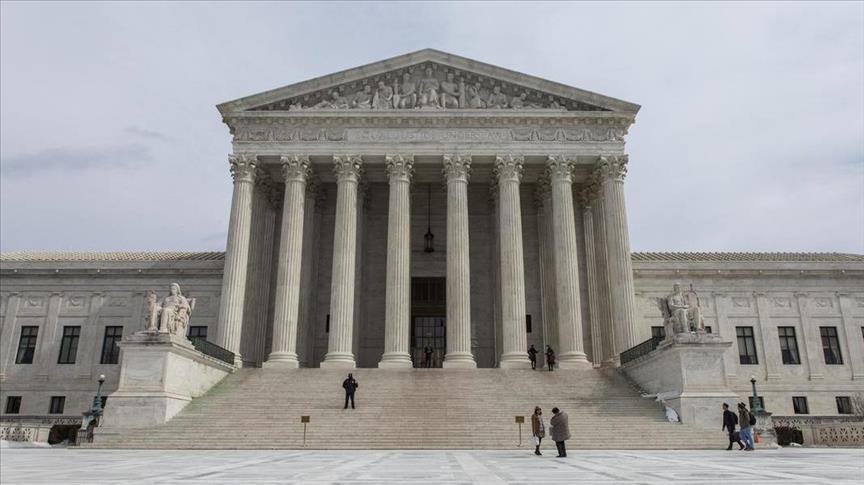
The death of Supreme Court Justice Antonin Scalia has set the stage for a divisive showdown between Republican lawmakers in the Senate and President Barack Obama.
At stake is the future of America’s highest court.
With Scalia’s Feb. 13 death, the now eight-member court has been split 4-4 among justices widely seen as leaning to the left or right.
That makes the infamously conservative justice’s successor a potentially decisive vote that could sway the court’s ideological tilt.
In order to understand the possible ramifications, Anadolu Agency spoke to a legal expert with more than two decades of experience teaching constitutional law.
“For four decades, the Supreme Court has had a conservative majority,” said Marjorie Cohn, a former president of the National Lawyers Guild. “This is an opportunity for President Obama to change the balance of the Court by replacing Antonin Scalia with a justice who will generally vote with the liberal justices.”
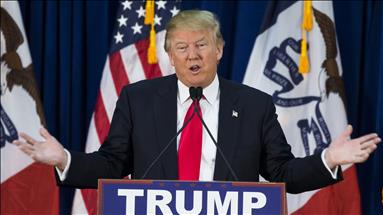
Obama has vowed to nominate an “indisputably” qualified candidate who is also “fair-minded” while urging the Senate to take up in a timely fashion any nominee he puts forth.
So far his words appear to have been met with little fanfare.
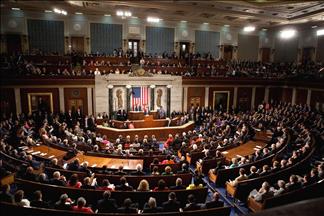
Senate Republicans led by Mitch McConnell have insisted that they will not consider any nominee until a new president is elected.
“The American people should have a voice in the selection of their next Supreme Court Justice,” McConnell said.
That would leave the Court with a vacancy that would last at least 11 months, which the White House has said would be “virtually unprecedented”.
“The irony is, I don't even think Republicans are suggesting that it's a short window,” spokesman Josh Earnest told reporters.
In fact, the Senate has acted on, but not necessarily approved, 11 out of 13 nominees put before it during an election year, according to Cohn, who is now a professor at the Thomas Jefferson School of Law.
As Obama navigates the political tightrope he is likely to avoid hardline liberals, and in so doing, force the Senate into making a difficult choice.
“Republicans will likely oppose anyone he nominates but if they reject a moderate, that could hurt them in the election with moderate Republican and Independent voters,” Cohn said.
“If they defeat Obama’s nominee, it will fall to the next president to nominate someone to fill the vacant seat on the Court. If the next president is a Republican, he can solidify the conservative majority on the Court.
But if the next president is a Democrat and the Democrats take back the Senate, the new president can nominate someone more liberal,” she added.
Scalia’s death has made the outcome of several highly sensitive cases even more uncertain than they were before.
The Court’s docket spans the gamut from abortion to immigration. Whole Woman's Health v. Hellerstedt “is perhaps the biggest threat to Roe v. Wade” that has made its way to the Supreme Court, according to Cohn.
The landmark Roe v. Wade case cemented the legality of abortion in the U.S. in 1973, and conservative Republicans have been working toward its repeal ever since.
At issue in the case is the constitutionality of restrictions Texas placed on abortion clinics in the state that would require most of those facilities to close.
“Where a woman lives would determine whether she could obtain an abortion,” Cohn said, noting that Justice Anthony Kennedy, widely seen as a swing-vote on the Court, may vote along with liberal justices.
“But even if Kennedy does not vote with the liberals, Scalia's absence still eliminates a broader risk that previously existed: If Scalia had participated in that decision, the Court may well have allowed states to impose restrictions,” she said.
Keeping in mind that a 4-4 tie would result in a no-decision on any of the cases that the intended 9-member court takes up, justices can vote to hear a case again after a colleague is confirmed, or uphold the lower court’s decision.
Doing so would not make the ruling applicable nationwide.
And in the case of Whole Woman's Health v. Hellerstedt, most Texas abortion clinics would be shuttered in a 4-4 tie, but the lower court’s ruling would not be extended beyond the Lone-Star state.
Separately, a tie on United States v. Texas would defeat Obama’s executive order to defer deportation for approximately 5 million undocumented migrants to the Fifth Circuit Court of Appeals, but the Justice Department could then seek to move forward with Obama’s plan in other circuits.
“Had Scalia not died, the Supreme Court would probably have imposed broader limitations on Obama's authority to issue executive orders,” Cohn said.
Regardless of the outcome of these cases, one thing is certain: Scalia's unexpected death has brought with it scores of challenges whose ramifications could reverberate far beyond America's highest court.