28 September 2015•Update: 28 September 2015
By Alyssa McMurtry
MADRID
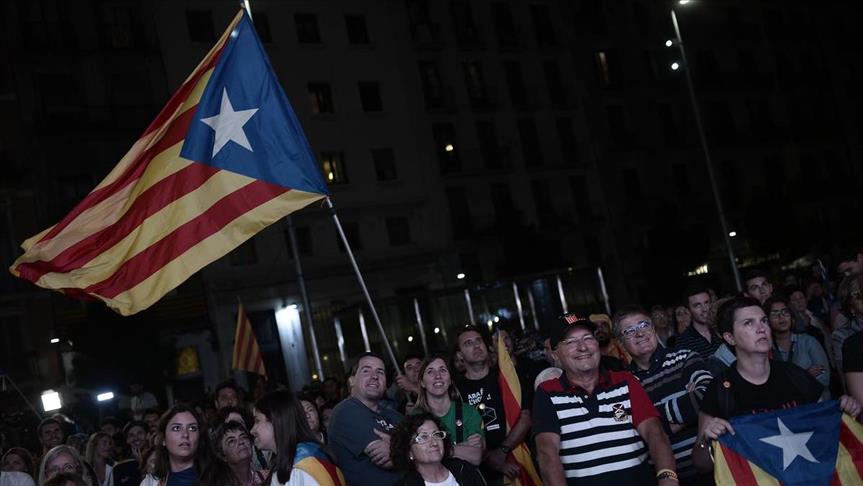
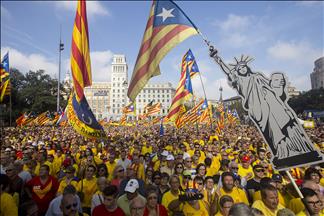
Pro-independence parties may have won the most seats in Sunday's Catalan election but the path to statehood now looks very different to how many separatists envisioned it.
Parties wanting Catalonia to split from Spain may have won in terms of parliamentary seats but they failed to secure a majority of the popular vote among the region’s 7.5 million people.
On Monday, the small, anti-capitalist Popular Unity Candidacy (CUP) discarded the idea of declaring unilateral independence. A larger secessionist coalition – Together for Yes – promised if they won an absolute majority they would declare independence by 2017, but to do that they will most likely need CUP support.
“The UDI (unilateral declaration of independence) was linked to the plebiscite: we haven't won the plebiscite, so there won't be a UDI,” Antonio Banos, CUP leader, told reporters.
On Sunday, Together for Yes won 62 seats of the 135 available, falling short of an absolute majority. However, when combined with the CUP's 10 seats, the separatists have a parliamentary majority.
Still, despite polling well in more sparsely populated, pro-independence rural constituencies, the two parties only received 48 percent of the popular vote combined.
Banos, however, said separatist parties did have a mandate to move forward with independence in a different way. He also revealed that the CUP will not support the current president of Catalonia, Artur Mas – who is also head of Together for Yes.
As Mas’ coalition alone does not command a majority, and lacks support from other parties, the region could see a new president.
“The big issue is that we have the majority to go forward and we can't frustrate those who have given us this majority,” said Mas in response to the CUP statements.
Pablo Iglesias, leader of Spain's anti-austerity party, Podemos, said in a press conference that if his party wins power he promises to hold a legal referendum on the question of Catalan independence.
Breaking his silence this afternoon, Spanish Prime Minister Mariano Rajoy said: “I want to transmit tranquility. The parties for rupture never had the support of the law and they don't have the support of the majority of Catalan society,” he said, holding firm to previous statements that independence calls were “nonsense”.
Rajoy stated he was willing to have dialogue with Catalonia but would not accept “liquidating the law,” or discussion of a non-unified Spain.
Former Spanish prime minister Jose Maria Aznar issued a statement saying that Rajoy and his conservative People’s Party (PP) were in the “worst situation possible”.
Last night the PP saw disappointing results, losing out seats to the anti-independence Cuitadans (Citizens) party.
“The secessionist process is going to continue and it’s going to continue [to be] more radicalized because now the more radical people have more power,” stated Aznar.
He wrote that the results must be heard and the government should take action and reaffirm Spain's constitutional order.
“Nothing is more dangerous than having a problem of an existential character, with which you please with the historic continuation of a nation,” he wrote. “There cannot be doubts, neither for those who receive the message nor for those who have to deliver it.”