BELGRADE, Serbia
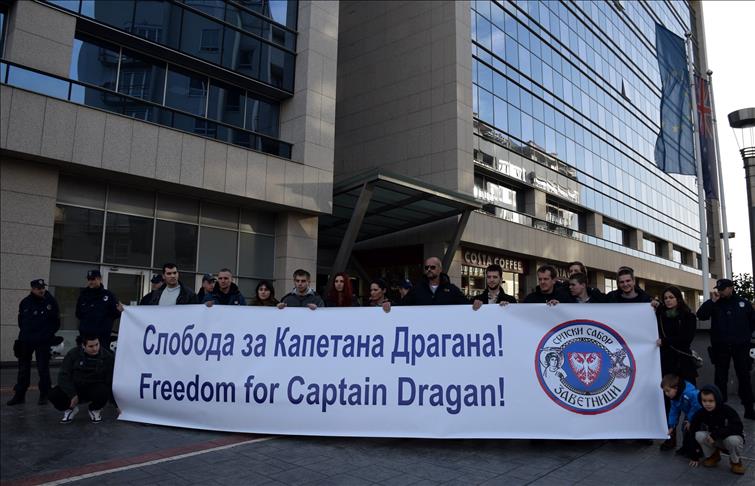
Nationalist supporters of suspected war criminal Dragan Vasiljkovic gathered outside the Australian embassy in Belgrade Monday to protest against a decision to extradite him to Croatia.
Activists from the Zavetnici movement carried banners reading "Freedom for Captain Dragan" and handed over a letter condemning the decision of an Australian court to extradite Vasiljkovic, a Belgrade-born Australian citizen, to Croatia for trial.
The 60-year-old has denied the allegations of war crimes committed while he was a paramilitary leader during the 1991-95 conflict between Serbia and Croatia.
Vasiljkovic has challenged the extradition order since his arrest in 2006 on allegations that he tortured and ordered the killing of prisoners of war and commanded an assault on the village of Glina, 78 kilometers south of Zagreb, resulting in civilian deaths.
In a separate defamation action, New South Wales Supreme Court found Vasiljkovic, who has been in custody since his arrest, committed torture and rape and had admitted his involvement in a massacre.
In the Zavetnici letter, his supporters said: “The court has handed over the most famous Serbian military commander during the nineties, known for strict discipline and enforcing a code of honor in the unit which he formed, to his enemies as a human hostage of terrible injustice.
"We want to believe that Australia is a country in which principles of law and justice are being implemented and that calvary of Captain Dragan, which lasts for eight years, will not end with his extradition to Croatia and the abolition of the right to a fair trial.”
Milica Djurdjevic, a spokeswoman for Zavetnici, said she "strongly condemns" the Australian court’s decision. She claimed his "extradition to Croatia means capital punishment."
Djurdjevic urged the Serbian authorities to protect a "war hero."
Bojan Glavasevic, the Croatian assistant minister for veterans, told The Anadolu Agency: "I have no doubt in the Croatian judiciary. I think it is adequately fair, as we have shown prosecuting a large number of people that committed war crimes from our side."
He added that Vasiljkovic's case would not affect relations between Croatia and Serbia.
However, the two countries are at loggerheads over the case of Serb nationalist Vojislav Seselj, who was released by the International Criminal Tribunal for the former Yugoslavia on the grounds of ill health after an inconclusive war crimes trial.
Since his return to Serbia last month he has given a series of speeches attacking Croatia and Bosnia and repeating aspirations for a Greater Serbia.
Vesna Pusic, Croatia’s minister for European affairs, said during a visit to Turkey last week that Serbia must prosecute war criminals as a condition to joining the European Union.
www.aa.com.tr/en