CAIRO
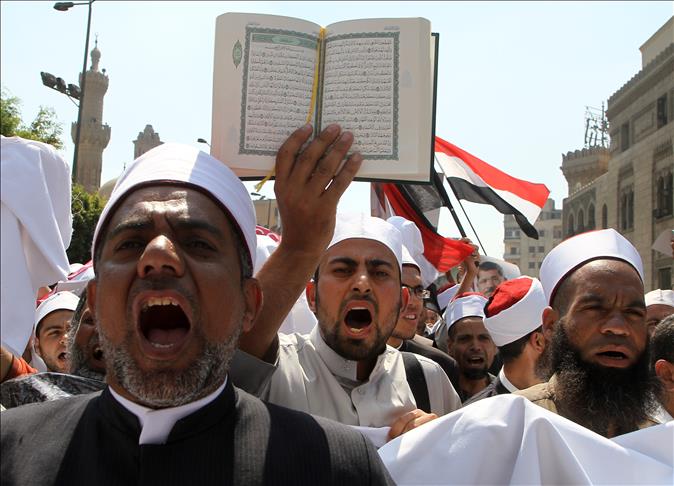
Tens of preachers and scholars from Al-Azhar, the highest seat of religious learning in the Sunni Muslim world, demonstrated outside Al-Azhar compound on Thursday against army chief and Defense Minister Abdel-Fatah al-Sisi’s call for mass protests on Friday to authorize him to “confront terrorism and violence.”
The preachers and scholars closed the road leading up to Al-Azhar, carrying copies of the Holy Quran, photos of ousted Morsi and banners reading “Yes to Morsi, No to Sisi.”
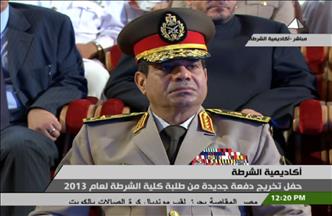
Earlier today, al-Sisi urged Egyptians to take to the streets for mass Friday protests to "authorize" him to "confront violence."
"I'm asking the Egyptian people to go out like they did on June 30 and July 3," he said in a televised address at a graduation ceremony for military cadets.
"I want you to show the world that you are authorizing me to confront any possible violence and terrorism," he added.
The preachers and scholars urged Grand Imam of Al-Azhar Ahmed al-Tayeb not to keep his silence and to speak out against Sisi’s call.
They asked him to issue a fatwa (religious edict) against what they described as a military coup against legitimacy.
The army ousted Morsi, Egypt’s first democratically elected president, on July 3 following mass protests against his regime.
It suspended the constitution and installed Adly Mansour, the head of the constitutional court, as interim president.
At the same time, Egyptian state and private newspapers front-paged on Thursday army chief and Defense Minister Abdel-Fatah al-Sisi’s call for mass protests on Friday to authorize him to “confront terrorism and violence.”
Most of the headlines were supportive of the Sisi call, and tended to mobilize people to take to the streets to support the army.
The supportive media explained “confronting terrorism and violence” to mean dispersing mass protests and sit-ins by loyalists of ousted president Mohamed Morsi.
Earlier today, al-Sisi urged Egyptians to take to the streets for mass Friday protests to "authorize" him to "confront violence."
"I'm asking the Egyptian people to go out like they did on June 30 and July 3," he said in a televised address at a graduation ceremony for military cadets.
"I want you to show the world that you are authorizing me to confront any possible violence and terrorism," he added.
“Go to protest” was the most common headline in today’s state and private newspapers, including the liberal Al-Wafd, the mouthpiece of Al-Wafd Party.
It urged the Egyptian people to take to the streets in response to Sisi’s call.
The same headline was used, in bold red, by the private dailies Tahrir and Youm7.
Some newspapers went as far as suggesting that the people had already accepted and responded to the call.
The headline of the private Al-Masry al-Youm daily was: “Sisi asks….people respond.”
The state-run Al-Akhbar daily carried the same message, with a headline reading: “Sisi’s message delivered…people respond.”
Another headline on the same page read, in bold red: “We authorize you.”
The major state and private channels have also announced they would not be airing any of the much-followed Ramadan soaps, and devoting all airtime to cover the expected mass protests.
Several talk-show hosts opened urged the audience to take to the streets in massive numbers in response to the army chief’s call.
englishnews@aa.com.tr