By Aamir Latif and Ihsan Khattak
BANNU
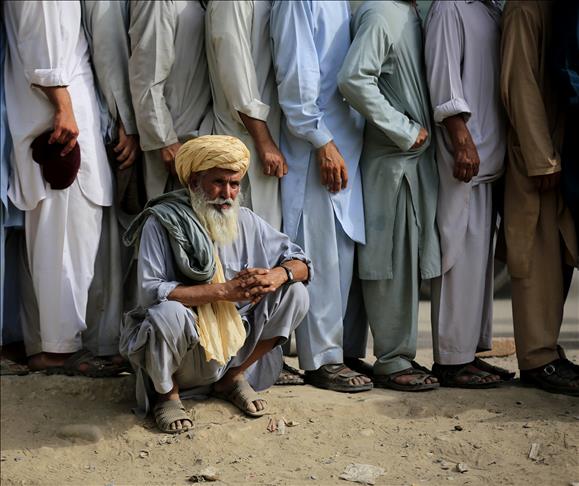
More than six months after he and a million others were forced to flee clashes between Pakistan's army and militants, Gul Naseeb Khan can return to his home in North Waziristan.
The army confirmed that the displaced will start returning home in February but for many of them, including Gul Naseeb, their excitement has been subdued by the prospect of having to rebuild their lives from nothing.
“I am still confused what to do. No doubt I miss my home, my people and my land but unfortunately nothing is left there,” says Gul Naseeb, who ran a small shop in the main bazaar in the town of Mir Ali, one of the worst hit towns.
“Almost the entire Mir Ali bazaar has been destroyed. A number of shops and houses in and around the bazaar have been completely or partially destroyed,” says Gul Naseeb, a father of five. “It seems if the government wants to handover a destroyed Waziristan to us. If not, then it should reconstruct our houses and shops, otherwise a majority of Waziris will not opt to return.”
Fasihuddin Dawar, who sold electrical material in Mir Ali, is also concerned about whether he has anything left to return to.
“This is a very good news. Like all other Waziris, I too want to go back but the issue is I do not know whether my house and shop still exist or not? I have absolutely no idea what future stocks for me there,” says Dawar, who is considering going to Saudi Arabia to work as a laborer. “Only I and my family know how difficult life is outside home. I am the one who wishes to go back right away but the conditions there have got me totally confused.”
“Reports reaching here suggest that most of the trade centers and shops in Mir Ali have been destroyed. If this is the case, then it is better for us not to return,” he adds.
Mir Daraz Khan, who used to herd sheep and goats in a village near North Waziristan's administrative headquarters, Miranshah, wants to return regardless of what awaits him.
“Truly speaking, I have no idea if my sheep and goats are alive and there but I have no choice. I have had enough of spending life away from my home. I will certainly go back,” Mir Dawaz says.
Her aging mother, who did not disclose her name, is equally keen to return but says she will not be able to bear the shock of seeing a “destroyed Waziristan."
“My home and my land are settled in my eyes. But I fear I will not survive if I see a destroyed Waziristan. I believe I would die if I do that,” she says, fighting back her tears.
- Slow rehabilitation
The process of rehabilitating North Waziristan's displaced will be a slow one, says Rahimullah Yusufzai, a Peshawar-based expert on tribal affairs.
Initially, he says, the army would allow a select few residents of low-lying areas of North Waziristan to return but it could be months before the next phase, as the authorities will want to assess how durable the rehabilitation is.
“There is no survey about the infrastructural losses in North Waziristan. In many areas, people have lost everything, their houses, shops, and other properties. It will be a very hard task for them to return to the normal living,” he observes.
“We have the experience of South Waziristan’s IDPs (internally displaced persons) to predict the future scenario vis-à-vis rehabilitation," says Yusufzai. “Only five per cent of over 500,000 IDPs from South Waziristan opted to return as tight security, restricted movements and other aspects crippled the local businesses and normal life.”
The army had launched a full-fledged operation in adjoining South Waziristan, a former stronghold of the main Pakistan Taliban coalition Tehrik-e-Taliban Pakistan in 2009, following a brazen attack on the army headquarters in the garrison city of Rawalpindi.
A slow rehabilitation, Yusufzai says, would ultimately affect the efforts for the restoration of local businesses. “If there is lesser population, then automatically, there will be lesser business and trade opportunities.”