By Alex Jensen
SEOUL
A senior nuclear envoy from the U.S. held talks in Seoul on Monday to discuss ways to bring North Korea back to dialogue on denuclearizing the military state -- even as all indications suggest Pyongyang is moving in the opposite direction.
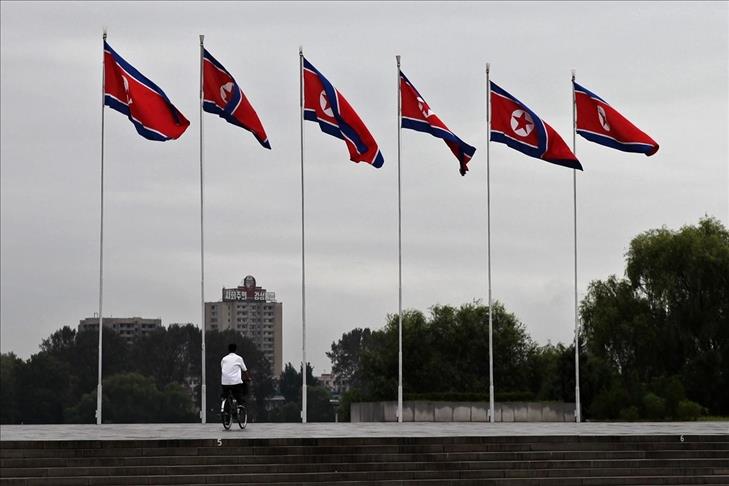
Hours earlier, at midnight in the North Korean capital, leader Kim Jong-un visited the embalmed bodies of his predecessors in honor of what his country calls ‘Victory Day.’ July 27 is known globally as the date when an armistice brought a truce to the Korean War 62 years ago, though a peace treaty has not been agreed since.
Differences in opinion over historical events demonstrate the challenge facing negotiators hoping that the recent example of Iran can inspire a similar denuclearization deal with North Korea.
Sydney Seiler, U.S. special envoy for stalled multilateral talks involving Pyongyang, arrived in the South Sunday insisting that his visit coincided with an “important” period.
American research website 38 North had pointed to satellite imagery going into the weekend in claiming that North Korea appeared to be building a weapon assembly station at its principal nuclear facility, while also making strides towards operating a new reactor there.
Having welcomed Seiler, Seoul’s Foreign Ministry admitted via a statement that it is “keeping close tabs on the North's activity related to its nuclear facility”.
As part of its coverage of Kim Jong-un’s celebration of ‘Victory Day’, Pyongyang’s official news agency mentioned reunification with South Korea, which is a goal that both sides share on the surface.
But according to the KCNA report, the North’s plan drastically contrasts with Seoul’s vision given its emphasis on "winning a war against U.S. imperialists" -- not least because Washington is South Korea’s closest military ally.
Over the weekend, a North Korean workers’ organization had called South Korean President Park Geun-hye a “hideous confrontation maniac” due to Seoul’s repeated calls for denuclearization.
While the South’s Unification Ministry urged North Korea Monday to refrain from “vulgar criticism”, Prime Minister Hwang Kyo-ahn reiterated the demand for Pyongyang to give up its nuclear weapon ambitions in an armistice anniversary speech.
Local police were ordered to try to avoid provoking the North, however, by attempting to block activists from marking the occasion by sending thousands of anti-Pyongyang leaflets across the border using air balloons. That form of protest has particularly irked the reclusive nation in the past.
Seoul has maintained that it cannot legally stop such activities, though a court ruling this year offered a caveat in cases where South Koreans’ security could be threatened.