By Nancy Caouette
MEXICO CITY
The ruling Institutional Revolutionary Party (PRI) appears to have retained its simple congressional majority, according preliminary results of midterm elections published Monday.
With more than 95 percent of ballots counted, President Enrique Pena Nieto’s party and its right wing traditional allies – the Green Ecological Party of Mexico and the New Alliance party – are believed to have the majority in Congress, with at least 251 seats.
The National Electoral institute said about 47 percent of Mexico’s 83.5 million eligible voters went to the polls to elect 500 members to the lower house of Congress, nine state governors and hundreds of mayors.
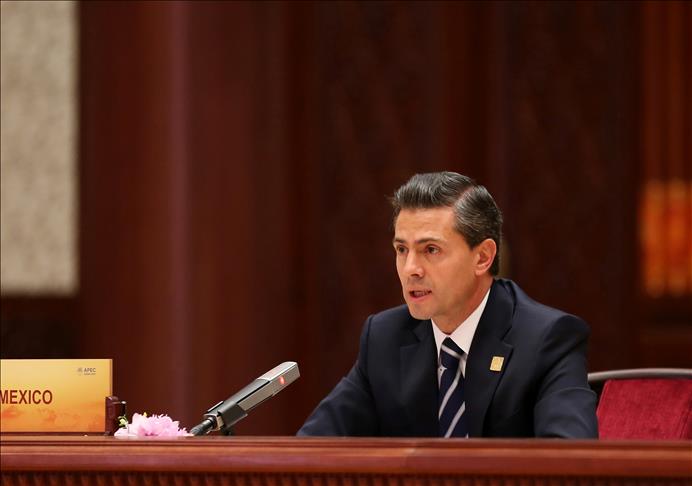
In a nationally televised speech Sunday night after polls closed, Pena Nieto, congratulated voters while emphasizing that “democracy is advancing in Mexico” in the face of violent incidents.
Despite a number of major protests and a series of political scandals that sank Pena Nieto’s popularity in the last month, voters renewed their trust in the president’s party with 29 percent of the vote.
The official opposition National Action Party (PAN) managed 21 percent of congressional votes, according to the preliminary results.
For the first time in Mexico’s history, unaffiliated candidates were allowed to run in all races, thanks to electoral reform approved last year.
Independent candidate, Jaime Rodriguez, better known as “El Bronco", or the Untamed, has made his way to the governorship of Nuevo Leon, one of the richest states that borders the U.S. state of Texas.
Analysts see the victory of the right-wing populist rancher – a former mayor who had been affiliated with PRI for 30 years before becoming independent – as a rejection of traditional parties.
“El Bronco’s speeches carry ideas against the actual political system and against official parties. The candidate gave the opportunity to electors to vote against established political class,” said political analyst and Mexico College professor Jean Francois Prud’homme.
Rodriguez made the fight against corruption a priority during his campaign and said his team will investigate actions by Nuevo Leon’s last government.
In southern Mexico, Elections Day was clouded by violence and protests. Thousands of police and soldiers were deployed in four of the 32 Mexican federal entities.
In Tixtla, a town of the state of Guerrero where 43 students disappeared last September, protesters tried to cancel the elections. Dissident teachers and activists demanded justice for the students and their familes and contested the political system they say is highly corrupted.
The nomination of a new mayor could be voided in the city, because protesters forced the closure 17 of the 29 polling stations.
The National Electoral Institute said on Monday, however, that the election of a governor and congressmen there were not threatened. “There is more than 400 polling stations in the entire state, so five or 10 poll stations closed will not affect the whole state,” said the counselor of the agency, Arturo Sanchez.
Poll boxes and ballots were also torched in Oaxaca, one of Mexico’s poorest states, where teachers had been protesting for almost a week against public school reform laws. The state’s government reported 88 arrests related to the elections turmoil.