LONDON
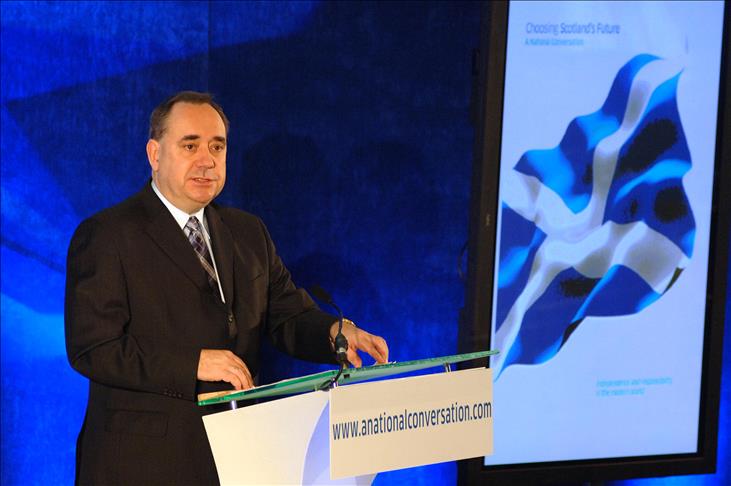
One week before his countrymen go to the polls to decide if they are to leave a 307-year union with the United Kingdom, Scottish First Minister Alex Salmond stood before an international audience in Edinburgh on Thursday and said that Scotland is on the “cusp of making history."
With just seven-days to go before voting begins, opinion polls suggesting no obvious winner are rattling industry nerves in the North - some of which have threatened to move South of the border if Scotland goes it alone.
“The eyes of the world are upon Scotland,” said Salmond, at an event to to mark 17 years since Scotland voted for devolution, and the subsequent re-establishment of the Scottish parliament after a 300-year gap.
A “Yes” vote would give people an “opportunity of a lifetime,” he stated.
"[Leaving the union] is not the end of something, it is the beginning of something really special."
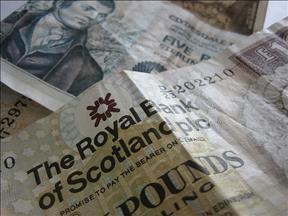
Following an announcement Thursday morning that the Royal Bank of Scotland would relocate to London if the "Yes" vote has its way, Salmond accused the treasury of leaking market sensitive material, and called for a cabinet office inquiry.
Charlie Mayfield, the chairman of retail store John Lewis, also claimed in an interview with the BBC on Thursday that prices in Scottish branches could rise.
Salmond, on the offensive with just a week to go, accused Westminster of “blatant bullying and intimidation.”
In a further blow to the “Yes” Campaign, the Scotsman newspaper said it was backing a “No” vote over concerns about currency, the European Union membership and defense.
The British pound dropped to its lowest level in ten months after an opinion poll suggested the "Yes" vote was in the lead Sunday, but it has since steadied.
“Scotland will vote 'Yes' next Thursday and they will vote 'Yes' because last-minute, cobbled up promises from the 'No' campaign which unravel at the slightest scrutiny will not fool anyone,” said Salmond.
The latest poll carried out for the Daily Record newspaper showed that the “No” campaign was in the lead with 47.6 percent and the “Yes” campaign lagging with 42.4, with 10 percent of voters undecided.
It polled 1,000 people between September 5-9 suggested that the result of the referendum would be a victory for the “No” campaign with 53 percent of the vote and the “Yes” campaign with 47 percent.
Salmond, however, was not deflated.
“The 'No' campaign is in terminal decline. In contrast a 'Yes' vote is the opportunity of a lifetime. An opportunity to build a fairer more prosperous country," he said.
"No-one is better placed to govern Scotland than the people of Scotland. No one understands the aspirations of the people more... We're going to wake up to a lifetime of feeling confident in ourselves and our country... For the first time ever, Scots believe we can do this and we will do this.”
In other news, 50-60 Labour MPs headed to Scotland on a 7:30 am train from London, gearing up for a day of campaigning in Glasgow.
If Scotland votes “Yes,” the Labour party will lose all hope of ever having a majority in Westminster. The party won 41 seats in Scotland in the 2010 general election.
Scottish 'No' campaign maintains lead in latest polls
A new poll on the Scottish referendum puts the “No” campaign in the lead with just under a week left until voters take to the polls.
A YouGov poll carried out for the Sun and Times newspapers - and released late Thursday - showed that the “No” campaign now stood at 52 percent compared to 48 percent for the “Yes."
The survey excluded those who were "undecided" - who number around 6 percent -and was based on the polling of 1,268 electors online between September 9 and September 11.
The results are a stark difference to a poll published last weekend, which showed the “Yes” campaign had taken the lead for the first time at 51 percent and opposition to independence had dropped to 49 percent.
The number of "undecided" voters appears to have fallen dramatically, YouGov saying in last week's poll that the number was around 18 percent.
Since then, there has been a flurry of warnings from, banks, retailers and the International Monetary Fund about the financial implications of independence - some of which have threatened to move South of the border if Scotland goes it alone.
Scotland's First Minister Alex Salmond has called for an inquiry into the warnings, accusing the British treasury of leaking market sensitive material to media.
The head of the Civil Service Sir Jeremy Heywood has denied the claims.
The referendum will be held September 18, threatening a union that has lasted for 307 years.
www.aa.com.tr/en