By Max Constant
BANGKOK
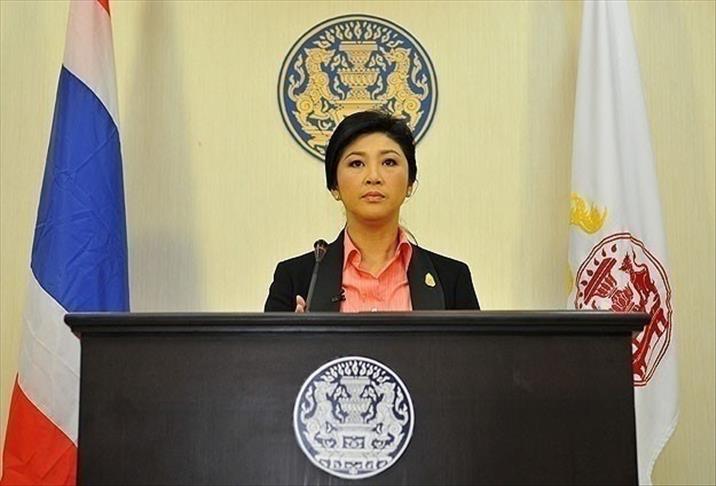
Former Thai prime minister Yingluck Shinawatra has suffered a setback at the start of a trial for dereliction of duty in relation to a loss-ridden rice-subsidies scheme, with the supreme court rejecting two defense requests.
The Bangkok Post reported Monday that the court had rejected Shinawatra’s request for a trial postponement, along with a demand for a rejection of additional documents and witnesses presented by the prosecution.
Already retroactively impeached and banned from political activities for five years, Shinawatra - premier from July 2011-May 2014 - now faces ten years in jail for failing to stop the subsidies program, which the anti-corruption commission says caused $18 billion in losses to the state.
She is charged with negligence and dereliction of duty.
Shinawatra, who was greeted by hundreds of supporters and members of the Puea Thai (For the Thais) party when she arrived at the court, had asked judges to delay the start of the trial because she said the case should instead be under the scope of the administrative court.
She also asked the supreme court to reject a request by accusers to have 60,000 pages of additional documents and 23 additional witnesses presented to the judges, saying that it put her at a disadvantage because her lawyers were not able to study the documents or examine the witnesses.
Both requests were rejected by the court, which stated that the administrative court had no authority in criminal matters and that the defendant also had the right to add documents and witnesses if she so desired.
The judges fixed the next hearing for Oct. 29.
The charges are the latest in a series of legal actions against the former premier – the sister of establishment nemesis Thaksin Shinawatra, a deeply divisive figure who was the prime minister between 2001 and 2006, before he was deposed in a coup.
Many blame Thaksin for the country’s long-time political crisis.
Yingluck herself was removed May 7 by the Constitutional Court for improprieties in the transfer of a high-ranking civil servant. Weeks later, her government was deposed in the May 22 2014 coup.
On the anti-corruption commission’s recommendation, the military-appointed legislative assembly impeached Yingluck Jan. 23 and banned her from political activities for five years in relation to the rice-subsidies scheme.
The anti-graft body has been widely accused of double standards in its treatment of the Shinawatra family, whose head - Thaksin - has lived in exile since being sentenced to two years in jail for abuse of power in 2008.
While it has been quick to revive the cases against the Shinawatras and their affiliates, charges against some opposing figures have been dropped.
A complaint filed in 2011 with the commission against improprieties by former Thai PM Abhisit Vejjajiva in the management of a price-guarantee scheme for rice has gone nowhere.
The commission’s secretary-general, Vicha Mahakhun, has tried to explain the delay, by saying that documents to pursue the case against Vejjajiva were “damaged and lost in the massive floods in 2011”.
In a Facebook statement posted when the criminal charges were first brought against her in February, Yingluck wrote that she had launched the subsidies scheme to "lift the quality of life for rice farmers".
"As prime minister, I was always honest and served the Thai people who voted for my government. I have not done anything wrong at all", she added.