BANGKOK
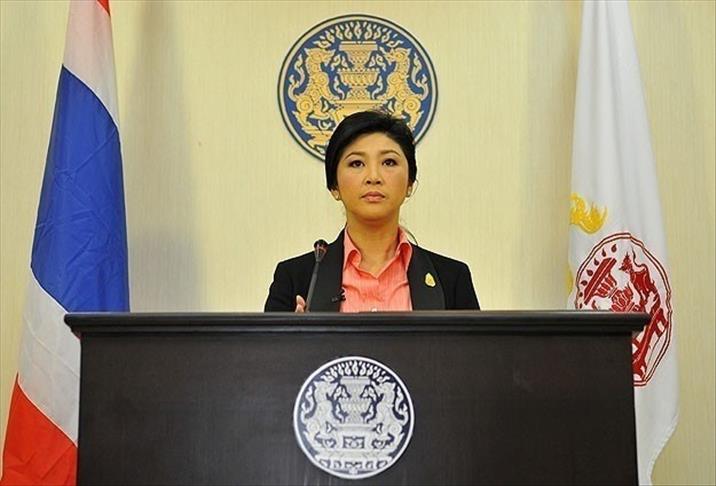
Yingluck Shinawatra showed her combativeness Friday as an impeachment process against her started at the national assembly. The former Thai prime minister denied all charges, and asked the 220-member assembly -- handpicked by the military junta which ousted her -- "not to become a political tool."
Yingluck, whose government was overthrown in a May 22 coup, is accused of dereliction of duty in relation to a rice-subsidies scheme, which her opponents claim was riddled with corruption.
The case was brought against her by the Anti-Corruption Commission. If impeached, Yingluck -- the sister of highly divisive ex-Prime Minister Thaksin Shinawatra -- will be banned from politics for five years.
"I denied all charges both by the Anti-Corruption Commission and by the Democrat Party [bitter rivals of both Yingluck, the Puea Thai party, and Thaksin] and insist I ran the program correctly and transparently," she announced defiantly.
Reading confidently from documents, the former PM underlined what she considered to be the weak legal basis of the proceedings.
"I was removed from office – the equivalent of being impeached – three times already. I have no position left to be impeached from," she said.
A fortnight before the coup, Yingluck was ousted from her position as PM by the Constitutional Court for impropriety in the transfer of a high-ranking civil servant. It was not immediately clear what she meant by “three-times."
The proceedings are based on the 2007 constitution, which the military abolished immediately after the coup. Legal experts working for the government argue, however, that the impeachment proceedings are still valid because organic laws linked to the constitution have not been abolished, an argument doubted by some academics.
Yingluck also defended the philosophy behind the rice-subsidies policy.
"It is a social contract that my government was bound to implement," she said. "My party understands farmers… how they are perennially plagued with debts, meager incomes and low rice prices. Besides, subsidizing rice-farmers is nothing new, it has been done for 33 years."
The former PM went as far as to emphasize that the current government, led by junta chief General Prayuth Chan-ocha, was still benefitting from the controversial rice policy.
"Our title as first world exporter of rice has been restored in 2014 and all the grain that made it happen came from the scheme," she said.
Critics of the rice-subsidies scheme have said that it caused huge financial losses for the state, was run without transparency and opened the door for massive corruption. In November, the Thai Finance Ministry said that losses caused by the program had amounted to $15.8 billion since July 2011, when Yingluck was elected PM.
Chookiat Ophaswongse, honorary president of the Thai rice exporters association, recently told The Anadolu Agency that he considered the subsidies scheme lacked transparency.
"Starting from mid-2013, Yingluck’s government was running short of money to continue to finance the subsidies scheme and was forced to sell some rice on the world market," he said. "But it did not sell on a tender-basis, but through secret channels at very low prices under the guise of government-to-government agreements."
The impeachment proceedings, which started Friday, run the risk of increasing political tensions and jeopardizing the reconciliation between rival political clans called for by Thai junta chief and Prime Minister Prayuth Chan-ocha.
"The ruling generals have a dilemma on their hands," wrote political scientist Thitinan Pongsudhirak in an opinion piece published in Friday’s Bangkok Post.
"Going too far against Miss. Yingluck will worsen Thailand’s conflict and polarization, driving away reconciliation and compromise. But not going far enough will raise questions about the basis of the coup and suspicions about behind the scenes deal-making between the generals and Thaksin."
Thaksin was prime minister from 2001 until he was overthrown in a September 2006 coup. In exile, since a conviction for abuse of power in 2008, he is widely considered to the real leader of the Puea Thai party.
The impeachment proceedings against Yingluck will continue until a vote is taken towards the end of January.
Three-fifths of the assembly must vote for her impeachment for the former PM to be banned from politics.