JERUSALEM
For the third week in a row, Israeli authorities have imposed restrictions on the access of the Al-Aqsa Mosque compound in occupied East Jerusalem.
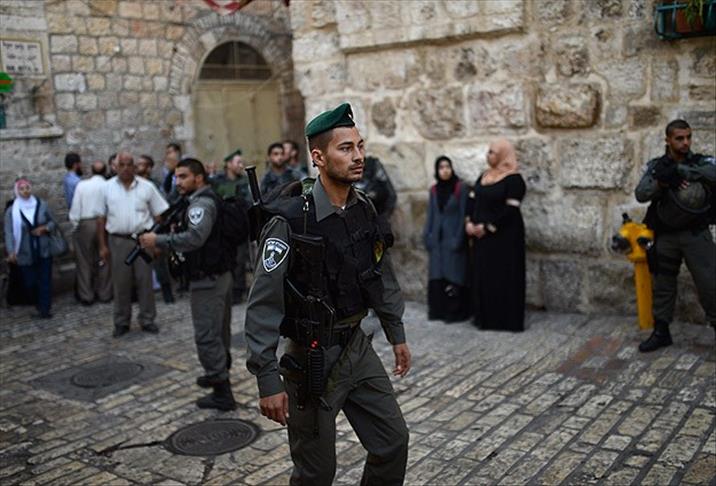
Israeli police have deployed 1,000 troops and erected roadblocks at Jerusalem's Old City ahead of the weekly Friday prayers.
Under the fresh Israeli restrictions, male worshippers under 50 were banned from performing the weekly prayers in the Al-Aqsa Mosque.
"All Muslim men under 50 and West Bankers will be barred from entering the Al-Aqsa Mosque compound for Friday prayers while women of all ages were granted access," Sheikh Azzam al-Khatib, head of the Jordan-run Organization for Muslim Endowments and Al-Aqsa Affairs, told Anadolu Agency.
Al-Khatib said that while Israel restricts the entry of Palestinians into Al-Aqsa mosque compound, it facilitates the access of Jewish settlers into the holy site.
He said that at least 1,300 Jewish settlers and 350 Israeli soldiers had forced their way into the holy site during Jewish holidays in the past ten days.
"Meantime, Israeli police banned more than 5,000 Muslims from entering the Al-Aqsa Mosque during the same period," he said.
Scores of Palestinians were injured in clashes with Israeli forces inside the Al-Aqsa Mosque compound last week.
In recent months, groups of extremist Jewish settlers – often accompanied by Israeli security forces – have repeatedly forced their way into East Jerusalem's flashpoint Al-Aqsa Mosque complex.
The frequent violations anger Palestinian Muslims and occasionally lead to violent confrontations.
For Muslims, Al-Aqsa represents the world's third holiest site.
Jews, for their part, refer to the area as the "Temple Mount," claiming it was the site of two prominent Jewish temples in ancient times.
Israel occupied East Jerusalem during the 1967 Middle East War. It later annexed the holy city in 1980, claiming it as the capital of the self-proclaimed Jewish state – a move never recognized by the international community.
In September 2000, a visit to the site by controversial Israeli leader Ariel Sharon sparked what later became known as the "Second Intifada" – a popular uprising against the Israeli occupation in which thousands of Palestinians were killed.
www.aa.com.tr/en