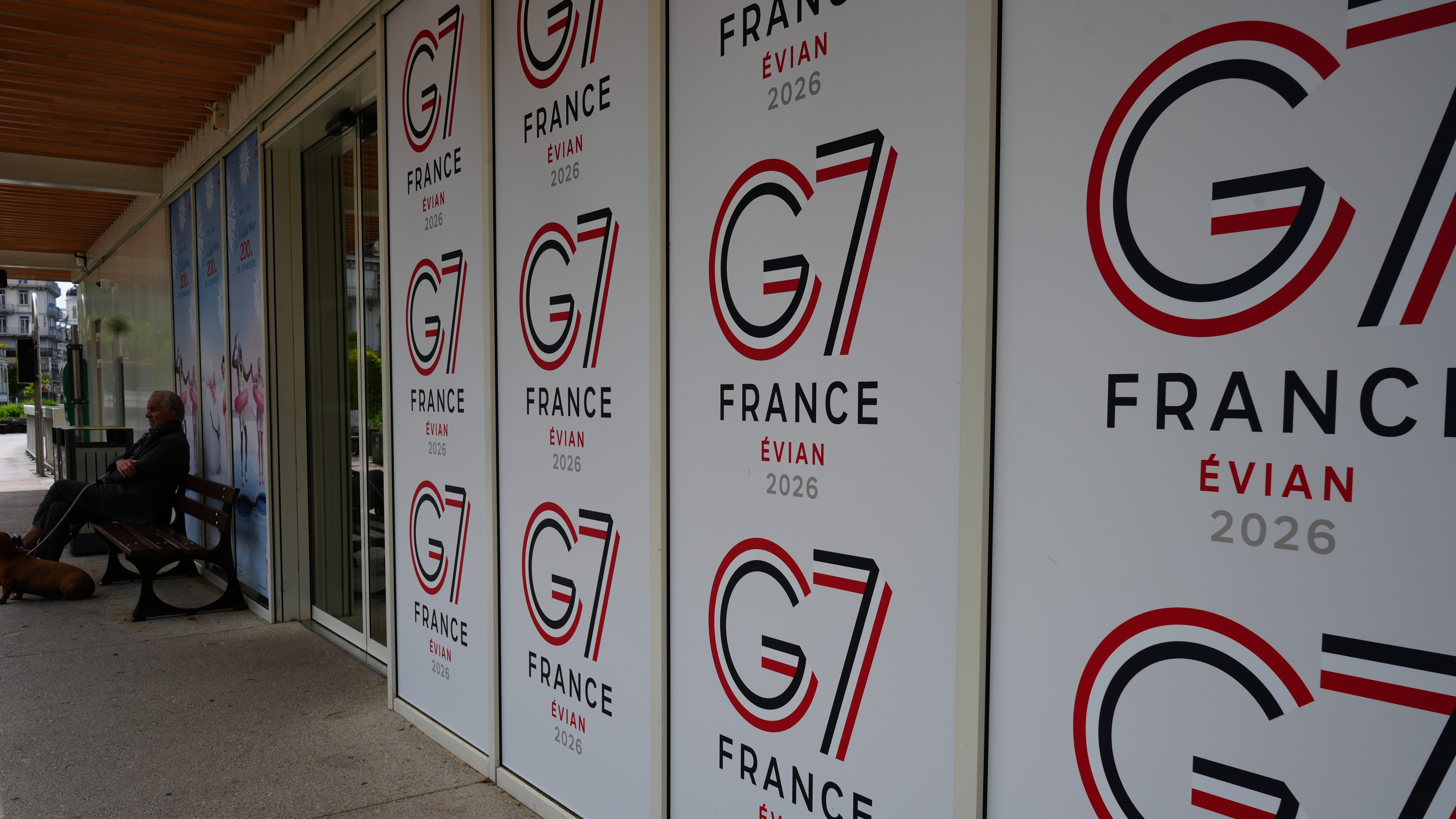
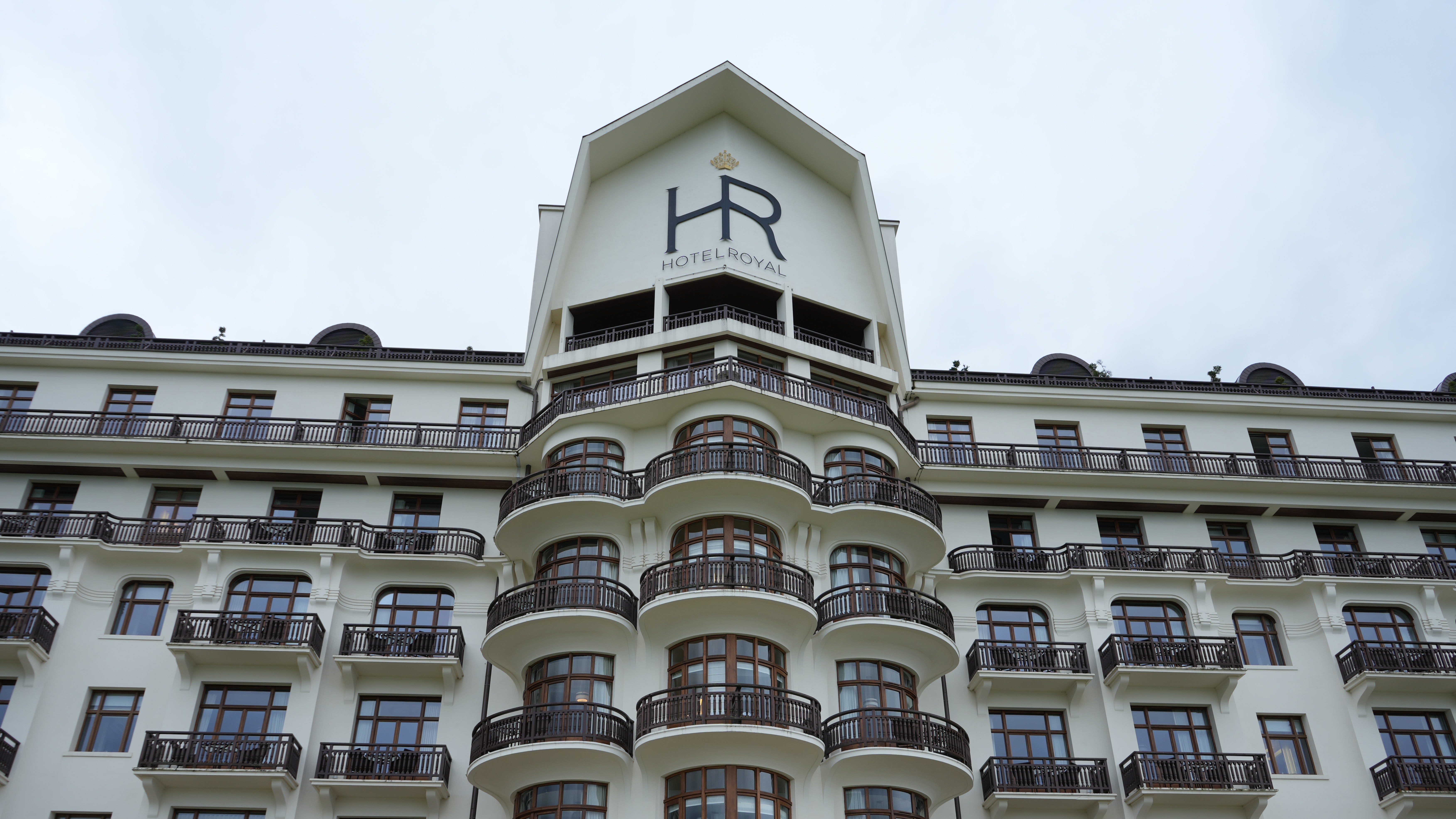
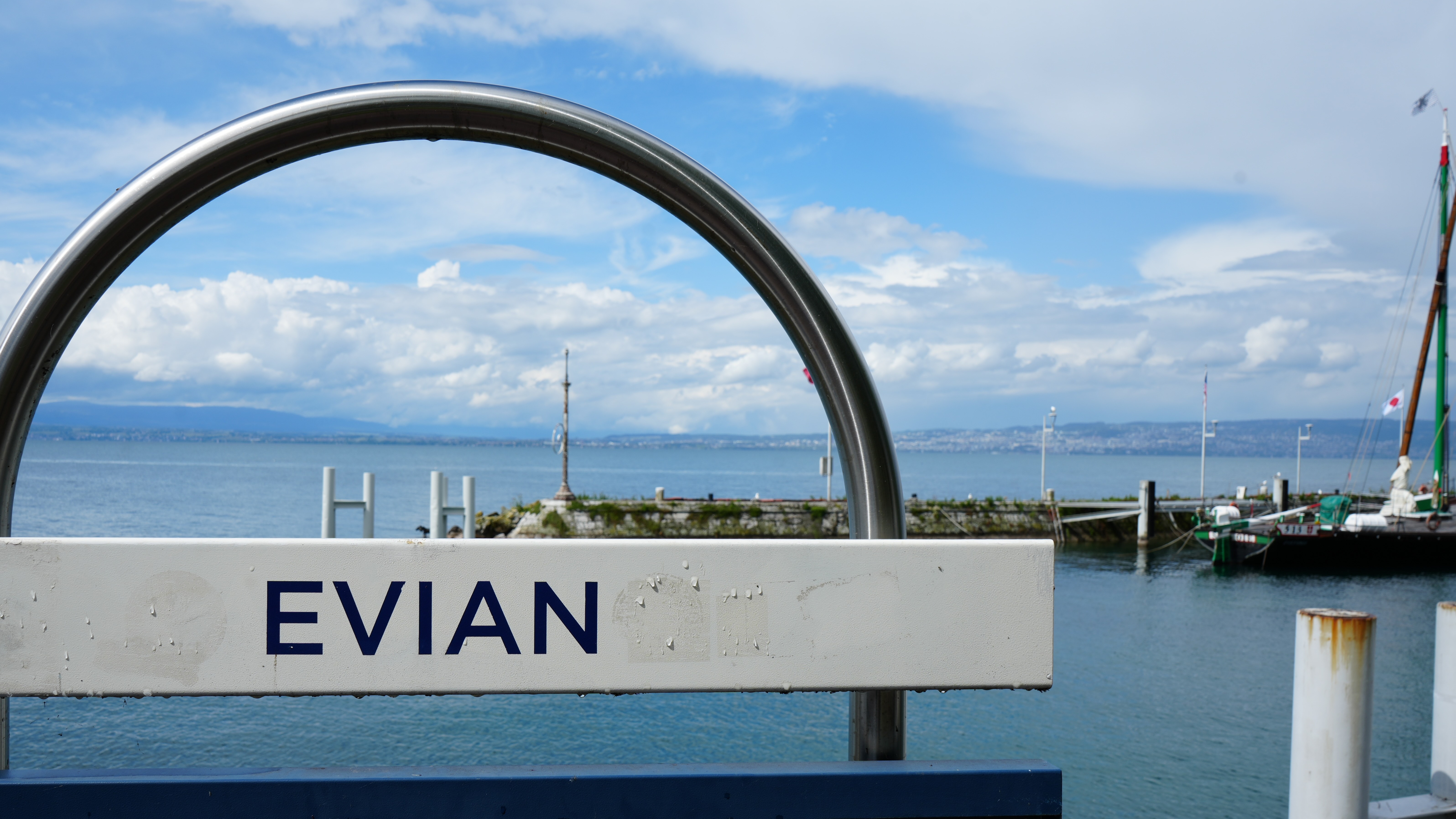
As G7 leaders gather in the French resort town of Evian-les-Bains, wars, trade tensions and questions about the future of transatlantic relations are expected to dominate discussions, overshadowing much of the summit's carefully prepared economic agenda.
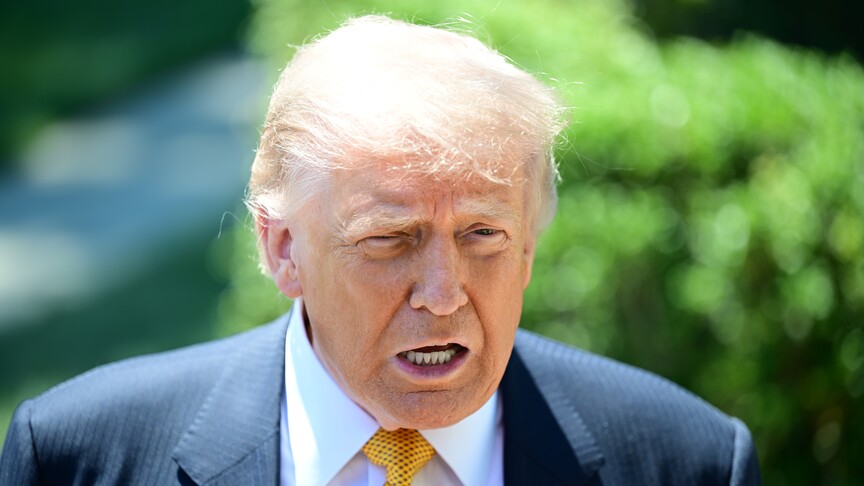
The summit will be the first full G7 gathering attended by US President Donald Trump since returning to the White House in January 2025. Although Trump took part in last year's summit in Canada, he departed early as the escalating Israel-Iran conflict forced him back to Washington, leaving key discussions on Ukraine and global trade unfinished.
Alongside the leaders of the G7 nations -- Canada, France, Germany, Italy, Japan, the UK and the US -- the summit will also bring together top EU officials and invited partner countries, including India, Brazil, South Korea and Ukraine.
While France has spent months preparing an agenda focused on economic cooperation, leaders are likely to devote much of their attention to a series of geopolitical crises.
At the top of the list is the conflict involving Iran, which has rapidly emerged as one of the most pressing international challenges facing the group.
"Two issues, the first is the relatively new one from the global security front, President Trump's war against Iran," John Kirton, director of the G7 Research Group at the University of Toronto, told Anadolu.
"No one thought that if Trump attacked Iran again as he had done about the same time last year, and that the war would last this long this year and bring such damage to all of the economies and peoples of the world," he said.
While G7 leaders broadly agree that Iran should not acquire a nuclear weapon, the conflict has also exposed differences over how far allies should support Washington's military approach.
"There was a division, not just in the team Europe against the United States, but within Europe, about which European G7 members would let the United States military use its military bases for the US war against Iran," Kirton said.
At the same time, leaders share a common interest in preserving freedom of navigation through the Strait of Hormuz, a critical artery for global energy supplies, he said.
Ukraine is also expected to remain high on the agenda. European leaders continue to view support for Kyiv and efforts to secure a lasting peace as central priorities alongside discussions on sanctions, defense spending and broader European security.
Rising tensions with China and disputes over global trade are also expected to feature prominently throughout the summit.
Even as security crises dominate headlines, French President Emmanuel Macron has repeatedly argued that the long-term challenge facing the global economy is growing fragmentation and persistent economic imbalances.
Officially, France wants the summit to focus on issues such as critical minerals, development finance, artificial intelligence and the distortions created by excess industrial capacity and uneven trade flows.
At the center of those concerns lies China.
Days before the summit, Macron hosted a video conference with Chinese Vice Premier Zhang Guoqing, saying the priority was "to put the global economy back on a stronger growth path" through international cooperation.
Kirton believes Macron may still be able to redirect attention toward the issue despite mounting geopolitical tensions.
"I think Macron will be able to, with his G7 leaders, absorb it, handle that issue (US-Iran war) and then deliver his longstanding initial priority of tackling global economic imbalances driven by China's massive trade surplus with Europe in particular, but the rest of the world as a whole," he said.
The issue is expected to feature prominently in discussions on trade, industrial policy and critical mineral supply chains, areas where France has repeatedly warned that strategic dependencies could become economic and security vulnerabilities.
Yet while concerns about China are increasingly shared across the G7, there is less agreement on how aggressively to respond.
The US has pushed allies toward tougher economic measures against Beijing, while several European governments continue to favor reducing strategic dependencies rather than pursuing outright economic decoupling.
"We may see some progress, not only G7 unity, but also it working with getting Xi Jinping to move to solve the problem at home before the EU and G7 have to do it themselves at their own borders with a tough love approach," Kirton said.
Trump's participation is expected to shape both the atmosphere and substance of the gathering.
Although European leaders have now had more than a year to adjust to Trump's return to power, differences remain over trade, security, China and the Middle East.
Macron may be better positioned than most to manage those tensions, according to Kirton.
He hosted Trump during the 2019 G7 summit in the French coastal resort city of Biarritz and is widely regarded as one of the European leaders most comfortable dealing with him.
"Indeed, he can certainly play the role of a mediator," he said.
"He's highly experienced. It's his 10th G7 Summit. Secondly, it's the second one he designed and hosted. He did that at Biarritz in 2019 and Donald Trump was there, and President Macron designed a whole new format and formula to cope with Donald Trump, and it worked," he said.
"Macron knows he has to make Donald Trump the center of attention, make the summit a success that Donald Trump can and will claim that he was personally responsible for," he added.
After the G7 concludes, Macron is set to host Trump for a private dinner at the Palace of Versailles, officially marking the 250th anniversary of US independence and celebrating the longstanding relationship between France and the United States.

Despite the focus on wars and security crises, France is also seeking progress on artificial intelligence and online safety.
Executives from some of the world's leading AI companies including OpenAI's Sam Altman, Anthropic's Dario Amodei, Google DeepMind's Demis Hassabis and Mistral AI's Arthur Mensch are expected to participate in discussions on the sidelines of the summit.
The talks are expected to focus on AI governance, digital infrastructure and the protection of minors online, building on the AI Action Summit hosted by France last year.
While wars and trade disputes are likely to dominate headlines, Kirton argues that climate change remains the most important challenge facing the international community.
"The biggest problem facing the G7 and the world today is climate change," he said, warning that leaders are unlikely to do enough to address the scale of the challenge despite some expected progress.
Kirton pointed to a series of preparatory meetings held by France ahead of the summit, including a gathering of G7 environment ministers that also included US participation.
According to him, leaders are expected to endorse previously agreed commitments and could even announce additional measures related to climate and environmental protection.
Beyond specific policy outcomes, Kirton believes the summit also highlights the continuing role of the G7 as a forum for global governance.
"There's nowhere else to go," he said,
He argued that the forum remains unique because its leaders continue to meet regularly and coordinate on major international challenges.
According to Kirton, even Trump increasingly recognizes that issues such as Iran, trade and global security cannot be addressed by the United States acting alone.
Referring to the conflict with Iran, he said: "If we were to ask President Trump now, is America alone able to win the war and end the war that you started against Iran, he'll be forced to say no."

contact_the_ombudsman
is_there_an_error_in_this_story