By Satuk Bugra Kutlugun
ANKARA
Despite the end of the reign of former Prime Minister Nouri al-Maliki, whose sectarian policies were widely blamed for the rapid advance of the terrorist group ISIL earlier this year, little has changed in Iraq's domestic politics, according to experts.
As Turkish Prime Minister Ahmet Davutoglu begins a two-day visit to Iraq on Thursday, experts say, he will find a country as divided along sectarian lines as ever before. Removing Maliki, it turns out, does not seem to have solved the problem.
ISIL, which stands for the Islamic State in Iraq and the Levant, made rapid advances across northern Iraq in June -- in part with the help of local Sunni leaders -- seizing large swathes of northern Iraq, including Mosul, a city of more than 1 million inhabitants.
Sunni leaders, though known to have little sympathy for ISIL, were thought to have been alienated by Maliki's blatantly sectarian policies, which favored Shia Muslims over Sunnis.
Yet, even though Maliki finally gave way under the weight of international pressure, to be replaced in September by Haider al-Abadi -- also a Shiite from Maliki's State of Law Party -- cooperation between Iraq's different religious and ethnic groups has not improved, experts told The Anadolu Agency.
Serhat Erkmen, a professor of international relations at Ahi Evran University in Turkey, said there had been "no changes at all" in the political structure of the Iraqi Parliament.
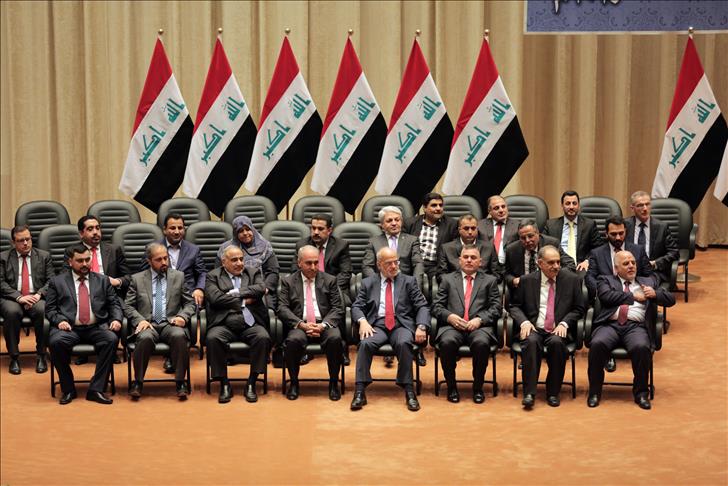
In the new Iraqi government, 17 ministries were given to Shias, seven to Sunnis, four to Kurds, and one to a member of the Turkmen community.
"Sectarianism and ethnic discrimination did not disappear in Iraq," Erkmen said. "The exact same groups of the former government are in the new government. The only difference is that the politicians in Iraq who chose to be more mild-mannered in the past governments have now come to the forefront."
Omer Turan, a Turkish political scientist, expressed a similar view. Sunnis in Iraq have been alienated, he said, and the reality is that Iraq is a Shia country. And Iran wields significant influence in Iraq, he said.
"After Saddam, a so-called democratic regime was established in the country by Iran," he said. "Shiite people have been determinant in the new system because they make up about sixty percent of the population."
Turan said that, during Maliki's tenure, Iraq maintained close relations with Iran, which has supported the Syrian regime of Bashar al-Assad. Turkey opposes the Assad regime and, for this reason, tension between Iraq and Turkey increased.
Erkmen said Iraq still suffers sectarianism and ethnic discrimination, the central government in Baghdad still suffers from a lack of control and Sunnis' exclusion in the political system remains a problem.
The rise of ISIL has only exacerbated the problems.
Veysel Ayhan, the head of the International Middle East Peace Research Center in Turkey, said because Sunni regions in Iraq are now under ISIL, it is difficult for the group to be represented politically in Iraq.
The terrorist group seeks to establish a caliphate straddling parts of Iraq and Syria, erasing national boundaries drawn by Europeans in the wake of World War I. After the group captured Mosul, the country's second-largest city, in June, it surged across large parts of northern Iraq and Syria, taking control of a number of predominantly Sunni cities.
www.aa.com.tr/en