By Evelyn T. Kpadeh
MONROVIA
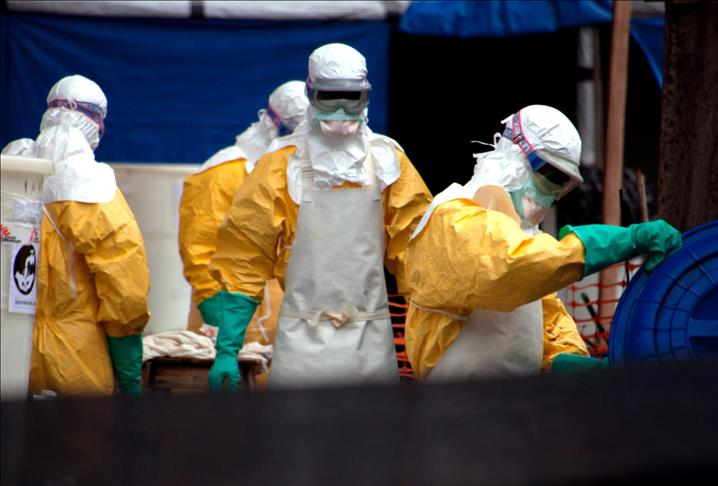
Holding overdue senatorial polls remains uncertain, even though the House of Representatives has set December 16 to elect half of the 30-member Senate, with many insisting elections should not be held unless the Ebola virus – which has claimed more than 2,000 lives in Liberia – has first been contained.
"We think it's untimely and it undermines the fight against Ebola," Vandalack Patricks, a civil society activist who heads the Campaigners for Change, told Anadolu Agency.
"I think the government should rethink any decision to hold elections in December," he said.
The special senatorial election should have been held on October 14 – as called for by Article 83 of the country's constitution – to replace 15 of the 30 sitting senators whose tenure should expire by the second week of January.
The other 15 senators were elected in 2011 and their tenure ends in 2019.
But the vote was postponed by the National Elections Commission due to the Ebola outbreak.
Commission Chairman Jerome Korkoyah wrote parliament that they could not go on with the election as planned due to the crisis.
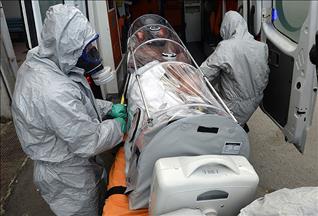
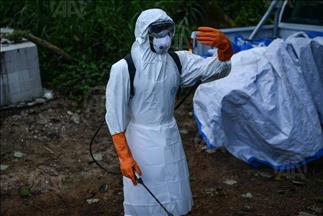
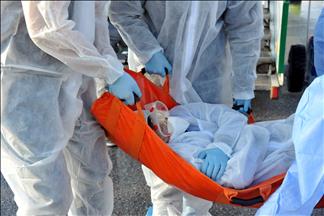
In recent months, Ebola – a contagious disease for which there is no known treatment or cure – has killed 4,951 people worldwide, mostly in West Africa, according to the World Health Organization (WHO).
A total of 2,413 deaths have been reported in Liberia alone.
Based on the National Elections Commission's decision, the House of Representatives passed a resolution that the election could not be held later than December 16.
The Commission has already released the names of the 139 candidates contesting the 15 seats.
But Patricks wants the planned senatorial election halted until health and medical experts declare Liberia Ebola-free.
Many Liberians share this conviction.
"People cannot be dying of Ebola while we are holding elections," said Daddy Kollie, who works at a private security firm.
"If the election goes on in December, I will not vote," the 26-year-old told AA.
A tropical fever that first appeared in 1976 in Sudan and the Democratic Republic of Congo, Ebola can be transmitted to humans from wild animals.
It can also reportedly spread through contact with the body fluids of infected persons or of those who have died of the virus.
Experts estimate that containing Ebola in Liberia and West Africa could take more than six months.
-Discrepancy-
Patricks wondered how the government – which only recently implored the U.S. and the international community for support to fight Ebola – would be able to hold democratic elections.
"It will only suggest to the world that Liberians are unserious and that our leaders are insensitive to their people," he told AA.
"The government has cried that it has no money to fight Ebola and one will wonder where they are going to get the money to conduct election," said Patricks.
"Is this the Ebola money that is being donated by international community and friendly countries?" he asked.
The UN, being one of the biggest partners in supporting elections in Liberia, has announced that there was no decision reached during the recent UN General Assembly meetings in New York on supporting elections in Liberia amid the Ebola crisis.
-Needed-
Still, many Liberians and politicians believe that elections should be held as scheduled to uphold the country's democracy.
"We wouldn't want to see elections taking place next year as is being proposed in some quarters," said Boima J. V. Boimah, a 28-year-old journalist.
"We would be heading for constitutional crisis because doing so will remind us of the anarchy and chaotic days of this country and that is not the kind of democracy we want to see," he insisted.
He was referring to the country's 14 years of civil war between 1989 and 2003, which left over 250,000 people dead and displaced thousands of Liberians to neighboring countries and abroad.
Boimah wants to see his country move forward.
"We hope that the situation will remain calm and I anticipate seeing elections taking place on December 16 so that those elected can have the opportunity to be inaugurated into office on January 16 as called for in the constitution," he added.
The opposition Alternative National Congress (ANC), one of Liberia's four big political parties, also believes elections should be held on schedule.
"The ANC is a law-abiding political institution and since the legislature passed a resolution mandating the regulatory body to hold elections on December 16, we will be prepared and ready to proceed," Lafayette Gould, the party's national chairman, told AA.
"We are still in this fight concerning Ebola and we want to eradicate it from our country – but we can also multitask," he insisted.
The opposition party is fielding 13 candidates to contest the 15 senate seats up for grabs.
Gould fears that failure to hold elections and protect democracy could have far-reaching ramifications that Liberia is not ready for.
"What do we do pass January 12? Continue to pay wages, gas slips and benefits to legislators that don't have the mandate of the people?" he asked.
"We want those lawmakers to pack their bags after their tenure," insisted the opposition leader.
"Should Ebola last until 2017, God forbid, and the president says she can't hold election or leave office because there is Ebola, what would be the outcry?" Gould argued.
"The government can't use a medical strategy as an excuse not to hold to the principles of democracy – she [government] can't be excused for that," he insisted.
The ruling Unity Party of President Ellen Johnson Sirleaf, for its part, said they would have no objection to holding the election once the environment was calm and the safety of the citizens was guaranteed.
"Election is something we cannot avoid," the party's secretary-general, Wilmot Paye, told AA.
"We will have no objection for the conduct of election once the environment is cool for election to be conducted," he said, without elaborating further.
englishnews@aa.com.tr
www.aa.com.tr/en