BERLIN
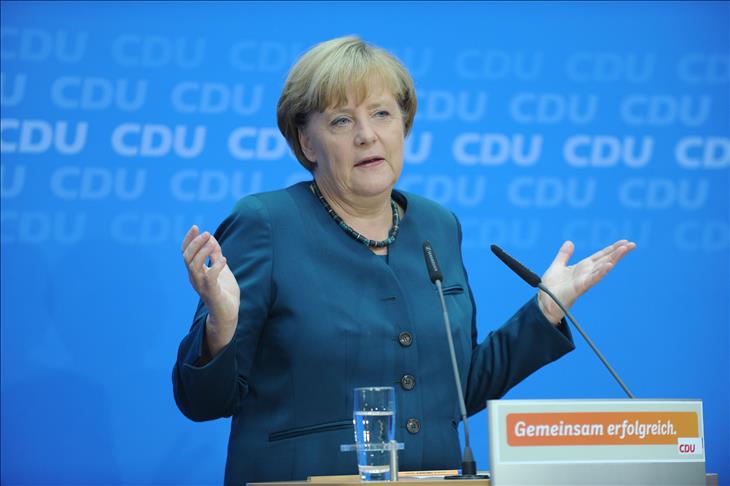
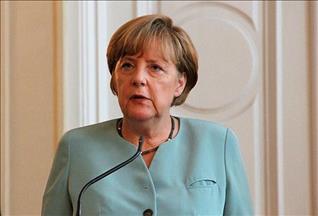
German Chancellor Angela Merkel’s conservatives and the small opposition Green Party have failed to bridge differences on forming a coalition government.
"I have to tell you that there won’t be any further exploratory talks (with the Greens), and there won't be coalition negotiations," said CDU Secretary General Herman Groehe after the six-hour meeting on Tuesday night.
Green Party Co-Chair Claudia Roth told reporters that they could not resolve differences on a number of significant issues.
"We have concluded that we would not propose our party congress to enter into coalition negotiations with the CDU/CSU," she stressed.
Green Party’s Co-Chair Cem Ozdemir underlined that they could not bridge differences with the conservatives on the topics such as taxes, energy policy and climate change.
But he also told reporters that depending on the developments in the coming weeks, they may have new talks with the CDU/CSU. "The door remains open," he stressed.
Eyes on Social Democrats
Following the failure of preliminary coalition talks with the Greens, Merkel’s CDU/CSU alliance has focused on the exploratory talks with the Social Democrats.
On Monday, the second round of talks between the CDU/CSU and the main opposition SPD ended without concrete results.
The Conservatives and Social Democrats are expected to meet again on Thursday for a third round of exploratory talks in order to bridge their differences.
The negotiation teams of the CDU/CSU and the SPD have so far reviewed 13 main policy areas and topics, including Europe, finance policy, energy transition, investments, minimum wage and dual citizenship.
The SPD supports dual-citizenship right for Turkish immigrants in Germany but Merkel’s conservatives are against a policy change in this area.
Minimum wage key issue
The SPD has signaled flexibility towards compromise on a number of key issues but insisted on the introduction of a blanket minimum wage.
"Without an agreement with the CDU/CSU on a nationwide blanket minimum wage the SPD will not take part in a grand coalition government," Andrea Nahles, secretary general of the SPD, has repeatedly underlined.
Social Democrats demand nationwide legal minimum wage of 8.50 euros an hour. Merkel’s CDU/CSU alliance has several reservations on the SPD’s demand.
Decisive weekend
The German chancellor is seeking to clarify her coalition partner before the first meeting of the new German parliament set for October 22.
Social democrats will gather their mini party convention on October 20.
If the preliminary talks with Merkel’s conservatives would bridge major differences, the SPD’s mini party convention will decide on whether or not to proceed to "formal coalition negotiations" with the CDU/CSU alliance.
At the end of the formal negotiations, any preliminary agreement with the CDU/CSU still has to be approved by the 470 thousand members of the SPD in a mini-referendum.
Social Democrats underline that they expect possible negotiations to take a long time and the formation of a new coalition government may even be extended to December.
According to the constitution, Merkel's current cabinet will continue to serve as a caretaker, up until the new coalition government is formed.