By Andrew Jay Rosenbaum
ANKARA
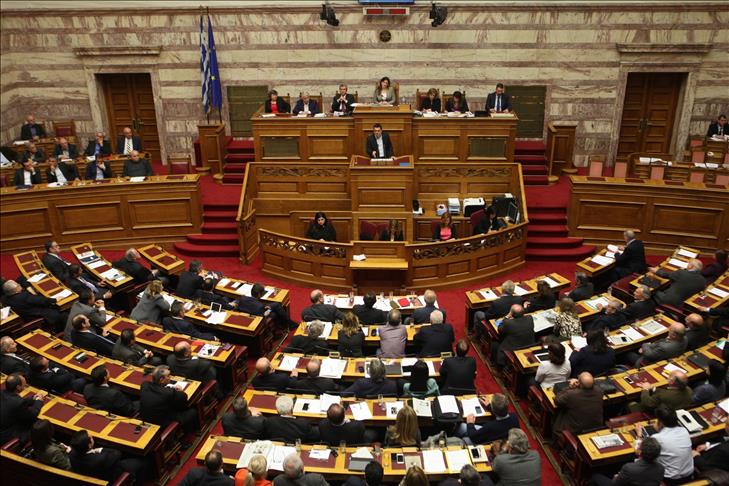
The fall of Greece’s SYRIZA coalition government could delay implementation of a multi-billion-euro bailout deal with international creditors in the short term, but it is also expected to provide a more stable political environment for economic reform in the long term, analysts said Friday.
"A stable government is needed to pass the bailout measures, and there is a good chance that one will emerge after the elections," said Christian Dembik, an economist with Saxo Banque, adding: "There is broad, popular support for the Greek government's handling of the bailout."
Greek Prime Minister Alexis Tsipras resigned late Thursday and called early elections.
Credit agency Moody's on Friday issued a warning on increased credit risk to Greece as a result of the move. "Future bailout payments could be delayed," Moody's said.
Greece's creditors, however, took a more optimistic view. "I recall the broad support in the Greek parliament for the new program and reform package and I hope the elections will lead to even more support in the new government," Eurogroup head Jeroen Dijsselbloem told reporters on Thursday.
For now, the two main opposition parties -- the conservative New Democracy and the ultra-right Golden Dawn -- each have three days to form a government. New Democracy leader Evangelos Meimarakis said he will make a full-scale effort to form a coalition, but he is not expected to succeed.
Tsipras himself remains the most popular politician in Greece, with support at the polls registering at 61 percent.
Analysts expect Tsipras will try to form a new government with elements from the opposition parties to replace the rebel left wing of SYRIZA, which will not accept the bailout. Tsipras has previously relied on opposition support to pass bailout legislation.
"The split in the ruling coalition became more and more evident, but Tsipras needs a stable government to pass the bailout legislation. This will mean remaining in power for the full term of four years. The move to go to elections allows Tsipras to clarify things, and to separate his government from the dissidents," commented George Sefertzis, a political analyst, in a note published Friday.
The bailout agreement provides Greece with €86 billion ($95.5 billion) in loans over three years, on the condition that the Athens government enact a series of far-reaching economic reforms.
The EU on Thursday released the first €23 billion ($25 billion) tranche of the bailout. It was after Greece received these funds -- which paid off outstanding obligations -- that Tsipras resigned.