- Development Road Project serves as a bridge connecting Southeast Asia to Europe via Iraq-Türkiye corridor through the Gulf, creating a pivotal nexus that could deepen the community of interests among regional states.
- The author is dean of the Faculty of Political Sciences at the University of Baghdad.
ISTANBUL
West Asia continues to grapple with a chronic deficit of sustainable cooperation and structural stability, particularly in its southwestern arc. This vacuum is consistently filled by recurring crises and friction between local, regional, and international stakeholders. This cycle not only hamstrings national development but reinforces a deep-seated culture of mistrust.
A significant portion of this structural issue stems from the absence of effective regional institutionalization to regulate relationships and overlapping interests. Rather than relying on partnerships grounded in rules and established institutions, the Middle East has often been governed by personal or conjunctural alliances.
Fragility of non-institutionalized alliances
Alliances centered on individual leaders are inherently short-term and tactical. They prioritize immediate personal gains, often carrying risks that far outweigh their benefits. Consequently, these ties fray or dissolve the moment their architects depart from the scene or shift their political stance. Similarly, situational alliances are tethered to specific issues; they tend to disintegrate as soon as the circumstances change or the immediate problem is resolved. This makes them even more ephemeral than personal ones.
In both instances, the framework of engagement remains fragile and unsustainable – destined to collapse at the first sign of a major political or security crisis. In light of this, a more viable path forward emerges: transitioning from volatile, personality-driven pacts to rules-based, institutionalized partnerships.
Rules-based institutional partnerships offer a long-term strategic dimension, yielding greater rewards and fewer risks than their situational counterparts. By maintaining a balance of interests among all parties, these structures remain resilient in the face of leadership changes and political fluctuations. The fundamental question remains: despite deep-seated animosities, complex geopolitical dossiers, and conflicting interests, can Middle Eastern relations truly transition into an institutionalized, rule-based framework?
European precedent: From historical conflict to institutional integration
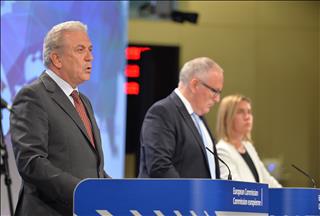
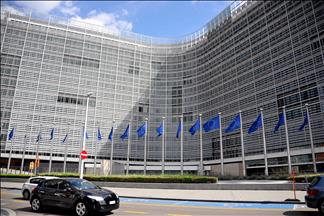
Historical experience suggests the answer is a definitive yes. The trajectory of European integration serves as tangible proof. Before this process began, Europe was defined by bloody wars, profound crises, and recurring conflict. Yet this legacy did not prevent the launch of a deep regional cooperation and integration project – a project built on three core pillars.
First is functional-technical cooperation, beginning with specific sectors of a clear economic and industrial nature, such as coal and steel. Second is the cultivation of trust through accumulated success, generating mutual benefits by securing tangible, incremental results. Third is long-term strategic patience – the recognition that institutional transformation requires time and a gradual alignment of state structures.
This framework emerged in France amid concerns that Germany might once again resurface as an expansionist power. Given the history of war and deep-seated animosity between the two nations, security and sovereignty anxieties were paramount. The proposed solution was a functionalist model of cooperation in coal and steel; this allowed France to monitor German industry while simultaneously fostering shared economic interests.
Following extensive negotiations and consultations, the European Coal and Steel Community was established in 1951. This step acted much like "a drop of ink on a sponge," steadily expanding its influence across Western Europe. As collective achievements mounted, trust deepened, and mutual benefits multiplied, leading to the founding of the European Economic Community (Common Market) in 1957.
In the following years, as trust deepened and suspicions decreased, more substantive steps were taken: the gradual dissolution of borders via the Schengen Agreement in 1985, the formal proclamation of the European Union in 1992, the adoption of the euro by several member states in 1999, and the subsequent development of common foreign and security policies led by France and Germany.
This historic transformation was not merely the byproduct of individual personalities or fleeting political whims. Rather, it resulted from a growing conviction among political elites and decision-makers that alliances must be translated into institutionalized frameworks based on transparent rules. These structures created systems that were insulated from political volatility and possessed a much higher degree of sustainability.
First step for Mideast integration: Development Road Project
While the European Union experience cannot be replicated verbatim in our region – given the differences in regional environments and historical contexts – its institutional logic can serve as a powerful blueprint. This logic is finding new expression through the Development Road Project, initiated by Iraq in cooperation with Türkiye.
This project shares several structural parallels with the European Coal and Steel Community. First and foremost, it is not an ideological or purely political venture; rather, it is a functional-technical initiative centered on transportation, logistics, energy, and communications. Furthermore, it is designed with an open architecture, allowing for gradual expansion as other nations could join over time. Crucially, it aims for a genuine sharing of mutual interests and a balanced distribution of benefits.
The Development Road Project is positioned to become the core of an integrated regional framework across three critical sectors:
- Transportation: (Ports, highways, and rail networks)
- Energy: (Oil, natural gas, and transit pipelines)
- Communication and technology: (Digital infrastructure and data corridors)
Strategically, the project serves as a bridge connecting Southeast Asia to Europe via the Iraq-Türkiye corridor through the Gulf, creating a pivotal nexus that could deepen the community of interests among regional states. By integrating maritime hubs with road and rail networks, it functions as both a vital energy artery for oil and gas and a high-tech corridor for digital transformation. In this capacity, the region has the potential to become a secure and significant energy alternative for Europe, while simultaneously evolving into a strategic frontline for technological advancement.
‘Route diplomacy’ and the need for institutionalization
If the Development Road Project remains merely a physical infrastructure investment, it will fall short of its full strategic potential. To succeed, the project must evolve into a formal institutional framework – such as a regional organization or a structured cooperation mechanism – capable of coordinating state interests, regulating legal and economic relations, managing shared risks, and transforming gains into a sustainable model of cooperation. Furthermore, the reduction of mutual suspicion and security anxieties through open governance and dispute-resolution mechanisms is an indispensable part of this evolution.
In other words, the project must become the institutional foundation for regional integration across transportation, energy, trade, and communications. Only then can a structure emerge where mutual trust is built and long-term stability is established. Over time, this process can pave the way for comprehensive development and a genuine transformation in the region, the bedrock of which will be the structural interdependence of national interests.
The deciding factor at this stage is the conviction of decision-makers – primarily in Iraq and Türkiye – regarding the project's positive returns, both at the national and broader regional scales. However, the project also demands an active, multi-layered diplomatic effort that can be termed "Route Diplomacy."
Under the leadership of Baghdad and Ankara, this diplomacy must involve promoting the project regionally and internationally while addressing the concerns of hesitant actors. Furthermore, the gradual inclusion of Gulf states, Iran, Syria, Jordan, and other stakeholders through incremental cooperation models could transform the project into a vital instrument for regional integration.
Ultimately, the initiative has the potential to transcend its economic and logistical origins to become a cornerstone of regional security and stability. This would allow Middle Eastern relations to be reshaped – moving away from fleeting alliances and competitive leadership struggles toward a foundation of shared interests and institutional rules. This vision requires a common understanding and a robust platform for dialogue. With historical precedents like the Baghdad Pact and the Saadabad Pact already in the region's DNA, there is no reason history cannot repeat itself in a more constructive form. The necessary foundation is already in place.
*Opinions expressed in this article are the author's own and do not necessarily reflect the editorial policy of Anadolu.