Aryamehr Fattahi
06 February 2026•Update: 06 February 2026
- The January 2026 precious metal crash will almost certainly prove to be a correction within a longer-term bull market rather than a paradigm shift for electronics costs
The author is the Head of Development at the Bloomsbury Intelligence and Security Institute (BISI).
ISTANBUL
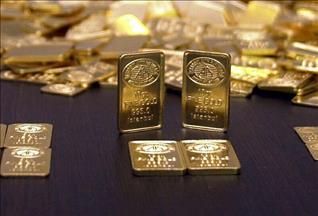
The dramatic collapse in precious metal prices on Jan. 30, 2026, sent shockwaves through commodity markets. Gold futures dropped 11.4%, their steepest single-day decline in four decades, while silver plummeted 31%, marking its worst session since March 1980. The trigger was President Donald Trump's nomination of hawkish former Federal Reserve governor Kevin Warsh as Fed Chair; this move shifted expectations regarding central bank independence, sending the dollar surging and precious metals tumbling. For an electronics industry already grappling with the most severe memory shortage in a generation, this volatility carries significant implications.
Supply chain vulnerabilities and the RAM shortage
The timing of this precious metal correction exposes a painful irony for electronics manufacturers. Throughout 2025, surging gold and silver prices added pressure to production costs precisely when the global RAM shortage was already squeezing margins.
The structural root of the current shortage lies not in precious metal markets but in a permanent reallocation of semiconductor capacity toward Artificial Intelligence (AI) infrastructure. SK Hynix has declared its entire 2026 high-bandwidth memory production sold out, while Micron has deprioritized the consumer market to focus on AI customers. With Samsung, SK Hynix, and Micron controlling around 95% of DRAM supply, any additional cost pressure from volatile commodity inputs amplifies existing fragility.
Gold remains essential for wire bonding in semiconductor packaging. Silver is used in conductive pastes and capacitors, where it can account for as much as 60% of production costs for passive components. The fundamental vulnerability facing manufacturers is extreme geographic concentration in precious metal refining: China controls an estimated 60% to 70% of global refined silver supply, while Switzerland accounts for a vast majority of global gold refining. China's new export controls, effective Jan. 1, 2026, compound this concentration risk.
The licensing framework restricts silver exports to 44 state-approved firms with minimum production thresholds. Estimates suggest that these restrictions could reduce global silver availability by up to 50% if enforcement proves stringent. For manufacturers already absorbing memory price increases, this represents a structural threat that no price correction can resolve.
Industry evolution and consumer impact
The electronics sector has spent a decade reducing precious metal dependence. Gold's share of the wire bonding market dropped from 77% in 2011 to 44% by 2024, with copper wires capturing the remainder. This transition accelerated after gold prices spiked in the early 2010s, demonstrating industry adaptability. Yet complete substitution remains technically impossible. Gold's corrosion resistance and silver's conductivity have no adequate replacements for high-reliability applications in automotive and defense electronics.
Additionally, consumer pricing is almost certain to reflect the broader supply crisis rather than any precious metal discount. The asymmetric pricing phenomenon—where input cost increases flow through faster than decreases—is well documented in electronics supply chains. Component manufacturers spent 2025 absorbing margin compression as silver prices surged 145%. They will almost certainly use this correction to rebuild profitability rather than pass savings to customers, especially given the demand for AI hardware which requires more resources than standard devices like laptops, phones, or even vehicles.
E-waste recycling presents a realistic possibility for long-term supply diversification. Printed circuit boards contain 40 to 800 times more gold per tonne than mined ore. New facilities in the United Kingdom and Australia are scaling rapidly, while graphene alternatives show promise for the decade ahead. While meaningful industry impact remains three to five years away, regional responses are accelerating. The United States designated silver as a critical mineral in November 2025. The European Union also announced strategic stockpiling plans, with a Critical Raw Materials Centre planned for 2026.
Outlook
The January 2026 precious metal crash will almost certainly prove to be a correction within a longer-term bull market rather than a paradigm shift for electronics costs. Manufacturers should welcome temporary input cost relief while recognizing that the RAM shortage, not commodity prices, represents the binding constraint on production. China's silver export controls and structural supply deficits make sustained price weakness highly unlikely. The industry's transition toward copper wire bonding demonstrates effective adaptation to metal volatility—a model that will intensify as supply chain resilience becomes the defining strategic imperative of the coming decade.
*Opinions expressed in this article are the author's own and do not necessarily reflect the editorial policy of Anadolu.