- Renewing the arms embargo on Libya may serve to increase pressure on rival factions and their foreign supporters, but by itself, it cannot resolve the core challenges the country faces, namely the ongoing fragility and deep divisions within its state institutions.
The author is a Senior Researcher at TRT World Research Centre, specializing in North African geopolitics and security, with a focus on Libya.
ISTANBUL
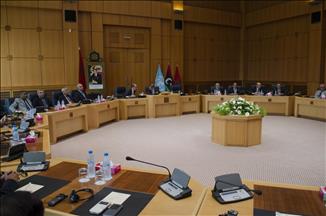
The United Nations Security Council (UNSC) [1] has recently voted [2] to extend its authorization to inspect vessels suspected of violating the international arms embargo off the coast of Libya for six months. This renewal highlights the international community’s ongoing concern about the North African country’s fragile security environment and a lack of progress toward peace and stability.
The renewal of the ship inspection mandate may reflect a continued, at least formal, commitment by the international community to stem the flow of illicit weapons that fuel Libya’s conflicts. In theory, strengthening maritime monitoring should reinforce the credibility of the arms embargo, constrain external actors from supplying rival factions, and support Libya’s progress toward sustainable stability. Yet in practice, the embargo has been widely ineffective: for years, various external actors have funneled weapons, equipment, and even foreign fighters into Libya by sea, land, and air with little consequence. Against this backdrop, the extension carries an ambiguous weight—symbolically important, but operationally limited.
Symbolism without enforcement
Politically, the move helps maintain pressure on armed actors and their foreign sponsors, demonstrating that Libya’s stability remains on the global agenda. Yet, without a robust international enforcement mechanism and genuine unity within the Security Council, these periodic renewals risk becoming mere technicalities that achieve little on the ground. The divided nature of both Libyan politics and the international response means there is no single "enforcer" willing or able to hold embargo violators accountable, undermining efforts to bring about sustainable security sector reform and rebuilding state institutions, especially security institutions.
The practical impact of the extension ultimately depends on how it is enforced. Although the EU-led Operation IRINI has carried out maritime inspections, its effectiveness has been limited and its approach has often been criticized as uneven, scrutinizing some actors while overlooking others who also violate the embargo. As a result, interceptions at sea have had only a marginal effect on curbing illicit arms flows. Moreover, maritime monitoring covers just one dimension of the problem. Libya’s land borders, especially the extensive frontier with Egypt, as well as aerial supply routes, continue to provide opportunities for smuggling. This reality underlines that the arms embargo remains highly permeable and far from being comprehensively enforced.
Militias, power balances and stalled compromise
On the ground, these enforcement gaps help maintain the existing balance of power among Libya’s opposing factions. Well-armed militias, still able to access weapons through multiple channels and shielded by the uneven application of sanctions, have little incentive to disarm or integrate into a national structure. As a result, the embargo has struggled to push armed groups toward genuine political compromise. What Libya urgently needs is a credible, unified security institution capable of asserting authority, accelerating the disarmament process, and bringing militias under a single professional military umbrella. Without such a force, international restrictions will continue to be easily bypassed and the broader political transition will remain fragile.
The extension also highlights the limits of the international system in managing crises. Multilateral mechanisms continue to function, but only barely, sustained by fragile consensus and hindered by insufficient resources, weak coordination, and a lack of real political unity. The message to Libya’s political and armed actors is therefore mixed: the world is paying attention, but its patience and its ability to act decisively are limited.
Yet real progress will require more than just surveillance. Stronger enforcement of the embargo, along with disarmament efforts and bringing Libya’s security forces together, could help create the basic security conditions needed for credible elections and meaningful political dialogue. If these gaps continue, however, militias will be encouraged, public trust will weaken, and genuine reconciliation will become even harder to achieve.
The UNSC’s extension of the ship inspection mandate off Libya’s coast is a necessary step—an expression of international concern and intent. However, its ultimate value lies in action rather than authorization. To break the cycle of deadlock and insecurity, the international community must go beyond renewing mandates and address the root causes of Libya’s turmoil: fragmented authority, foreign meddling, and the empowerment of militias over institutions.
A strategic misstep
Renewing the arms embargo on Libya may serve to increase pressure on rival factions and their foreign supporters, but by itself, it cannot resolve the core challenges the country faces, namely the ongoing fragility and deep divisions within its state institutions. The early international focus on holding elections, without first establishing the solid foundations necessary for effective governance, was a fundamental misstep.
Going forward, Libya’s prospects for lasting peace and security depend on a comprehensive process of reconciliation and robust institution-building. Unless Libya moves decisively toward unity, institution-building, and the rule of law, with sustained, coordinated support from the international community, the ongoing six-month renewals of the arms embargo, though significant, will remain merely temporary measures rather than practical solutions.
The path to peace in Libya is clear but fraught with difficulties; it will demand much greater courage, consensus, and commitment than have been demonstrated thus far. In the absence of an inclusive approach that addresses the underlying political, economic, and social issues, the cycle of conflict and deadlock is likely to persist, undermining hopes for a stable and unified Libyan state.
[1] https://press.un.org/en/2025/sc16233.doc.htm
[2] https://www.aa.com.tr/en/americas/un-security-council-renews-authorization-for-high-seas-inspections-to-enforce-libya-arms-embargo/3754081
*Opinions expressed in this article are the author's own and do not necessarily reflect Anadolu's editorial policy.