Iraq’s judiciary urges respect for constitutional timelines, rejects ‘foreign interference’
Supreme Judicial Council stresses timely appointment of president and prime minister after parliament delays vote
ISTANBUL
Iraq’s Supreme Judicial Council on Thursday stressed the need to adhere strictly to constitutional deadlines for appointing the country’s president and prime minister, warning that any delays or foreign interference could undermine political stability and the democratic process.
In a statement issued after its first session in 2026, chaired by Judge Faiq Zaidan, president of the Federal Supreme Court, the council emphasized the importance of completing the procedures for selecting the heads of the executive branch within the timeframes set out in the constitution.
The council called on all political parties and blocs to respect the constitutional calendar, saying that failure to do so would negatively affect political stability and the orderly functioning of Iraq’s democratic institutions. It also underscored the necessity of preventing any external interference in the country’s internal affairs.
The statement came days after the Iraqi parliament postponed a session scheduled to elect a new president, following a request by the Kurdistan Democratic Party and the Patriotic Union of Kurdistan, who sought additional time to reach consensus on a candidate. The session was delayed to an unspecified date.
Under Iraq’s constitutional process, once a president is elected, he is required to nominate the candidate of the largest parliamentary bloc to form a government within 15 days.
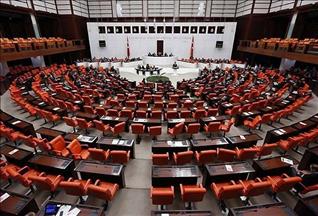
Iraq’s power-sharing system allocates the presidency to a Kurd, the premiership to a Shiite and the speakership of parliament to a Sunni. Parliament elected Sunni lawmaker Mohammed al-Halbousi as speaker on Dec. 29.
According to constitutional timelines, parliament must elect a president within one month of its first session, a deadline that expires at the end of January.
On Saturday, the Coordination Framework, a coalition of Shiite parties, announced the nomination of former Prime Minister Nouri al-Maliki for the post of prime minister, saying the decision was approved by a majority vote within the alliance.
Iraq held parliamentary elections on Nov. 11, 2025, with voter turnout reaching 56.11%. The newly elected lawmakers are tasked with choosing the president and approving the next government.
Tensions over the government formation have drawn international attention. On Tuesday, US President Donald Trump urged Iraq to refrain from appointing Maliki as prime minister, a call Maliki rejected as “blatant interference” in Iraq’s internal affairs.
Separately, the Supreme Judicial Council said it reviewed procedures related to investigations and trials of individuals transferred from detention centers in Syria to Iraqi prisons over alleged links to the ISIS (Daesh) terrorist group.
Earlier this month, the US military’s Central Command (CENTCOM) announced that several ISIS-linked detainees had been transferred from detention facilities in northeastern Syria to Iraqi custody, saying the move was part of ongoing efforts to prevent the group’s resurgence and support regional security.