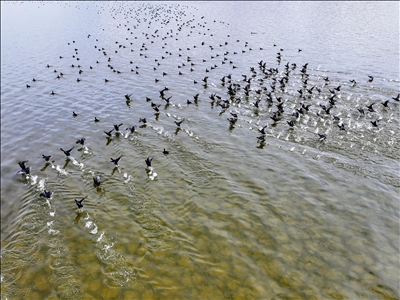
Reviving lake in central Türkiye sees birds return amid drying wetlands


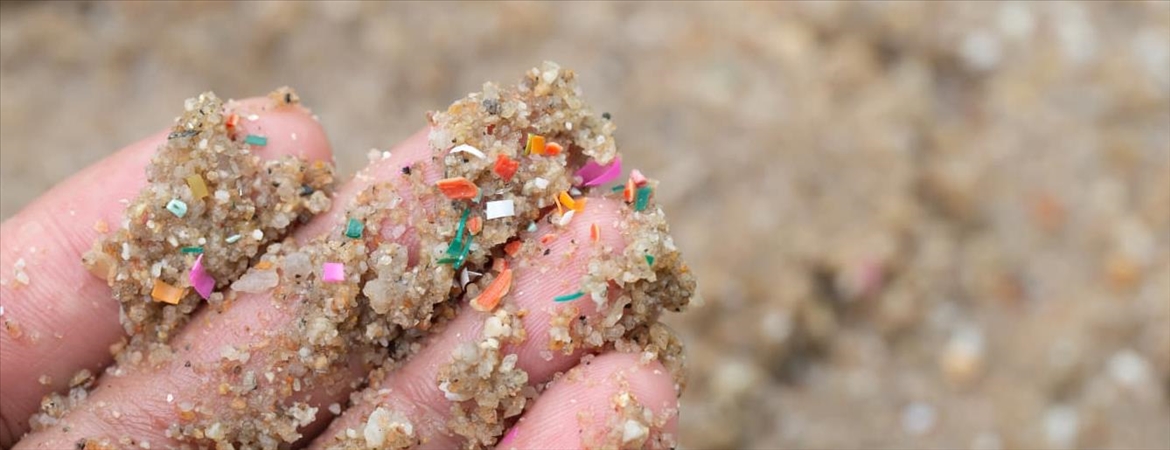
Microplastics, which are insoluble particles smaller than 5 millimeters, originate from the fragmentation of larger plastics or be manufactured synthetically for use in textile, cleaning agents and various industrial products. Their small size allows them to bypass filtration processes, and they can easily be dispersed through wind and currents to seas, lakes and coastal ecosystems. This situation poses an increasing environmental risk to marine ecosystems, including protected areas.
Scientists from the Mediterranean Conservation Society and Akdeniz University examined the seasonal distribution of microplastics and potential pollution sources through water samples taken from 17 stations within the Datca–Bozburun Special Environmental Protection Area.
According to the study, a total of 3,105 microplastic particles per cubic meter of seawater were recorded across all stations last year. The analysis of samples revealed the presence of 97 microplastics in Bordubet, 110 in Alayar, 127 in Emecik, 80 in Karakoy, 130 in Cumali, 267 in Knidos, 287 in Yazi and 217 in Palamutbuku.
Additional findings documented that 110 microplastics were found in Kizilbuk, 173 in Datca Center, 197 in Karaincir, 140 in Aktur, 150 in Lindos, 127 in Inbuku, 163 in Selimiye, 177 in Tavsanbuku Island and 553 in Bozburun.
Fibers were the most common type of microplastic detected in the water, at 93.7 percent, followed by film-type microplastics from plastic bags and sacks at 3.2 percent and hard plastic fragments at 2 percent. The predominant microplastic color was observed to be black, at 72.2 percent.
Seasonal data showed that total concentrations per cubic meter were measured 440 in winter, 623 in autumn, 1,207 in summer and 833 in spring.
“We found microplastics at all 17 stations”
Olgac Guven, associate professor at Akdeniz University Faculty of Fisheries told Anadolu that the team examined the presence of microplastic levels and types in the Datca–Bozburun Special Environmental Protection Area, and also took samples from nearby coastal areas and beaches.
Guven emphasized that microplastics were found at all 17 stations: “The lowest level we detected was 16 particles, but even 16 particles indicate microplastic pollution in that area. Considering that this is a protected zone with no heavy industrial presence, this is an environmental issue that requires close attention.”
Güven noted that pollution levels in areas such as Datca–Bozburun are relatively lower than in regions with heavy discharge or watershed load, such as the gulfs of Antalya and Mersin.
He said the highest levels were measured in Bozburun and Knidos, and the lowest in Karakoy, adding that the northern coastal stretch of the peninsula remains cleaner than the southern curve.
Highest microplastic concentrations detected near marinas in summer
Guven explained that despite being far from local settlement areas, Knidos showed high pollution levels likely due to a vortex current near Rhodes, which can accumulate and deposit offshore pollutants onto the coastline.
He added that microplastic concentrations were generally higher in spring and summer than in the other seasons: “The summer season is the most polluted period in areas near local settlements, but in winter we still observed concentrations reaching 56 particles. For example, we detected 56 microplastics in Selimiye during winter. This indicates that the pollution is not solely coastal; oceanic circulation also plays a role. It also shows that levels vary depending on active factors during sampling. While marina areas show high values in summer, winter pollution increases in locations where local residents live.”
Guven stated that most microplastics detected in the Datca–Bozburun area were textile fibers, which can have various negative impacts on marine life.
He highlighted that despite regulatory restrictions within the protected area, waste generated by agricultural activities and tourism-based consumption contributes to pollution.
“The agricultural lands behind the beaches sit right at the shoreline, and agricultural activities there lead to pollution on the beaches. Among the pollutants we identified during our assessments, irrigation hoses were very common, along with seedling fasteners and plastic cultivation containers. We also found fertilizer sacks and pesticide bottles used in the area. This shows that activities carried out by local residents, outside the protected area’s regulatory mandates, also need to be regulated, as daily practices negatively affect the region,” Guven said.
Solutions must focus on the source
Guven stressed that microplastic pollution is a borderless problem and can only be addressed through global cooperation.
He emphasized the need for public awareness and recommended individuals to reduce single-use plastics, install microplastic filters on washing machines, and minimize overall consumption.
For industrial and agricultural sectors, Guven highlighted the need for preventative measures at facilities, developing alternatives to plastic-based agricultural products, and improving waste management.
Guven stated that once microplastics enter aquatic environments, dealing with them becomes extremely difficult and expensive.
“There is a significant difference in time, effort and cost between properly transferring collected waste to disposal sites and gathering scattered debris piece by piece from a field or roadside. Therefore, one of the most important steps is to adopt approaches that address the problem at its source,” Guven explained.
Guven added that the study is the first phase of a five-year project aimed to capture and monitor three-year pollution trends.