By Ovunc Kutlu
ANKARA
Turkey's inclusion in an EU-U.S. free trade agreement would give the country easier access to energy infrastructure equipment, but it will take some years before it can be included in the agreement, experts say.
The Transatlantic Trade and Investment Partnership is a proposed free trade agreement intended to increase cooperation between, and spur economic growth in, the U.S. and the EU. At the moment, energy is not included in the talks.
But there may be hope.
The visit to Turkey last week by a senior U.S. State Department official, Undersecretary Catherine Novelli, signaled Turkey's possible inclusion in the agreement after it is finalized.
Turkey's inclusion would strengthen its energy infrastructure for renewables and exploration activities, a Turkish economy expert said.
The country would have access to bigger markets, too, said Erdal Tanas Karagol, economy director at the Ankara-based SETA Foundation for Political, Economic and Social Research.
Turkey is dependent on Europe for the import of electrical units and wind turbines for renewables, Karagol said.
Turkey is a non-EU country that has had a customs union agreement with Europe since 1995. But it wants to be included in the trade agreement to counter the results of unfair competition.
Being included could help Turkey for expedite its oil and gas explorations as well.
Major U.S. energy companies – ExxonMobil, Chevron, ConoccoPhillips – may come to Turkey to explore natural gas, oil, and shale gas, Karagol said.
"They have the power to invest and to meet the costs of the explorations," Karagol said.
Although energy is not yet included in the talks, the trade agreement may decrease the EU's dependence on Russian energy as tensions grow over Ukraine. And the U.S. may export its shale gas to sustain Europe's economy and use it as a strategic tool against Russia.
"Turkey's biggest part in the agreement would be its contribution to energy security of Europe, by delivering the energy sources from Azerbaijan, Turkmenistan, Iran, eastern Mediterranean and northern Iraq," said Karagol.
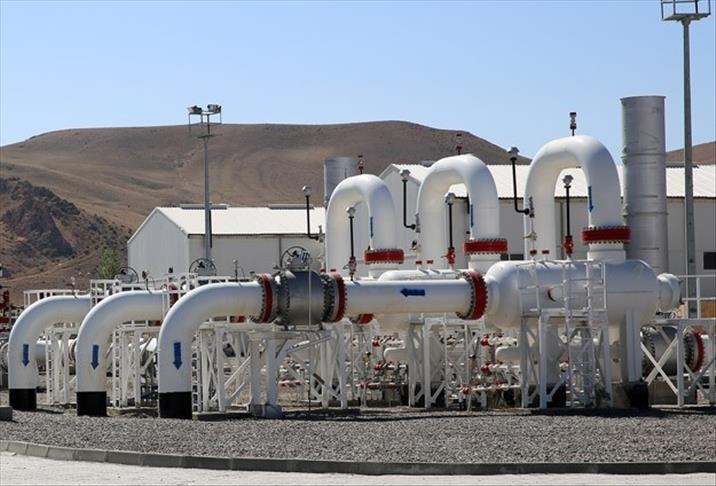
Turkey receives 6.6 billion cubic meters of natural gas from Azerbaijan, 10 billion cubic meters from Iran, and 20 billion cubic meters from Russia per year via gas pipelines.
Turkey is also projected to complete the Trans-Anatolian gas pipeline in 2018, which will run from Azerbaijan to Turkey and is expected to have a capacity of 16 billion cubic meters per year. Its capacity will increase to 23 billion cubic meters by 2023, and to 31 billion cubic meters by 2026.
The Trans-Anatolian pipeline is planned to be connected to Trans-Adriatic pipeline, which will run through Greece to the Adriatic Sea via Albania before reaching Italy.
If the Trans-Caspian Gas Pipeline project between Turkmenistan and Azerbaijan is built, it would transport 30 billion cubic meters of natural gas per year from Turkmenistan and Kazakhstan to Europe via Turkey, circumventing both Russia and Iran.
The EU is eager for the completion of the pipeline projects so it can diversify its sources of energy and reduce its dependence on Russia, Karagol said.
Officials hope the trade negotiations will be concluded by 2015. But that estimate may be optimistic, and Turkey's inclusion in the deal may not happen for a while.
"There are a lot of topics to be discussed and agreed between the U.S. and Europe" in the trade talks, said Mehmet Yegin, of the Ankara-based International Strategic Research Organization.
www.aa.com.tr/en