By Huseyin Erdogan
ANKARA
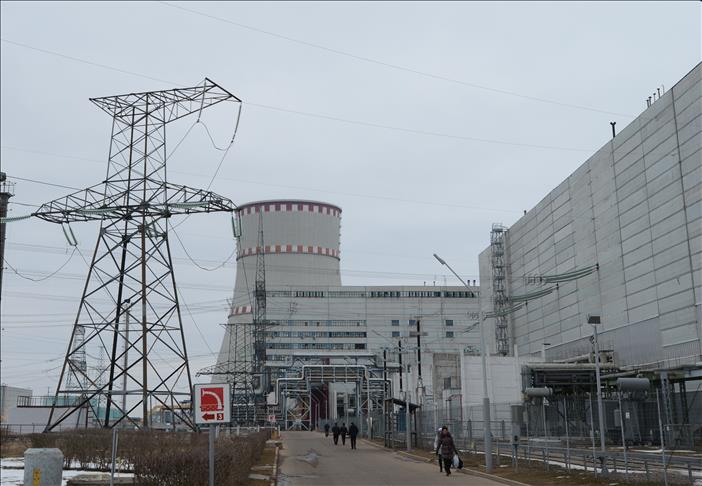
China’s move to establish its first overseas nuclear power plant is proof of its role as a major world energy player, industry observers are claiming.
China and Argentina signed an agreement last week to construct what will be the fourth nuclear power plant in Argentina but a first for China as the People’s Republic attempts to move away from coal-based electricity generation.
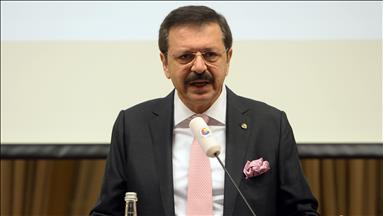
“This will be the first time China constructs a nuclear power plant of its own design in a foreign country," says Ahmet Goncu, an associate professor at China's Xi’an Jiaotong-Liverpool University.
“This is particularly important to China since it has huge market potential in exporting nuclear technology to other countries, additional to its domestic market,” Goncu says.
After the 2011 earthquake and tsunami which struck Japan, causing an emergency at its Fukushima nuclear power facility, China reconsidered the safety of its own nuclear power plants; however, the construction of new nuclear reactors was not halted says Goncu.
China has 21 active nuclear power plants and 28 new facilities under construction.
“China is trying to reduce the use of coal for electricity production and use natural gas and nuclear energy as clean energy sources,” says Goncu.
“Therefore, in line with the domestic expansion of nuclear plants, China is becoming one of the important exporters of civilian nuclear technology.”
China’s first overseas nuclear power plant, named ‘Atucha III’, will have 800 megawatts of installed capacity. It will be located 110 kilometers (71 miles) northwest of the Argentine capital, Buenos Aires.
Chinese energy companies have already been quite active in Latin America and in Argentina as the country’s economy struggles for growth since the financial crisis of 2001-2002.
With this deal Argentina will improve its energy capacity and obtain more Chinese investment to stimulate economic growth.
Argentina already has two operational nuclear power plants with a total of 1,000 megawatts of capacity and a third is under construction; China will install the fourth facility. Nuclear energy constitutes 4 percent of Argentina's power capacity.
China will have a chance to export more goods and services to Argentina and will be able to achieve easier access to the natural resources of Argentina, Goncu adds.
Countries with suitable natural resources are on the top of China’s list of nations to improve relations with as Beijing wants to have more access to this natural resources in these markets. Therefore, China is improving its economic and political relations with Latin America.
These countries are providing China with the important natural resources that are needed for the country's economic growth to continue smoothly. Through mutual trade, China's economic influence in these regions is improving, Goncu adds.
Richard Carlson, an energy analyst at University of Toronto’s Mowat Center, says that the deal represents a big investment and that Latin America is a new area of the world where China is trying to gain more economic links.
“The deal in Argentina is a natural one for China. Also, the plant will use Canadian-made CANDU reactors, which are also in China, thereby giving China experience with the technology,” Carlson says.
Carlson adds that there are only a few companies who work internationally on nuclear power and China sees its expansion as an opportunity to leverage experience in building new nuclear plants, and probably to develop its own technology.
www.aa.com.tr/en