By Ovunc Kutlu
ANKARA
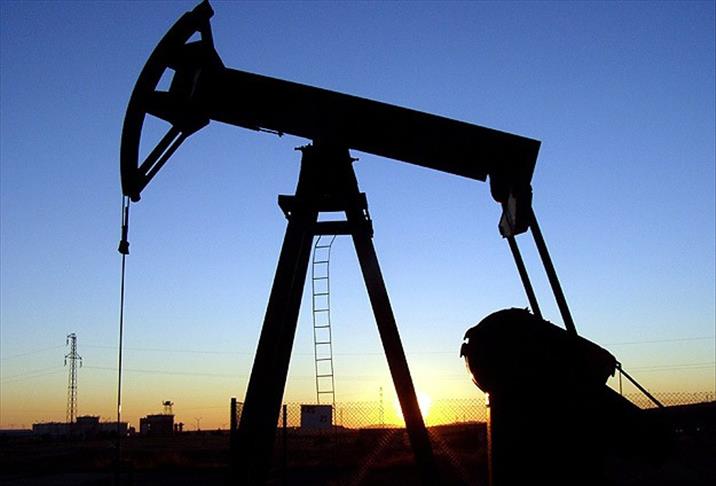
Lifting a four-decade ban on U.S. crude oil exports would boost the U.S. economy and its foreign relations, according to a report by a Washington-based think-tank and a global economics firm.
The Brookings Institute and National Economic Research Associates said in the joint report released on Tuesday that the removal of the ban, which was brought in by Congress in the 1970s to conserve domestic crude oil reserves and discourage foreign imports, would aid the US in several ways.
"Permitting the export of crude oil will enhance U.S. global power, reinforcing the credibility of U.S. free- and open-market advocacy," said the report.
While the U.S. has been promoting a liberal market economy and free trade for decades, critics have queried why it has not integrated its energy reserves into international markets following its 2008 shale boom.
Andrew Holland, an energy expert at American Security Project, a non-partisan organization in Washington, said: "The best reason to lift the restrictions is that the US is a global power with a national interest in free and open markets. He added: "We can’t argue for open markets around the world if our markets aren’t open at home."
The U.S. banned export of crude oil in the 1970s, after an Arab oil embargo showed the vulnerability of the U.S. economy which was highly dependent on oil imports, mostly from the Middle East.
The removal of the restrictions would increase flexibility to export crude to others to address supply disruptions from less reliable suppliers, says the report.
Holland said: "The U.S. oil production can help a little on the margins for our allies since oil is a global commodity, but it is an important signal to our allies that we are willing to help and open our markets to them."
U.S. crude oil production has grown rapidly in recent years, primarily from light, sweet crude, reaching 7.9 million barrels per day in December 2013, while the 15 percent increase in production from 2012 to 2013 was the largest annual percentage increase since 1940, according to the Energy Information Administration.
The report said: "If the Organization of Petroleum Exporting Countries competes for market share with the lifting of the ban on U.S. crude oil exports and maintains crude export levels, it will have a negligible effect on U.S. crude oil exports."
The organization is an international economic cartel who coordinates the policies of its oil-producing member countries to secure a steady oil revenue income to the member states.
The report said that if the organization decides to maintain the price of oil and cut crude exports, the U.S. will be able to increase exports by 2.8 million barrels a day in 2015.
Holland added: "The U.S. has been especially important over the last 3 years because its production has gone up, while the production from Iraq and Iran has gone down. This has stabilized the price at a level. Without the U.S. production we would have seen the prices spike up to 120-130 dollars per barrel."
The economic and social benefits are greatest if the U.S. lifts the ban in 2015 for all types of crude oil exports, says the report, adding that delaying the ban would lower the benefits by 60 percent relative to a complete removal of the ban immediately in 2015, while the reason behind is the greatest increase in light oil production comes in 2015.
The report said: "Lifting the ban entirely in 2015 will result in a 0.14 percent change in welfare, decrease unemployment at an average annual reduction of 200,000 from 2015 to 2020, and will increase Gross Domestic Production by 0.40 percent for the year 2015."
Lifting the ban would also benefit the U.S. public, a major concern for politicians in Washington, as gasoline prices are estimated to be set to decrease by $0.09 per gallon in 2015 when the total amount of crude supply would increase, according to the report.
www.aa.com.tr/en