- Other major routes include Bab al-Mandeb Strait, Suez Canal, Danish Straits, Turkish Straits and Panama Canal
LONDON
Nearly 70% of global oil demand, exceeding 100 million barrels per day, is transported through strategic maritime chokepoints such as the Strait of Malacca and the Strait of Hormuz, as well as around South Africa’s Cape of Good Hope, an alternative shipping route.
Following joint US and Israeli strikes on Iran, commercial traffic in the Strait of Hormuz has declined sharply after Iran began targeting vessels transiting the waterway.
These routes are known as maritime chokepoints, narrow passages along global sea lanes that play a critical role in international trade. Large volumes of crude oil, petroleum products, liquefied natural gas (LNG) and other commodities pass through these corridors.
Disruptions at these chokepoints can lead to supply delays, higher freight costs and rising global prices. While some disruptions can be mitigated through alternative routes, chokepoints such as the Strait of Hormuz have limited substitutes, highlighting the global energy market’s heavy dependence on them.
According to data compiled by Anadolu from the International Energy Agency (IEA) and the US Energy Information Administration (EIA), global oil demand averaged about 104 million barrels per day in the first half of 2025.
Of this total, roughly 80 million barrels per day was traded by sea.
Around 70% of global oil demand and more than 90% of seaborne oil trade pass through seven major maritime chokepoints worldwide, along with the Cape of Good Hope, which serves as an alternative route for tanker traffic.
Strait of Malacca: world’s largest oil transit chokepoint
The Strait of Malacca, linking the Indian Ocean with the Pacific Ocean, forms the shortest sea route between Middle Eastern oil suppliers and Asian markets.
In the first half of 2025, about 23.2 million barrels of oil per day passed through the strait.
This accounted for roughly 22% of global oil demand and 29% of seaborne oil trade, making Malacca the largest oil transit chokepoint in the world.
More than 70% of the oil transported through the strait is crude, while the remainder consists of refined petroleum products.
Much of the oil shipped through Malacca moves from the Middle East to East Asia, with China accounting for about 48% of imports transiting the strait in the first half of 2025.
The US also trades oil through the route, with volumes reaching roughly 1 million barrels per day.
Strait of Hormuz: gateway for Gulf oil
The Strait of Hormuz, connecting the Persian Gulf with the Gulf of Oman and the Arabian Sea, is one of the most strategically important energy chokepoints in the world.
In the first half of last year, oil flows through the strait averaged 20.9 million barrels per day.
This volume represented about 20% of global oil consumption and roughly one quarter of seaborne oil trade.
Around 5.5 million barrels per day of shipments consisted of refined petroleum products, highlighting the Gulf region’s role as a major exporter of fuels such as diesel and jet fuel.
Approximately 80% of the oil passing through Hormuz is shipped to Asian markets, with Japan, South Korea, China and India heavily dependent on supplies transiting the strait.
The US imported about 400,000 barrels per day of crude oil and petroleum products from Persian Gulf countries through the Strait of Hormuz in the first half of last year, accounting for roughly 7% of US crude and condensate imports.
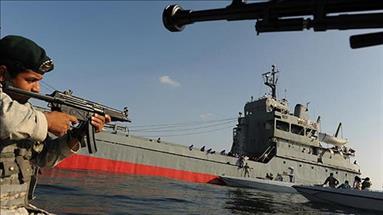
Following US and Israeli military strikes against Iran on Feb. 28 and attacks by the Islamic Revolutionary Guard Corps (IRGC) targeting vessels linked to the US and Israel passing through the strait, shipping traffic has dropped sharply.
According to the UK Maritime Trade Operations (UKMTO), the historical daily average for vessels transiting the Strait of Hormuz is around 138 commercial ships.
However, on March 7, only one commercial vessel passed through the strait and no oil tanker transit was recorded.
The disruption to maritime trade, particularly shipments of oil and LNG, has raised concerns over global energy supply security and contributed to rising prices.
Bab al-Mandeb Strait and the Suez Canal
The Bab al-Mandeb Strait, located between the Arabian Peninsula and Africa, connects the Red Sea with the Gulf of Aden and the Indian Ocean.
With the construction of the Suez Canal in northern Egypt, Bab al-Mandeb became part of a major maritime corridor linking the Mediterranean with Asia, allowing Gulf oil and natural gas shipments to reach European markets.
Attacks by Yemen’s Houthi group on vessels linked to Israel in the Red Sea since late 2023 have significantly disrupted shipping in the region, forcing many vessels to reroute via the Cape of Good Hope.
In the first half of 2025, oil shipments averaged 4.9 million barrels per day through the Suez Canal and 4.2 million barrels per day through the Bab al-Mandeb Strait.
Danish Straits and Turkish Straits
The Danish Straits, linking the Baltic Sea with the North Sea, handled about 4.9 million barrels per day of crude oil and petroleum products in the first half of 2025.
Before the Russia-Ukraine war in 2022 and the subsequent European Union sanctions on Russian oil, the Danish Straits played a major role in Russia’s maritime oil exports to Europe.
Although Russia still accounts for a notable share of flows through the straits, much of the trade has shifted from Western markets toward Asia.
The Turkish Straits, comprising the Bosphorus and the Dardanelles, connect the Black Sea with the Mediterranean and are considered among the most challenging waterways in the world.
About 50,000 vessels transit the Turkish Straits each year.
In the first half of last year, around 3.7 million barrels per day of crude oil and petroleum products passed through the Turkish Straits, accounting for roughly 5% of global seaborne oil trade.
Panama Canal
The Panama Canal, linking the Pacific Ocean with the Caribbean Sea and the Atlantic Ocean, carries about 2.3 million barrels per day of crude oil and petroleum products.
Approximately 2.2 million barrels per day of this volume consists of refined petroleum products.
Because refined fuels and LNG are often transported on smaller vessels capable of navigating the canal’s locks, the Panama Canal remains an important route for these commodities.
Cape of Good Hope: alternative route
Although not a chokepoint, the Cape of Good Hope at the southern tip of South Africa has become an important alternative route for oil tankers and LNG shipments.
Following Houthi attacks on commercial vessels in the Red Sea beginning in late 2023, many ships diverted away from the Suez Canal and Bab al-Mandeb corridor toward the Cape.
As a result, the volume of oil transported around the Cape of Good Hope rose by more than 45% to about 9.1 million barrels per day in the first half of 2025.
However, routing vessels around the Cape significantly increases travel times and shipping costs as ships bypass the Gulf of Aden, the Bab al-Mandeb Strait and the Suez Canal.
*Writing by Mucahithan Avcioglu in Istanbul