By Abdullah Saad
ISTANBUL
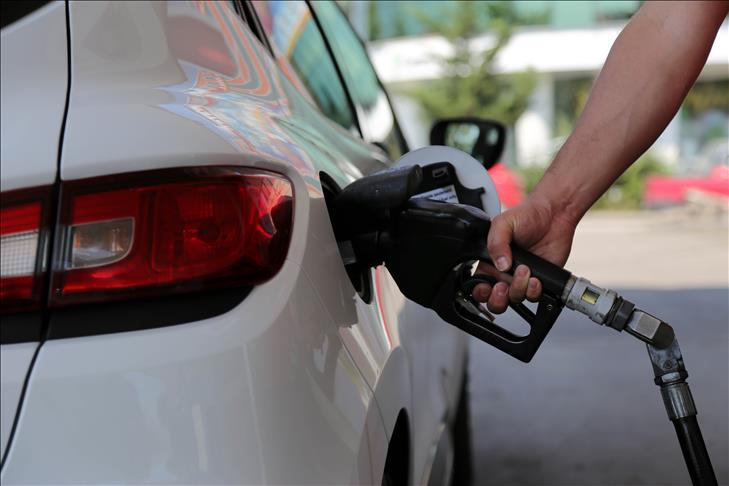
The government of the United Arab Emirates (UAE) has started to phase out state subsidies on a range of goods and it has also lifted fuel subsidies earlier this month.
One day before the price adjustments were implemented on Aug. 1, lines began forming outside the nation’s gas stations – a rare sight in the oil-soaked country.
The move is ultimately aimed at bringing retail gas prices into line with international oil prices.
According to Energy Ministry Undersecretary Matar al-Neyadi, a government-appointed committee has been tasked with monitoring global gasoline and diesel prices.
“Price averages will be announced [by the committee] on the 28th of each month in order to calculate retail fuel prices,” al-Neyadi recently told reporters.
According to the new price scheme, one liter of gasoline will now be sold for 2.14 UAE dirhams (roughly $0.58) instead of a previous 1.72 dirhams – an increase of 24 percent.
Per-liter diesel prices, meanwhile, will go up from 2.05 dirhams a liter to 2.9 dirhams.
Economic impact
In line with the IMF’s recommendations, the UAE sees the removal of fuel subsidies as a first step in a wider plan to eventually do the same with other state-supported commodities.
The move will, however, have a noticeable impact on other aspects of the economy – particularly inflation, which is widely expected to rise as a result.
In 2012, the UAE’s inflation rate stood at around 0.7 percent. This rose to 1.1 percent in 2013, rising further last year to 2.3 percent.
According to IMF forecasts, inflation will reach 3.8 percent in 2015 – a natural increase, given that rising fuel prices will be reflected in higher prices for many goods and services.
In the medium- to long-term, the lifting of fuel subsidies may also lead the UAE to lose some of its competitive advantage in certain fields, as increased fuel prices lead to higher production costs.
What’s more, the UAE will no longer represent a source of low-cost fuel, which had earlier served to attract considerable foreign investment, especially in tourism.
All this comes within the context of recent declines in global oil prices, to which the UAE – like other oil-led Gulf economies – has not been immune, despite attempts in recent decades to diversify its economy.
Receding role?
These combined economic strains could eventually impact some of the UAE’s more interventionist policies abroad, especially the role the country has come to play in supporting the economies of other countries in the region.
This is particularly the case with cash-strapped Egypt, which since a 2013 military coup has only managed to stay afloat with the help of unprecedented financial largesse from its Gulf backers, including the UAE.
The UAE’s role might witness regression in other states of the region as well, such as Syria – where it continues to support the armed opposition against the Damascus regime – and Yemen – where it is taking part in a major Saudi-led air coalition against the Shia Houthi militia.