By Magdalene Mukami
NAIROBI, Kenya
While on a visit to Kenya in October 2014, UN Secretary-General Ban Ki-moon said “entire communities in Kenya and elsewhere in Africa and around the world have decided to end female genital mutilation”.
It is true that many NGOs are leading successful campaigns against this dangerous and painful practice – one which is particularly prevalent in many African countries.
However, despite successes, anti-FGM campaigners are facing a new problem: trying to help someone who does not want to be helped.
The practice is explicitly forbidden by Kenyan law and regarded as a human rights violation. The World Health Organization says FGM has no health benefits for girls and women and can cause dangerous bleeding, leading to infertility or an increased risk of death in childbirth.
It estimates that more than 125 million girls and women alive today have been cut in Africa and the Middle East.
This unnerving issue faced members of Kenya’s security forces last week.
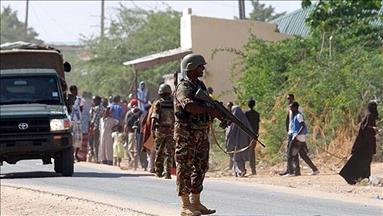
Police arrested four adult, married women who had chosen to undergo the outlawed procedure (having FGM performed voluntarily is a crime in Kenya).
Acting on a tip-off, police in Rift Valley province raided a house in a remote village and arrested the four women.
The four had their legs tied with strings – a customary message to everyone that they had undergone FGM.
They were still recuperating at the time of the arrest and were later charged with encouraging and engaging in the illegal practice.
This is not the first time that married women in Kenya have been reported to be chasing the razor blade.
Anadolu Agency set out on a mission to find out why adult women are retracing their steps home to go through the potentially life-threatening custom.
-‘You cannot run away from culture’
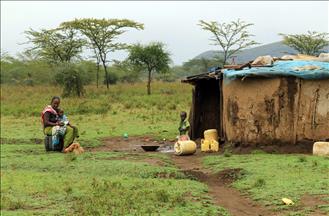
Anadolu Agency traveled to Kajiado, a region in Kenya’s Rift Valley notorious for conducting FGM openly.
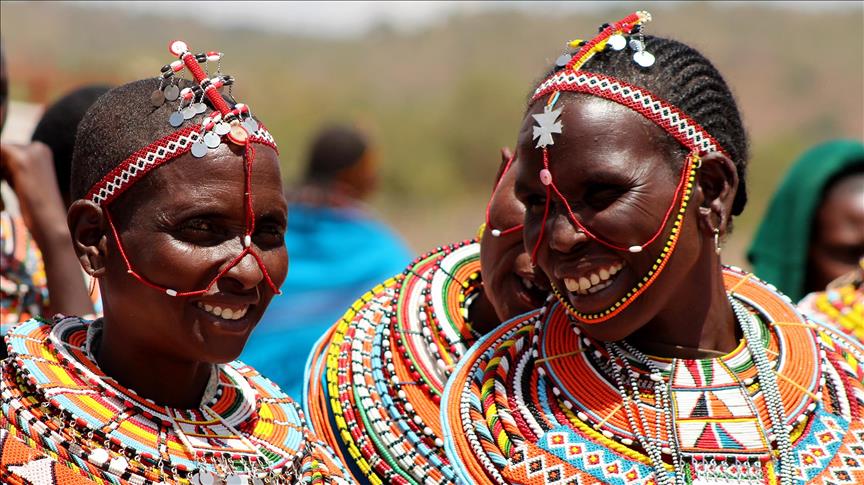
Most residents hail from the Maasai community who have, since time immemorial, practiced female genital mutilation. Many shy away from reporters as it seems that visiting journalists always have one thing they want to write about: FGM.
“Is this about female genital mutilation, then I will not comment,” one Maasai man told Anadolu Agency before hurriedly disappearing into a forming crowd.
However, not all are unwilling to defend the custom: “This is our culture; we must practice it. The state should not interfere with our culture,” says 63-year-old Naserian Nasieku, a female traditional surgeon.
Anadolu Agency was able to ask some married women on why they sought out the procedure.
A 35-year-old teacher, who would only give her first name, Nashiru, said: “I had to go back because of the misfortunes that were facing my family. Everything my husband was doing would not work, it was like we were cursed or something.
“I went back, I was circumcised and here I am now: no curses. My husband got a better-paying job. Coincidence?...I think not,” Nashiru added.
“You cannot run away from culture, it is very common to see women in the Maasai community going back to FGM after being married. I know of about 30 women who have done this so far.”
Nalangu told Anadolu Agency that she went back to FGM because “girls” are not allowed to get married in the Maasai community.
“I was 29 and still not married. Just because I was educated, I failed to get a husband as the Maasai men will not marry girls,” a smiling Nalangu said, adding that an ‘uncircumcised’ woman will always be referred to as a child.
“If a woman has not been circumcised you will always be a girl [even] at age 40… you will still be a young immature girl.
“A 13-year-old can speak and be listened to over your sentiments despite you having lived for more than 40 years.”
She is aware of the risks inherent in FGM, but says local customs and belief override safety concerns:
“Cuts have gone wrong, where children die, but the community believes that it only happens if a family had been previously cursed,” Nalangu says.
Anadolu Agency also spoke to Keziah, a woman who strongly supports the practice and had recently participated in a community meeting on FGM:
“Our complaint is that we want to be allowed to circumcise our girls because if our girls – according to our customs – have not been circumcised, then that’s a curse”.
In June 2015 over 1,000 women from Kajiado’s Enkorika village held a meeting, coupled with fervent prayers, to persuade the government to lift the ban on FGM.
In attendance were government officials and community leaders.
“According to our customs if your daughter is not married, then you are bringing death to your family. You, as the father, will die and the mother will die too. That is why our young men will never marry an uncircumcised woman, only the lost ones do,” Keziah says.
“For the lost ones, they end up divorcing the woman after realizing the mistake they have made.
“I am a midwife; no Maasai woman can care for an uncircumcised woman. If I do then Enkai [God] will, for sure, curse me.”
Keziah claims women who are not circumcised bring diseases to the community:
“They move from one man to another. If they are circumcised they will persevere, they will not cheat even if their husband dies, that is how a true Maasai woman is supposed to behave,” she says.
Attitudes like this – even from educated professionals – ask some serious question of the ostensible success of anti-FGM campaigns.
Anadolu Agency spoke to Kobia Kamau, County Commissioner of Kajiado; he said that FGM had been outlawed in the country and it would remain so unless the law changes.
“I haven’t seen other communities trying to protect the FGM practice. I was there at the meeting last year and I was shocked by the number of people that showed up; they were in the thousands,” Kamau says.
“This is unusual [and] we need to do more consultation with the leaders to determine who is carrying out female genital mutilation and those circumcising our young men.
“That way we can arrest those who are breaking the law against female girl children.”