- Truce ‘was always fragile and failed to address the domestic political incentives for conflict,’ says Kyoto University’s Pavin Chachavalpongpun
- ‘We are going to see a difficult period of the conflict for people on both sides of the border until there is a divine intervention from major powers like Washington or Beijing,’ says Chhengpor Aun of Cambodian think tank Future Forum
ISTANBUL
Thailand and Cambodia’s ceasefire – hailed just months ago as a diplomatic breakthrough – collapsed almost overnight this week, as both sides continue their worst border escalation since July.
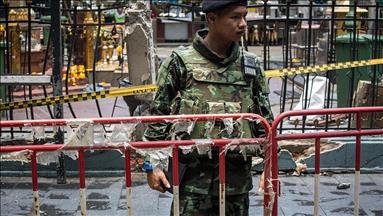
The renewed fighting, which has already killed at least 15 people and displaced more than half a million civilians on both sides, has laid bare just how quickly regional diplomacy can unravel when deeper political and historical grievances go unaddressed, according to experts.
The two Southeast Asian neighbors accuse each other of restarting a conflict that ended with a deal brokered by US President Donald Trump signed in Malaysia in October.
That agreement followed deadly July clashes that left 48 people dead before Trump stepped in to broker a temporary halt.
With the guns firing again and both sides sticking to escalatory rhetoric, analysts say the breakdown was almost inevitable and warn that the clashes could spiral into a larger crisis.
The ceasefire “was always fragile and failed to address the domestic political incentives for conflict,” Pavin Chachavalpongpun, a professor at Kyoto University’s Center for Southeast Asian Studies, told Anadolu.
For Thailand, he said, the renewed fighting serves “as a calculated diversionary war,” drawing attention away from the caretaker government’s troubled handling of devastating floods and from an emerging corruption scandal linking Thai elites – including Prime Minister Anutin Charnvirakul – to scam networks operating inside Cambodia.
Under these pressures, Pavin warned, the truce became “politically disposable.”
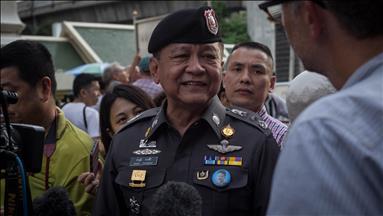
Thai military leaders have since doubled down. The Royal Thai Army’s chief of staff vowed to cripple Cambodia’s military capability, while Prime Minister Anutin made clear that diplomacy was off the table.
“From now on, there will be no negotiations of any kind,” he declared. “If the fighting is to stop, Cambodia must follow the course of action set by Thailand.”
Phil Robertson, director of Asia Human Rights and Labour Advocates (AHRLA), said the Kuala Lumpur Peace Accord merely “papered over a dispute” without resolving core triggers – from border demarcation to rising ultra-nationalism.
Role of major powers
The conflict’s roots stretch back more than a century to the colonial-era demarcation of their over 800-kilometer (500-mile) border.
When French colonial authorities drew the map in 1907, they failed to clearly define four disputed areas, including the territory surrounding the Preah Vihear temple, long claimed by both sides.
The International Court of Justice ruled in 2013 that the temple belongs entirely to Cambodia and ordered Thailand to withdraw troops. Thailand, however, continues to reject the ICJ’s jurisdiction, and a 4.6-square-kilometer (1.7-square-mile) zone around the site remains a powder keg.
“The core cause of the tension is a deep mix of unresolved territorial claims and weaponized nationalism,” Pavin said.
He added that political leaders use border clashes “to rally support, consolidate power, and justify a forceful security posture,” making compromise “politically toxic.”
Among those trying to contain the crisis are the US and China, as well as the Association of Southeast Asian Nations (ASEAN).
Trump said at a rally late on Tuesday that he was “going to have to make a phone call,” while Secretary of State Marco Rubio issued a statement calling for “immediate cessation of hostilities, the protection of civilians, and for both sides to return to the de-escalatory measures outlined in the October 26 Kuala Lumpur Peace Accord.”
Malaysian Prime Minister Anwar Ibrahim, also the current ASEAN chair, spoke to both Thai Prime Minister Anutin and Cambodian Premier Hun Manet to stress the need for “sustained diplomatic engagement.”
China also urged both sides to “exercise restraint and work in the same direction to prevent further escalation.”
What comes next?
For analysts, a major takeaway remains ASEAN’s inability to rein in its members.
“If ASEAN cannot mediate and resolve this conflict, then people will start to ask what good is ASEAN in the first place?” Robertson said.
He added that while Trump may try “to crack the heads of Cambodia and Thailand with tariffs,” such pressure may prove ineffective as politicians in Thailand could use it to “garner conservative support” in elections.
Pavin also said the conflict has shown ASEAN’s “weakness in resolving conventional security crises between its own members, forcing the intervention of external powers like Malaysia, the US, and China.”
He also warned that the bloc’s failure could lead to a more fragmented regional security architecture, along with economic fallout from border closures that disrupt trade, supply chains, and tourism.
Major powers now play “a clear, influential role, acting as crucial external levers for both mediation and military capacity,” he said.
With tensions running high and nationalist rhetoric dominating both sides, analysts see little chance of a lasting peace soon.
Long-term peace and stable relations “seem unlikely now for the foreseeable future,” said Chhengpor Aun, a policy researcher with Cambodian think tank Future Forum.
He said the conflict is being kept alive in Thailand to deflect attention from political crises at home, while Cambodia seeks to show good faith to Washington to protect crucial trade ties linked to the peace accord.
“We are going to see a difficult period of the conflict for people on both sides of the border until there is a divine intervention from major powers like Washington or Beijing,” he said.