25 December 2015•Update: 27 December 2015
TOKYO
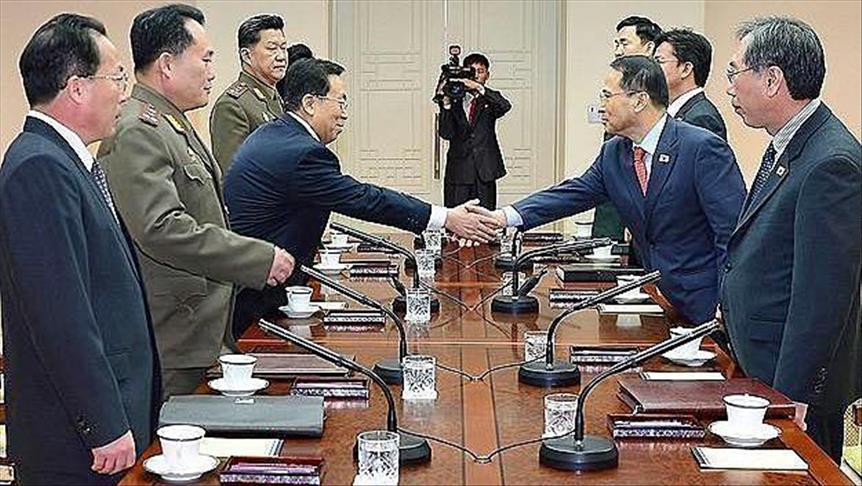
Japan and South Korea announced Friday that their foreign ministers will meet Monday to discuss the thorny issue of the so-called comfort women in hopes of a breakthrough.
Japanese Foreign Minister Fumio Kishida announced his upcoming visit, telling reporters at the ministry that the matter “is a difficult issue but I will do the best I can until the last minute [to make progress over the issue]".
Kyodo News quoted him as saying, "I will do my utmost to move forward Japan-South Korea relations by the end of this year, which marks the 50th anniversary of the normalization of bilateral ties."
The agency had earlier cited an unnamed government official as saying that a trip was being planned to present new proposals to Seoul after Kishida was instructed by Prime Minister Shinzo Abe to visit the neighboring country before the anniversary year ended.
"We've almost drafted a resolution. The focus is now on whether we can reach an agreement with the South Korean side," the official said.
Seoul’s Foreign Ministry has also confirmed the bilateral ministerial meeting set for Monday.
There are fewer than 50 surviving Koreans -- most of them entering their 90s -- known to have been forced into sexual slavery during Tokyo’s 1910-45 colonial rule, and the comfort women issue has become the most prominent point of dispute between South Korea and Japan.
Despite statements of broad apology, Tokyo insists that all related matters were settled under a 1965 treaty with Seoul.
The government official told Kyodo Friday that the allocation of around 100 million yen (around $831,000) to a government-run program aimed at helping supply medical and welfare care to some of the aging women was among the proposals.
The scheduled meeting comes after positive developments that could contribute to relations between the two countries.
While South Korea's President Park Geun-hye had refused to hold a bilateral summit with Abe over his attitude toward the comfort women issue since she assumed office at the start of 2013, they met on Nov. 2.
The premier admitted after the summit that he had agreed to speed up “negotiations for a conclusion as early as possible”.
Earlier this month, a South Korean court also found a Japanese journalist not guilty of defaming Park in an article published last year -- a ruling that led to Abe expressing his appreciation and hopes that it would “have a positive impact on relations between Japan and South Korea”.
On Wednesday, South Korea’s Constitutional Court also refused to review a complaint about the 1965 agreement by a national whose father had served as a forced laborer under Japanese colonial rule.