Zahid Rafiq
24 May 2019•Update: 24 May 2019
SRINAGAR, Jammu and Kashmir
A popular Kashmiri militant commander was killed in a gunfight in south Kashmir’s Tral district on Thursday night, Indian police said.
Zakir Musa was chief of the militant outfit Ansar Ghazwat ul Hind, which some believe was an affiliate of Al-Qaeda.
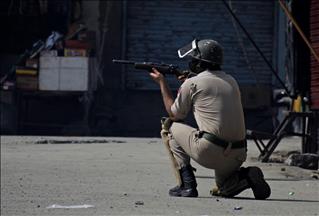
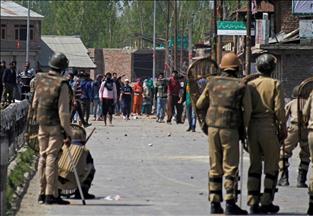
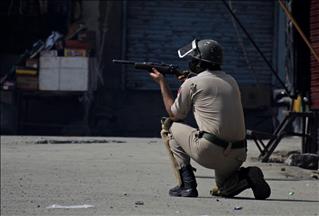
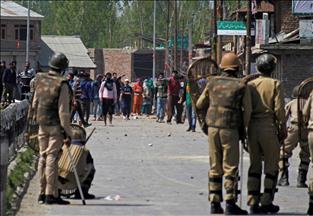
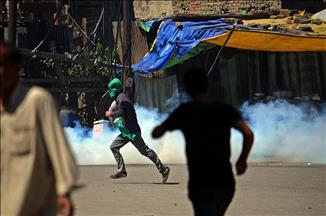
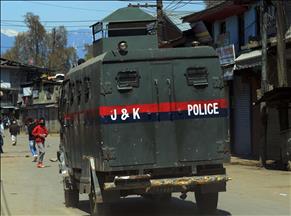
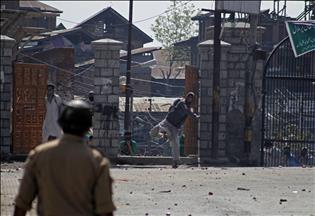
People took to streets as soon as news spread of Musa’s killing and clashes between civilians and Indian forces were reported at several places across Kashmir.
Musa had joined militancy in 2013 and was part of Hizbul Mujahideen, a pro-Pakistan militant group, until he broke away from the outfit in 2017 and formed his own outfit, Ansar Ghazwat ul Hind.
“One terrorist killed. Terrorist identified as Zakir Musa. Operation over,” police spokesman Manoj Pandita said in a brief statement.
While the police officially confirmed Musa’s death only on Friday morning, the government last night cut off mobile internet across Kashmir and blocked all phone and internet connections in south Kashmir, fearing widespread protests.
The Indian authorities in the region also announced that a curfew will be imposed on Friday, and all educational institutions announced that they will remain closed tomorrow.
Baseer Ahmad Khan, divisional commissioner of Kashmir, told reporters that the decision had been taken as a precautionary measure.
Musa had become a known name after he declared in a video message in 2017 that he was fighting for establishing a Caliphate and not for joining Pakistan or creating an independent state. He also threatened pro-independence Hurriyat leadership of dire consequences who he thought were a hurdle in the establishment of caliphate.
Jammu and Kashmir, a Muslim-majority Himalayan region, is held by India and Pakistan in parts and claimed by both in full. A small sliver of Kashmir is also held by China.
Since they were partitioned in 1947, the two countries have fought three wars -- in 1948, 1965 and 1971 -- two of them over Kashmir.
Also, in Siachen glacier in northern Kashmir, Indian and Pakistani troops have fought intermittently since 1984. A cease-fire came into effect in 2003.
Some Kashmiri groups in Jammu and Kashmir have been fighting against Indian rule for independence, or for unification with neighboring Pakistan.
According to several human rights organizations, thousands of people have reportedly been killed in the conflict in the region since 1989.