- Ruling Bangladesh Nationalist Party lawmakers have refused to join the opposition in taking oath as members of a proposed Constitution Reform Council
- Observers warn the situation risks creating institutional friction at the outset of the new parliament
DHAKA, Bangladesh
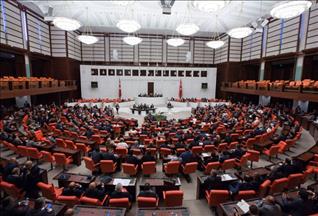
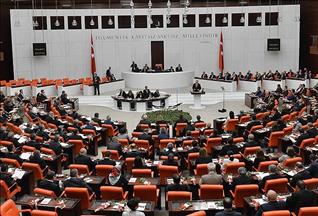
As Bangladesh’s newly elected parliament prepares to convene its first session on March 12, the country is entering an unfamiliar constitutional moment shaped by competing visions of how far its political system should be reformed after last year’s uprising.
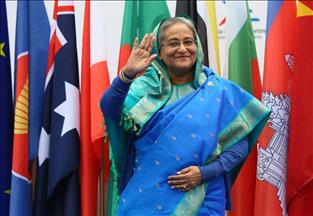
Instead of the procedural calm that typically accompanies the start of a legislative term, the incoming parliament will begin its work amid unresolved questions about constitutional authority and diverging interpretations of the July Charter – the reform blueprint that emerged from the 2024 mass uprising that toppled the government of former Prime Minister Sheikh Hasina.
At the center of the uncertainty lies a simple but unprecedented development: lawmakers have taken different oaths depending on which political bloc they belong to.
Members of the ruling Bangladesh Nationalist Party (BNP), which holds a two-thirds majority in parliament and occupies the treasury benches, have taken the standard oath as members of parliament.
But lawmakers from the opposition – primarily the Bangladesh Jamaat-e-Islami and the student-led National Citizen Party (NCP) – have taken two separate oaths: one as parliamentarians and another as members of a proposed Constitution Reform Council.
The divergence has created a constitutional puzzle that could overshadow the opening days of parliamentary business.
The Constitution Amendment Council was proposed under the July Charter, a political document drafted after the 2024 uprising that forced Hasina’s government from power.
The charter called for sweeping institutional reforms, including decentralization of the judiciary, changes to the electoral system, and the creation of an upper house elected through proportional representation.
To carry out those reforms, the charter envisioned the creation of a special constitutional reform body backed by at least 60 members of parliament.
The opposition bloc, comprising Jamaat and the NCP, has already crossed that threshold with its 77 lawmakers and has taken the oath required to establish the council.
However, the ruling BNP has refused to take the second oath, arguing that the council has no basis in the current constitutional framework and that any reforms should instead be pursued through the existing parliamentary process.
The result is a legislature entering its first session with two competing mandates: one rooted in the existing constitutional order and the other based on the political commitments of the July Charter.
Political observers say this unusual arrangement risks creating institutional friction at the outset of the new parliament.
Reforms or parliamentary sovereignty?
Supporters of the proposed council argue that such a body is necessary because many of the reforms envisioned in the July Charter would fundamentally reshape Bangladesh’s 1972 Constitution.
Sarwar Tusher, a senior NCP leader, said the scale of the proposed transformation requires a mechanism that operates outside the traditional amendment framework.
“A council whose job is to fundamentally reform the constitution cannot logically exist inside that same constitution,” he told Anadolu.
Tusher argued that parliament can amend provisions only while preserving the constitution’s basic structure, a principle repeatedly upheld by the courts.
“The mandate of a reform council is precisely to change that basic structure – something parliament cannot do without risking judicial annulment,” he said.
Tusher cited proposals such as the creation of an upper house and the decentralization of the judiciary, noting that similar attempts in the past had been struck down when pursued through conventional constitutional amendments.
From this perspective, the council would function in a role similar to a constituent assembly, tasked with facilitating structural reforms that go beyond the limits of the existing constitutional order.
The ruling BNP, however, appears reluctant to embrace such a mechanism.
Despite being a signatory to the July Charter during negotiations following the political transition, the party has signaled it does not support establishing an upper house through proportional representation – one of four reform proposals approved in a referendum held alongside the Feb. 12 election.
Salahuddin Ahmed, a senior BNP leader and current home affairs minister, has repeatedly said the party remains committed to the charter’s political spirit.
He publicly stated on several occasions that BNP is “committed and pledged to implement the July National Charter exactly as it was signed as a document of political consensus.”
But Ahmed has also emphasized that constitutional reforms should be “processed through parliament, not through a separate body” automatically created by the referendum.

Legal challenge deepens uncertainty
Adding to the uncertainty is a fresh legal challenge that has brought the judiciary into the unfolding political debate.
Earlier this week, several lawyers – whom opposition figures claim are aligned with the BNP – filed a petition in the High Court questioning the legality of both the July Charter and the referendum that endorsed it.
The court responded by asking why the charter and the referendum should not be declared illegal, immediately turning a political disagreement into a potential constitutional confrontation.
Advocate Mohammad Shishir Manir, a Jamaat member involved in the legal debate, warned that invalidating the referendum could have wide-ranging consequences.
“Striking down the referendum could also affect the validity of the election, because the referendum was held on the same day,” he said.
“If the referendum is questioned, it raises questions about the entire electoral process from which the government derives its legitimacy.”
The court’s involvement has also revived concerns about the judiciary becoming entangled in political disputes.
Asif Shahan, a political analyst and professor at the University of Dhaka, warned that judicial intervention in such politically sensitive questions could complicate matters rather than resolve them.
“Court involvement in political questions is always problematic,” Shahan said, recalling past episodes where constitutional litigation intensified political tensions in Bangladesh.
“The executive has little to gain here. It would be wiser to allow the legislature to take control of the issue.”
Shahan suggested the immediate crisis could be defused if parliament formally incorporated a reform mechanism into the constitutional framework and allowed the council to deliberate on the July Charter’s proposals.
“If parliament passes the framework and implements at least the provisions where consensus exists, that could calm things down,” he said.
However, he cautioned that the political situation could still evolve unpredictably.
“In the short run, the possibility of a full-scale crisis is limited,” Shahan noted. “But if the council is never formed and the July Charter’s commitments are ignored, the situation will remain uncomfortable and provide opportunities for opposition mobilization.”
The prospect of renewed political agitation remains another variable shaping the early days of the new parliament.
Shahan said the trajectory of the dispute will depend largely on two factors: the BNP’s willingness to compromise and the opposition’s ability to mobilize street protests.
If the ruling party refuses to recognize the reform council entirely, it could give the opposition – particularly the NCP – an incentive to revive protest politics.
While Shahan remains cautious about the alliance’s ability to sustain large-scale mobilization, the mere possibility of renewed unrest highlights the fragile balance underpinning Bangladesh’s new political order.