- Economic consequences for Moscow include immobilized sovereign wealth, reduced export income, increased operational costs under sanctions, destruction of military assets and mounting modernization expenses
MOSCOW
As the war in Ukraine grinds into its fifth year, measuring the cost to Russia is less about shattered cities than about balance sheets, lost revenues and depleted arsenals.
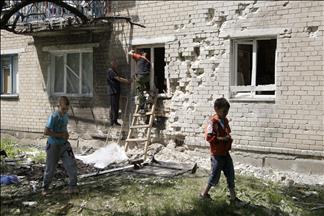
Unlike Ukraine, Russian territory has largely avoided widespread devastation, but cross-border shelling, drone strikes and incursions have caused measurable damage in regions bordering the front line.
In November 2025, Alexander Bastrykin, head of Russia’s Investigative Committee, said at least 41 Russian regions had been impacted by Ukrainian attacks, causing damage worth around 600 billion rubles (over $7.8 billion).
However, the major toll for Russia has unfolded across the economy, financial system and military capacity.
Since Moscow does not publish comprehensive loss figures, economists, international institutions and independent analysts have attempted to quantify the damage through reduced economic output, frozen assets, higher operating costs and the replacement value of destroyed equipment.
Economic shock and constrained growth
Russia’s economy absorbed an immediate shock following the start of the war in 2022, with the World Bank reporting a GDP contraction of 2.1% that year.
Growth returned in 2023 and 2024, supported by fiscal stimulus and expanded defense production. However, the rebound masked deeper structural strain. The International Monetary Fund (IMF) estimates cumulative lost economic output relative to pre-war forecasts at roughly $200-250 billion over four years.
Sanctions have reshaped Russia’s economic trajectory, limiting technology imports, financial access and foreign investment. These constraints are expected to weigh on productivity and long-term growth even as short-term wartime spending boosts industrial output.
Frozen reserves and financial pressure
One of the most significant financial blows has been the immobilization of Russian sovereign reserves.
Approximately $300 billion in central bank assets remain frozen in G7 jurisdictions. While not destroyed, these funds are inaccessible, limiting fiscal flexibility and reducing Moscow’s financial buffer against prolonged external pressure.
The loss of access to Western capital markets and borrowing channels has further tightened financial maneuverability.
Energy revenue losses and trade rerouting
The energy sector – historically the backbone of Russian federal revenue – has sustained measurable losses.
A 2025 report by the Kyiv School of Economics Institute estimates cumulative losses to Russia’s oil and gas sector at roughly $180 billion in foregone revenue since 2022 due to embargoes, redirected trade flows and pricing restrictions.
Russian crude has been sold at discounted rates to buyers, while longer shipping routes and restricted access to Western services have eroded profitability.
To bypass sanctions and the oil price cap, Russia has invested heavily in assembling a so-called “shadow fleet” of aging tankers. Bloomberg reported in late 2025 that more than $10 billion had been spent acquiring such vessels. Higher insurance premiums and logistical inefficiencies have further increased export costs.
Rising wartime and modernization costs
Beyond immediate military spending, the conflict has accelerated long-term replacement and modernization costs.
A report by the Royal United Services Institute in early 2026 found Russia increasingly drawing on Soviet-era armored reserves. Replacing these with modern systems such as the T-90M or T-14 Armata at peacetime production rates could require between $150 billion and $200 billion over the next decade.
Domestic infrastructure demands are also mounting. Internal figures from the Russian Ministry of Construction indicate that overhauling municipal heating and water systems alone would require at least $50 billion – investment that may be deferred as defense spending takes priority.
Military hardware losses
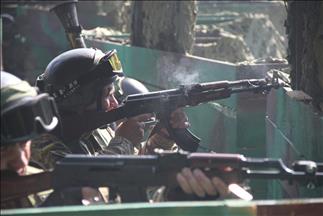
The most visible damage has been the destruction of military equipment.
While Russia does not release official figures, Western intelligence and other independent estimates provide a picture of attrition. A late-2025 report by the Center for Strategic and International Studies placed the replacement value of equipment destroyed during the first four years of the war at between $80 billion and $120 billion.
This includes the loss of more than 3,000 main battle tanks, 6,000 armored combat vehicles, and roughly 400 aircraft and helicopters.
Some losses carry symbolic weight alongside financial cost. The sinking of the warship Moskva in 2022 alone represented a loss of approximately $750 million. The destruction of multiple Sukhoi Su-34 and Su-35 aircraft – each valued at $40-50 million – has further added to the cumulative toll.
Burgeoning burden
Aggregating the principal estimates – lost GDP, frozen reserves, foregone energy revenue, higher operating costs, infrastructure deficits and military equipment losses – suggests Russia has incurred financial damage exceeding $1 trillion over four years.
Although the country has avoided large-scale physical devastation, the economic and financial consequences of the war are extensive and multifaceted. They include immobilized sovereign wealth, reduced export income, increased operational costs under sanctions, the destruction of military assets and mounting long-term modernization expenses.
Taken together, the evidence suggests that while Russia has maintained macroeconomic stability and adapted to sanctions, the cumulative economic burden of the conflict represents one of the most expensive strategic undertakings in its post-Soviet history.
Recovery will likely be slow, constrained by limited access to foreign capital, restricted borrowing channels and reduced integration with European markets.