Khaled Badr
26 March 2026•Update: 27 March 2026
ISTANBUL
Iran’s Foreign Minister Abbas Araghchi on Thursday held a phone call with UN Secretary-General Antonio Guterres to discuss the latest regional developments and the security and humanitarian implications of the ongoing military escalation.
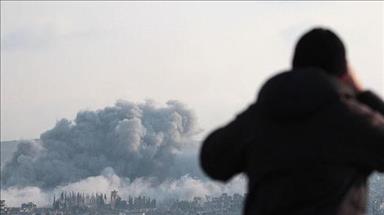
Araghchi said the US-Israeli military aggression against Iran has led to wide-ranging security and humanitarian consequences, pointing to attacks on civilian targets, including schools, hospitals, cultural and historical sites, and residential areas.
He said he briefed the UN chief on “violations and crimes,” urging the UN to fulfill its responsibilities in addressing what he called “serious breaches” of international law, human rights and international humanitarian law.
The Iranian minister also stressed Tehran’s determination to continue its “legitimate defense” of its security, sovereignty and territorial integrity.
Araghchi criticized what he described as “one-sided” calls from some parties urging Iran to exercise restraint, arguing that such positions ignore that the United States, in coordination with Israel, initiated and expanded the war.
On the Strait of Hormuz, he said the current tensions are a direct result of the escalation, adding that preventing vessels linked to “enemies” from passing is a legal right of Iran as a coastal state, while stressing that measures have been taken to ensure maritime safety.
He also called on the United Nations to adopt clear positions and take practical steps to safeguard international peace and security, including condemning “aggressors” and holding them accountable.
For his part, the UN chief reiterated the organization’s position on the need to respect states’ sovereignty and territorial integrity, expressing deep concern over the continuation of the war and the loss of life in the region.
Guterres also announced the appointment of Jean Arnault as the UN Secretary-General’s special envoy for the Middle East, saying the move aims to enhance direct engagement with Iranian officials and support efforts to resolve the crisis.
In a related development, Araghchi urged Gulf states to reject hosting US soldiers in hotels alongside civilians, saying their presence poses a risk to local populations.
He said US troops have left their military bases in Gulf Cooperation Council countries since the start of the war due to strikes targeting those bases and have taken shelter in hotels and offices.
He added that these soldiers are “using the citizens of those countries as human shields.”
Araghchi also said that hotels in the United States refuse bookings for officers whose presence could endanger civilians, calling on Gulf hotels to take similar measures.
The remarks come amid rising military tensions in the region and ongoing exchanges of attacks between Iran, the US and Israel, raising concerns about a wider regional escalation.