

July 19, 2009
KAYALIPINAR (SIVAS)
The archaeologic site of Kayalipinar is on the bank of the Kizilirmak River, near Yukarı Ekecik village, in the Yildizeli area of Sivas province. A survey in 1997 by T. Ökse recorded Early Bronze, Middle Bronze and Iron Age remains here.
 Illegal digging has been a major problem. Excavation under the direction of Vuslat Müller-Karpe began in 2005. A geophysical survey of the site suggests it is very similar to Hittite Kuşaklı. The main excavation area is near the south gate, where five levels have been identified. The lowest, Level V, dates from the Middle Bronze Age (19th century BC).
The walls are very burnt, with the mud brick preserved to a height of 3 m. The architecture is similar to that of Kultepe and the pottery is identical, with beak spouted pitchers and rhyton fragments. There have been 120 bullae as well as many sealings, mainly from stamp seals. There are also tablets of the Assyrian Colony period, suggesting the site was a wabartum (a term unique to the Old Assyrian merchants; a structure is originally designated as a caravansarai, but eventually expanded into a more permanent residential and trading center).
In Level III, the grid-like Building A has been uncovered. It was rebuilt on several occasions before its destruction by fire. Findings include fragments of terracotta bull rhytons which parallels the ones recovered from Kuşaklı and Bogazkoy, and bullae with Hittite royal seals.
Level II has produced tablets, including an extraordinary itinerary list from Syria to the Black Sea.
Kayalipinar Relief
It was found in 2005 during the excavations of the Hittite settlement in Kayalipinar. Carved on a block of rock is a seated figure with a cone shaped head piece, holding a drinking cup in one hand and a bird in the other. Only the tail of the bird is visible and the rest is damaged. The legs of the chair are shaped like lion paws. On the damaged right side, the feet of a second person is visible in front of the seated figure. The Hittite settlement at the site dates to 15th century BC. The block has been moved to Sivas Museum. A replica has been placed in the original site.
Reliefs with figures of Hittite deities and tablets belonging to Hittite and Assyrian trade colonies recovered from Kayalipinar are displayed in the Archaeology Museum this year.
This year's excavations will be a carried out by a team 17 German archaeologists directed by Andreas Müller Karpe.
HAYRANLI-HALIMINHANI
The Upper Miocene site of Hayranlı-Haliminhanı, located beside the Sivas-Ankara highway, has been excavated since 1993 by the Turkey Vertebrate Fossil Beds Research Project of Ankara University and the University of California (Berkeley), under the direction of Musa Törnük and Erksin Güleç. Fossils, including equids, bovids, suids and rhinoceros-like animals, have been found at many localities in the area.
Among the finds were a small mammal and examples of Hipparion. The Hipparion found represents a middle phase of the shift from five toes to three and then to one hoof. Other finds have included examples of Proboscidea (elephants), including Gomphotheriidae; Bovidae (cattle, sheep, goats); Suidae (pigs); Giraffidae (giraffes); Rhinocerotidae (rhinoceroses); and members of the Rodentia order, including Muridae, Cricetidae and Sciuridae (squirrels). These are on display at the Sivas Museum of Archaelogy.
The excavation team of 23 people lead by Ankara University Anthropology will start this year's works towards the end of July Professor which will last around 20 days.
EXCAVATIONS IN CORUM PROVINCE
Hattusa, near modern Boğazkale (formerly Boğazköy), was the capital of the Hittite Empire in the late Bronze Age.
The region is set in the curve of the Kızıl River (Marashantiya in Hittite sources and Halys in Classical Antiquity) in central Anatolia.
Hattusa was added to the UNESCO World Heritage list in 1986.
 Since 1906, the German Oriental Society has been excavating at Hattusa (with breaks during the two World Wars and the Depression, 1913-31 and 1940-51). Archaeological work is still carried out by the German Archaeological Institute (Deutsches Archäologische Institut). Hugo Winckler and Theodor Makridi Bey conducted the first excavations 1906, 1907 and 1911-13, which were resumed in 1931 under Kurt Bittel, followed by Peter Neve (site director 1963; general director 1978-94).[3] One of the most important discoveries at the site has been the cuneiform royal archives of clay tablets, consisting of official correspondence and contracts, as well as legal codes, procedures for cult ceremony, oracular prophecies and literature of the ancient Near East.
One particularly important tablet details the terms of a peace settlement between the Hittites and the Egyptians under Ramesses II, circa 1283 BC. A copy is on display in the United Nations in New York as an example of one of the earliest known international peace treaties.
Although the 30,000 or so clay tablets recovered from Hattusa form the main corpus of Hittite literature, archives have since appeared at other centers in Anatolia, such as Tabigga (Maşat Höyük) and at Sapinuwa (Ortakoy). They are now divided between the archaeological museums of Ankara and Istanbul.
This year's archaelogical works carried out by a team of fifteen experts and 30 workers lead by Assistant Prof. Andreas Schacner German Archaeological Institute begun in June 10.
Schacner told AA that their work would focus on the Sarikale area inside Hattusa's city walls, which would be followed by works in the lower parts of the city.
Once the team finishes planned works here they will start excavations in the Chalcolithic settlement in Camlibel 1.5 kms to the west of Bogazkale district.
Schacner says 30 percent of Hattusa settlement was unearthed so far during 103 years of excavations.
"ROYAL TOMBS" OF ALACAHOYUK
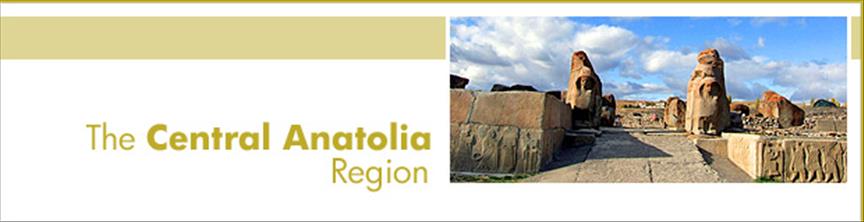
Alacahoyuk or Alaca Höyük (sometimes also spelt as Alacahüyük, Euyuk, or Evuk) is the site of a Neolithic and Hittite settlement and is an important archaeological site. It is northeast of Boğazkale or Boğazköy, where the ancient capital city Hattusa of the Hittite Empire was situated.
 The mound at Alacahöyük was the center of a flourishing autochthonous Hattian culture during the Early Bronze Age. The mound was a scene of settlement in a continuous sequence of development from the Chalcolithic Age, when earliest copper tools appeared alongside the use of stone tools. It has been continuously occupied ever since, until today's modern settlement in the form of a small village. The standing and distinguishing remains at Alacahöyük, however, such as the "Sphinx Gate", date from the Hittite period that followed the Hatti, from the fourteenth century BC.
The site started attracting attention as of the late 19th century and in 1907, the Ottoman archaeologist Theodor Makridi Bey held brief explorations here for two weeks. In the 1910s, German teams discovered royal tombs dating to the third millennium BC, as well as a Hittite town of the second millennium BC. The impressive sphinx gate surrounded by stone reliefs marked its entrance. The town was heavily fortified with walls and towers due to the frequent raids of the Kaska people living in the mountainous region to the north.
Excavations resumed in 1935, under Atatürk's personal instructions who contributed from his own budget, by the Turkish archaeologists Remzi Oguz Arık and Hamit Kosay. The digs have revealed considerable local wealth and achievement even before the time of the Hittites, with the earliest occupation dating from the 4th millennium BC. Tombs of the 3d millennium B.C. feature metal vessels, jewelry, weapons, and pole finials of bulls, stags, and abstract forms often interpreted as solar symbols. Work at the site is now directed by Dr. Aykut Cınaroğlu.
Thirteen "Royal Tombs" (EBII, ca. 2350-2150 BC) in Alacahöyük contained the dead in fetal position facing south. They were richly adorned with gold fibulae, diadems, and belt buckles and repoussé gold-leaf figures. Many of the artifacts discovered at Alacahöyük, including magnificent Hattian gold and bronze objects found in the Royal Tombs, are housed today in the Museum of Anatolian Civilizations in Ankara. Among these artifacts are gold and electrum standing cups and other ware. Bulls or stags on pedestals as culturally unexplained "standards" are among the most common images. The standards are cast in copper, in the form of flat circles, half-circles or squares that are in-filled with an open network of cross bars, central crosses, swastikas. The Royal Tombs "seem to belong to the end of a period, as marked by a stratum of destruction and the burning of the citadel. The culture which the tomb objects illustrate does not continue into the next historical phase, that of Kültepe.
This year's excavations will start next week under the directing of Archaelogy Professor Aykut Cınaroglu and will initially focus on the royal tombs over which works have begun in 2008.
The royal tombs will be covered with glass and will be opened to visitors.
Later the excavation team will start working on the iron workhop, the oldest in world history which was unearthed last year in the Early Bronze Age layer.
SHAPINUWA EXCAVATIONS
Ortakoy is a town 53 kms. southeast of the province of Corum in central Turkey. It is situated at the north of Central Anatolia, to the south of Black Sea Mountain Range and at the end of Kelkit Valley which is the entrance to Anatolia from the Caucasus. To the east lies Amasya, and to the southwest, Yozgat. Shapinuwa is situated 3 kms. southwest of Ortakoy. It can be reached, as well as with the highway from Corum, either with Sungurlu-Alaca-Kizilli-Ortakoy route or with Amasya-Goynucek route.
The first survey over Shapinuwa was conducted in 1989 and excavations in Ortakoy were launched in 1990 by Ankara University with the permission of Ministry of Culture of Turkey. The site was discovered and currently excavations are directed by Prof.Dr. Aygul Suhel and Prof.Dr. Mustafa Suhel with the contributions of public institutions and private organizations.
 At Shapinuwa, an important structure was uncovered with the excavations which began in 1990. The building lies at a dominant point on the plateau, and has a location with an impressive view.
This monumental building has a symmetrical plan. In the present ground level, limestone and sandstone blocks have been used at the base of the structure, underneath the mud-brick superstructure. These blocks seem to have been arranged in a Cyclopian order. The joints between the blocks are the work of good craftsmanship and skill. The height of the foundation reaches some 2 metres above the ground, and the width is about 2 metres.
Judging by the wide foundation and scattering of mud-bricks some 10 metres away from the building, it is assumed that the building was originally at least two-storeys high.
The building burnt down and was destroyed. Due to agricultural activities, mud-bricks that should have been on the foundation were greatly destroyed. The site of the building was used as a cemetery in the Roman times.
This 3500 years old building which is an engineering and architectural wonder covers an area of 100x25 sq.m., and the excavations over the site still continue.
Whatever purpose the building "A " served, whether it be administrative or religious, it definitely was of major importance for Ortakoy.
Shapinuwa with its unique architecture, small finds, and tablet archive.
In 1995, excavations started at Kadilar Hoyuk, 150 metres southeast of building "A". At the foundation of the building "B", plain-cut blocks have been uncovered. On top of these foundation blocks which are arranged in two rows, 110 cm. wide mud-brick walls were found. These mud-brick walls were covered with a well-polished, straw-added, 3.5 - 4 cm. thick plaster.
Burned beams which must have fallen down with the remains of another storey proves, a second storey made of an intense timber structure existed. Only a section of this building full of earthenware jars, which, therefore, may be called a depot, has been unearthed. Over 30 large jars were recovered.
In building "A ", where the the excavations are still in progress, around 3000 tablets and tablet fragments have been found in a Hittite cuneiform archive. These tablets and tablet fragments have been uncovered in a deposition layer of upper storey ruins. There are three seperate archive locations in this monumental building.
These tablets include various topics such as religious, political, military, administrative , and prophecies. The archive mainly consists of letters. There are texts written in Hurrian, Hitto-Hurrian and Akkadian as well as in Hittite. A close examination of the archive revelaed that, besides the identification of Shapinuwa with Ortakoy, that Ortakoy had been a residential town for the great Hittite king, an administrative, political, military and religious center, with close ties with Hattusas.
In Ortakoy excavations, in addition to this important archive, dark gray, buff and terracotta coloured, well-polished common ware, as well as mostly buff and terracotta coloured, slipped ritual vessels were recovered. Among those are; plates, hydria, jugs, juglets, and pithoi. Although not too many in number, there are metal objects which can be considered as fine examples of the Hittite era, such as arrowheads, bronze axe and dagger. Among the golden pieces is a golden object with palmette motif, which gives valuable indicators for the relations between Anatolia and Egypt. Another important group of diggings are the triangular objects which are thought to be used at rituals. Especially the one made out of obsidian is very striking. Moreover, there are seal impressions in the Hittite hieroglyph.
This year's excavations will focus on the Agilonu region and will be carried out by a team of 20 people.
 KULTEPE RUINS
Archeologists have unearthed three monumental palaces so far in the excavations which have been continuing for 61 years in Kultepe Ruins which is on the 20th kilometer of Kayseri-Sivas highway in the central Anatolian region. Also a neighborhood in Karum excavation zone will be restored, and the daily life will be animated similarly as it was 5,000 years ago. Kultepe Kanis-Karum ruins is the first center where Anatolian people met writing. Nearly 50,000 inscribed clay tablets and archeological artifacts have been unearthed in the center so far.
CORUM
Archeologists unearthed 56 pieces of artifacts as well as a 34-room building belonging to early periods of Hittite Kingdom in Boyali Tumulus in the central Anatolian province of Corum. Also, 30 tombs --belonging Pre-Hittite Era in 3,000 BC-- were found in excavations in Ugurludag town. Corum was the capital of Hittites.
ESKISEHIR
Archeologists unearthed artifacts belonging to early Bronze Age in excavations in Kulluoba Tumulus in Seyitgazi town of the central Anatolian province of Eskisehir. Kulluoba Tumulus dates back to 5,000 BC. A fortress, pots and pans as well as architectural buildings were unearthed in the excavation. Archeologists also found tomb stones and 30-40 centimeter votive statues in excavations in Han underground city in Han town of Eskisehir.
 NEVSEHIR
Archeologists unearthed places dating back to Iron Age during the excavations in Ovaoren Tumulus where Hittite state center was located in 700 BC. There are six-meter high and four-meter long ramparts in Ovaoren Tumulus in the central Anatolian province of Nevsehir. Archeologists found out the last buildings in the ramparts that belonged to Tabal Kingdom which ruled in the 8th century BC.
PORSUK TUMULUS
Excavations at Porsuk Tumulus located in Nigde are the first archaeological studies at the ancient site. French Professor Dominique Beer leads the excavations that were started 39 years ago. Around 500 pieces of historical artifacts discovered at the site are displayed at Nigde Museum. The museum also exhibits diggings unearthed from the ancient site of Ciftlik Tepecik.
 KIRSEHIR
Archaeological excavations started at Kalehoyuk in Kaman town in 1986. Head of the excavation team is the Japanese archaeologist Professor Sachihiro Omura. Turkish and Japanese experts, as well as researchers and students from several countries such as United States, Australia, Britain, Korea and Malaysia are part of the team.
Remains from the early Iron Age found at Kalehoyuk will be examined in this year's works at the site.
Several diggings, such as weapons, seals, jewelry and tablets from early Bronze Age to Ottoman period, have been unearthed at the site. All these are on display at the Kirsehir Museum.
Turkish and Japanese governments have a cooperation to build a new museum near the archaeological site. The Kalehoyuk Archaeological Museum is planned to be opened in 2010 which was declared the Year of Japan in Turkey.
KONYA
Excavations at archaeological sites of 12,000-year-old Boncuklu Tumulus and Catalhoyuk are closely monitored by the world.
First excavations at Catalhoyuk, located nead Cumra town, were made by British archaeologist James Mellaart and his team in 1960s. Lots of historical artifacts were found at the site as the strata were dug. Another British professor Ian Hodder took over the works at Catalhoyuk in 1993.
The earthenware statue of the Mother Goddess Kybele, disinterred at the site, is one of the most famous part of diggings and it can be seen at the Museum of Anatolian Civilizations in Ankara.
At laboratories established near Catalhoyuk, which is visited by 13,000 people annually, an international team of experts are examining how people lived on 9,000 years ago, which diseases they suffered from, their genotypes and plant and animal characteristics of that period.
Catalhoyuk, a Neolithic age settlement, is one of the oldest settlements in the world where more than 8,000 people inhabited. It is also stunning for being the only place to see motifs, pictures and reliefs on walls. New finds at the site have given new clues about how people lived at that time of the history. Unique motifs on walls are considered the first works of art in Neolithic age.
Finds shed light on daily life of people 9,000 years ago in Catalhoyuk. Discoveries revealed that people consumed mostly fish, lived in adobe houses in peace and that there were no administrators or clergy, and men and women were equal.
Officials plan to build an entirely adobe museum near the archaeological site to display diggings. A part of objects found at the site, such as potteries, hunting materials, seals, statuettes and skeletons are on display at Konya Archaeological Museum. Another collection of objects are preserved at the Museum of Anatolian Civilizations in Ankara.
12,000-YEAR-OLD BONCUKLU HOYUK (TUMULUS)
Another archaeologically important site is the Boncuklu Hoyuk (Tumulus) in Cumra town. Excavations started at the 12,000-year-old site three years ago. Scientists have obtained significant information about how people were living in early Neolithic period and pre-Neolithic era.
British professor Douglas Baird from University of Liverpool leads a team of 25 archaeologists carrying out the excavations at the mound. Finds indicate that people living here 12,000 years ago did not have any knowledge of agriculture and animal husbandry. Researches made here suggest that people also lived on hunting and picking and they did not know how to domesticate animals. Excavations at the site are expected to continue for a long time as results of studies are eagerly anticipated.
 KUBADABAD: ALAADDIN KAYQUBAD'S SUMMER PALACE
Ruins of Kubadabad Palace, built for Seljuk Sultan Kayqubad I on the shores of Lake Beysehir, is another excavation site in Konya.
Part of the palace sits on Kizkalesi Island which is close to shore. The ruins were discovered in 1949. Three years later, excavations started at the site, but works suspended in 1967. Excavations resumed in 1980 by a Turkish team of archaeologists led by Professor Ruchan Arik of Ankara University.
Arik and her team unearthed many encaustic tiles, ceramics, plasters, glasses and coins belonging to the Seljuk Period. These priceless diggings are exhibited at Karatay Museum in Konya.
ASIKLI TUMULUS
Asikli Hoyuk (tumulus) is located near Kizilkaya village of Gulagac town in Konya. Excavations are going on at the archaeological site. Interesting finds at the site include  a skull that indicates a brain surgery 10,000 years ago. Discoveries, including adobe houses and special purpose buildings, revealed that Asikli was the first settlement in central Anatolia where hunter picker and nomads inhabited. Diggings also include pelts, tools made from bones, beads and hairpins.
ACEMHOYUK
It is located in Yesilove town of Aksaray town. Ongoing excavations have started at the site in 1962. So far, excavations unearthed 12 layers, dating back to a period from 2600 BC to 1700, and buildings belonging to Assyrian trade colonies.
Archaeologist found palaces, houses, seals, potteries, fabrics, beads, golden jeweleries, ivory jewelries and wooden toys at Acemhoyuk, which is one of the largest mounds in Anatolia.
This year's excavations will be made especially at the palace.

GUVERCINKAYASI
Digging work started at the site, which is located in Catalsu village of Aksaray, in 1996.
The site is a rare model of transition to an advanced settlment from a simple form. The archaeological site gives clues about Chalcolithic age settlements thanks to finds that include potteries, storage bowls, horns, obsidian mirrors and beads. All these diggings can be seen at the Aksaray Museum.
 PODCASTTÜMÜNÜ GÖR


 PODCAST