ISTANBUL
From Cold War proxy battles to the post-9/11 era, the nature of conflicts over the past 25 years has undergone a significant transformation, analysts say.
As the world heads into 2026, experts warn that wars are lasting longer, civilians are increasingly being targeted, and new technologies from unmanned aerial vehicles to information warfare are reshaping conflicts.
Cold War legacies
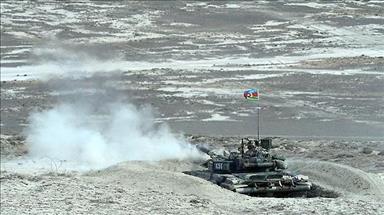
Comparing the wars of this century to the previous quarter of the last century, experts explain that the conflicts from 1975 to 2000 were heavily influenced and shaped by the Cold War, the end of the Vietnam War, and strategic thinking in both Washington and Moscow.
"Both of those militaries were preparing for large-scale combat in Europe, basically mechanized, armored artillery, while maintaining their nuclear capability," William Thomas Allison, a professor of history at Georgia Southern University, and a scholar of American military, told Anadolu.
Allison said the 1980-88 Iran-Iraq War was not only “heavily mechanized," but also used chemical and biological weapons, noting that the 1990-91 Gulf War relied heavily on airpower and Cold War-era doctrines.
Suda Perera, assistant professor in International Development at the University of Sussex, said that after the end of the Cold War and the fall of the Berlin Wall, the US sought to assert moral authority globally through "liberal peacebuilding."
"This idea that you have elections and free market economics and a lot of what the US was doing in there and the intervention in a lot of these civil wars was trying to promote this peacebuilding model.
"And we see that these civil wars, they last a few years, but they sort of end, and then you have this kind of post-conflict period in which quite a bit of money goes into trying to build peace in those countries."
Post-2000 conflicts defined by war on terror
Experts say the 9/11 attacks in the US have fundamentally shaped wars in this century.
"The first significant defining event is September 11th happening in 2001. And this really kind of puts the war on terror as this kind of central feature of how we think about wars," said Perera.
The US-led invasion of Afghanistan in 2001 and Iraq in 2003 marked this shift, leading to long wars, counterinsurgency campaigns and the expansion of US military presence across the Middle East, Africa and South Asia.
Perera also noted that this marked a shift from humanitarian interventions to viewing conflict zones as sources of direct threat.
"We see this real move from the US taking this more humanitarian approach of promoting liberal peace to seeing a lot of countries in conflicts as sources of enemies to the US."
Conflicts lasting longer
A defining feature of modern conflict, experts say, is its duration and no decisive ending.
"The conflicts are lasting a lot longer," said Perera.
"We have these ongoing wars, and even in situations where maybe peace gets declared, taking Iraq and Afghanistan as examples, we have continuing political instability. So even when a ceasefire is declared in a particular country, or a war is deemed over in the eyes of the international community, we don't actually see much difference on the ground between war and peace."
Allison said war termination has proven especially difficult.
“In the American experience, I think we've only done it well one time, and that was World War II,” he said, pointing to Vietnam, Korea and Iraq as examples of conflicts with far-reaching consequences.
He also cited the unintended effects of the Soviet withdrawal from Afghanistan and the ongoing difficulty of ending the war in Ukraine, warning that evolving technology could make future wars easier to start.
Civilians increasingly drawn into combat
Experts also highlighted how modern wars increasingly draw civilians into the line of fire.
Expert Perera referred to Mary Kaldor’s New and Old Wars, which contrasts trench warfare with conflicts fought within civilian spaces, noting that conflicts in Syria, Iraq, Gaza and Ukraine are fought in cities rather than on isolated battlefields.
“We see that with the war on terror, what we have is a kind of defining of who is a combatant, and this idea that actually any civilians can also be combatants,” she said.
As a result, she added, displacement has surged, with large populations forced to flee because “it's quite hard to exist with conflict going on.”
Drones and the rise of asymmetric warfare
The widespread use of drones has become one of the most visible changes in modern warfare.
“This is a really big element that comes out of the war on terror,” Perera said, noting heavy investment in military technology and the rise of asymmetric warfare.
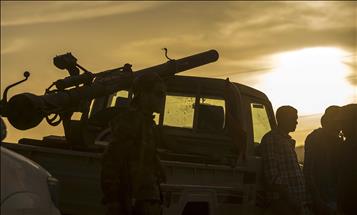
US drone strikes in Pakistan and Afghanistan marked the early large-scale use, while more recent conflicts, such as Ukraine and Gaza, have seen widespread deployment of small, inexpensive drones for surveillance and attacks.
“The sides that have access to drones, to kind of aerial bombardment, are able to cause much more destruction than, say, small militias that are fighting with AK-47s," she added.
Allison traced drone development from early use in the first Gulf War and the Balkans to today’s conflicts.
“For example, in Iraq and Afghanistan, the United States ultimately tried to fight those wars like it did during the Cold War. Large mechanized units,” he said.
He noted that smaller, portable drones later became standard, allowing infantry units to scout terrain and, increasingly, to carry out lethal attacks. “In Ukraine, these small drones are now anti-personnel weapons,” he said.
Cyberattack and information wars
Recent wars have also seen a rise in cyberattacks, such as in September 2024, when Israel orchestrated a series of explosions involving wireless communication devices, including pagers and walkie-talkies used by the Hezbollah group, killing at least 51 people and injuring nearly 3,000 others in Lebanon.
Israel's use of AI for surveillance and targeting civilians in its brutal war in Gaza has also come under fire.
Experts also pointed to the growing importance of cyberattacks and information wars.
While such tactics have long existed, Perera said they have intensified with the spread of the internet.
“Governments are using that as a political pretext to clamp down on civil liberties, to increase surveillance of their population, to be more restrictive at borders, and to promote discourses that divide people,” she said.
She warned that these trends are contributing to greater global polarization and expanding state control, even in countries not formally at war.
Defense spending and militarized economies
Rising global insecurity has driven increased military spending, particularly in Europe following Russia’s invasion of Ukraine, and in the US amid competition with China, experts say.
This has increased investment in defense and military industries, creating jobs across technology, manufacturing, and the armed forces.
Perera said this has become a way to absorb economic discontent, particularly among young men.
“For as long as there is a need to keep military-aged men in employment, it is unlikely that the nature of warfare will change,” she said, warning that exclusion could fuel future unrest.
According to the Stockholm International Peace Research Institute (SIPRI), world military expenditure rose to $2,718 billion in 2024, meaning that spending has increased every year for a full decade, going up by 37% between 2015 and 2024.
"The 9.4% increase in 2024 was the steepest year-on-year rise since at least 1988," it noted in its report titled Trends in World Military Expenditure, 2024.
Erosion of war ethics
Both experts raised concerns about the erosion of wartime ethics.
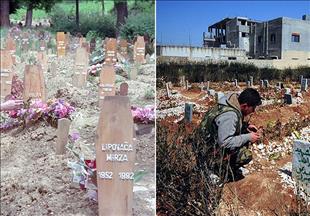
“There was a sort of moral outrage at the targeting and killing of civilians” in late-20th-century atrocities such as Rwanda and Bosnia, Perera said, arguing that this outrage has weakened in the 21st century.
She pointed to attacks on civilian infrastructure and debates over civilian status in contemporary conflicts, including Gaza, as signs of that erosion.
Allison warned that international legal frameworks such as the Geneva and Hague Conventions are struggling to keep pace with new weapons and technologies.
“We’ve got to figure out the ethical use of these sorts of new weapons,” he said, noting that military systems are increasingly vulnerable on modern battlefields.
“Try driving a tank down the road today,” he added. “A drone will spot you, and someone will fire a missile from miles away. That’s a totally different ballgame.”