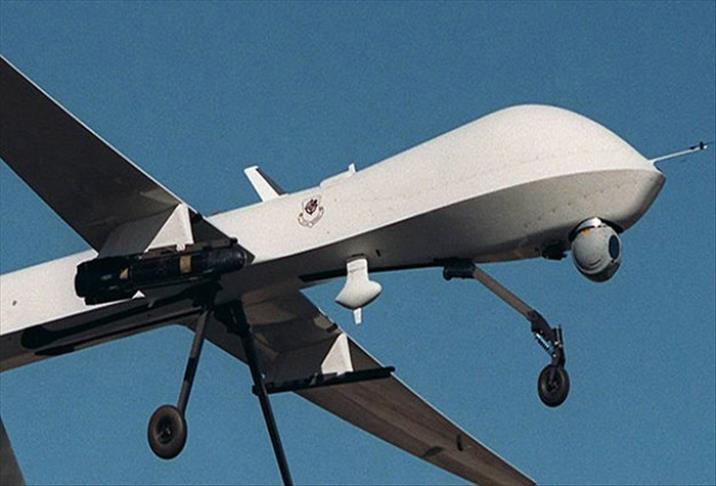
Despite recent success, Washington’s global targeted killing program faces mounting questions about its operations, and the future ramifications it may have on warfare.
On November 1, a US drone strike near the Afghan border in Pakistan hit a car, and a compound used by Pakistani Taliban chief Hakimullah Mehsud. Pakistani authorities said that the drone strike did, in fact, kill Mehsud. Shortly thereafter, the Pakistani Taliban confirmed the death, showing pictures of the deceased Mehsud on their Facebook page.
Mehsud’s militant credentials run far and wide with his alleged involvement in a suicide attack on a CIA outpost in Khost, Afghanistan in 2009 that killed nine, a failed attempt to bomb New York City’s Times Square in 2010, and a ruthless campaign of suicide bombings and attacks in Pakistan.
The Pakistani Taliban announced Mehsud’s successor six days later: Mullah Fazullah. The hardline militant is said to have ordered the attack on Malala Yousafzai, and been in charge of a vicious campaign in Pakistan’s Swat Valley from 2007 to 2009 that sought to impose its extreme version of Shariah law on the region, which included burning schools and flogging and beheading offenders.
-Secrecy permeates US program
As is common practice, the US declined to confirm the death of Mehsud following the attack. The strike highlights the continued secrecy that the Obama administration has insisted upon for the security of the program, and its continued success.
To be sure, drones have several significant advantages over their manned counterparts: their flight time is longer, they cost less than conventional aircraft, and remove the inherent danger to a pilot flying combat operations.
Still, the program’s opaqueness faces mounting challenges from rights groups and international organizations.
“The lack of transparency, the huge wall of secrecy that’s erected around the targeted killings program makes it difficult to know, nearly impossible to know, whether the US is following the law or not in carrying out these killings,” said Letta Tayler, senior researcher on counterterrorism at Human Rights Watch (HRW).
After researching six drone strikes in Yemen, Tayler found that over half of the individuals who died in the attacks were unlawfully killed civilians.
“Of the six strikes I investigated, six out of at least 80 estimated targeted killings, those strikes killed at least 82 individuals. At least 57 were civilians. Of those, in my view, at least, 54 were unlawfully killed. But I have no idea whether that’s indicative of any broader trends,” she said.
Large disparities exist between US estimates of civilian casualties, and those gathered by rights and media groups, in part, because the Obama administration has refused to publicly lay out fundamental information regarding the program, such as how it defines a civilian.
Tayler’s report was issued alongside a separate review from Amnesty International, which focused on drone strikes in Pakistan’s North Waziristan region, a hotbed for militant activity. Amnesty found that “the cases in this report raise serious concerns that the USA has unlawfully killed people in drone strikes, and that such killings may amount in some cases to extrajudicial executions or war crimes and other violations of international humanitarian law.”
Both Amnesty’s and HRW’s reports follow two separate UN reports released earlier in October that took issue with several aspects of the US’ target killing program, including civilian casualties.
Still, others remain adamant that the US must maintain its secretive approach to targeting militants.
“The fighting of war is not a function of government that lends itself to political control. On the contrary, political control tends to screw it up mostly,” said Paul Rosenzweig, a visiting fellow at the conservative Heritage Foundation think tank in Washington.
Speaking on May 23rd at Fort McNair in Washington, US President Barack Obama, recalled the successes of the program, while stating that he has “insisted on strong oversight of all lethal action.”
“In the intelligence gathered at Osama bin Laden’s compound, we found that he wrote, ‘we could lose the reserves to the enemy’s air strikes. We cannot fight air strikes with explosives.’ Other communications from al Qaeda operatives confirm this as well,” said Obama.
- Effectiveness in question
Even as the US has racked up successes against militant leaders, there has been an uptick in al Qaeda affiliate activity from the Maghreb to East Africa and the Levant.
“Fundamentally this is a global Islamist insurgent threat. The administration has defined it as is a network, and that if you kill certain nodes in the network, you degrade the network and it’s not a problem. And they’re wrong,” said James Carafano, vice president of Foreign and Defense Policy at the Heritage Foundation, while speaking at George Mason University last week.
He added, “You can’t kill your way out of this problem. And killing select leaders is never going to do that.”
And indeed, there has been increased activity from al Qaeda-affiliated groups in Syria with the Islamic State of Iraq and the Levant (ISIS), in the Maghreb with al Qaeda in the Islamic Maghreb (AQIM), and long-time affiliate al Shabab in Somalia.
AQIM last Wednesday claimed the death of two French journalists in Mali as retaliation for French “crimes”.
Their declaration follows several alarming advances for the East African affiliate, al Shabab.
The group carried out a deadly four-day attack on a Kenyan mall in September that resulted in nearly 70 dead civilians. They are also engaged in an ongoing attempt to overthrow the UN-backed government in Mogadishu.
Al Shabab militants said the attack on the Westgate Mall in Kenya was in retaliation for Nairobi’s military backing of Somalia’s fledgling government.
- Future spread of drone technology likely as US maintains export crackdown
The technological advances and tactical advantages of the US’ drones are likely to spur other nations to rapidly develop programs of their own.
“There’s going to be a lot of proliferation. A lot of people are going to have these, and they’re going to kill people with them. And we’re actually perversely aiding and abetting the speed of that, because what we’re doing with import-export laws for drones is repeating the mistake we made with satellites,” recalled Carafano.
The US has prohibited the export of satellite technology for decades, which led to the proliferation of competing satellite programs, said Carafano.
“The reality is nobody would have gotten in the market, except we took ourselves out of the market, and we’re doing the exact same thing with drones. […] The irony is when we export military technology, we usually have pretty good controls over that. People like to buy our stuff, and they usually abide the rules that we give them,” he said.
In a potentially telling sign, a video released last week depicts a new Chinese drone with striking similarities to Northrup Grumman’s leading Global Hawk.
englishnews@aa.com.tr
news_share_descriptionsubscription_contact

contact_the_ombudsman
is_there_an_error_in_this_story