WASHINGTON
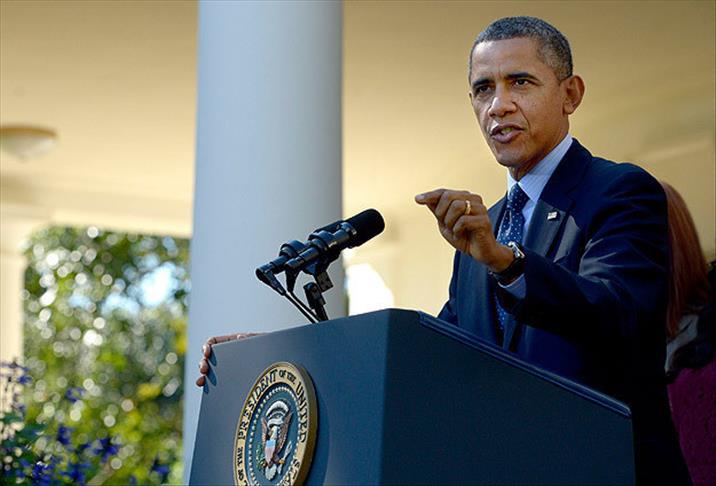
U.S. President Barack Obama warned that difficult choices lay ahead if peace is to be achieved between Israel and Palestinev while speaking at the White House with Israeli Prime Minister Benjamin Netanyahu on Monday.
“Tough decisions are going to have to be made. They are tough negotiations. The issues are profound,” he said.
The U.S. set an April deadline for a framework for future talks on final status issues, which U.S. Secretary of State John Kerry has taken the lead in drafting. His efforts and those of the Obama administration writ large, however, have not been without opposition. Continued sticking points between the parties include the final status of Jerusalem, Israeli settlements in the occupied West Bank, and the recognition of Israel as a Jewish state by the Palestinian Authority.
Netanyahu absolved Tel Aviv for any setbacks in the decades-long peace talks, placing blame squarely with the Palestinians, saying, “Israel has been doing its part, and I regret to say that the Palestinians haven't.”
“What we all want fervently is peace. Not a piece of paper - although that, too - but a real peace; a peace that is anchored in mutual recognition of two nation states that recognize and respect one another, and solid security arrangements on the ground,” the Israeli Premier said.
Obama added that peace is still achievable, saying, “ultimately it is still possible to create two states, a Jewish state of Israel and a state of Palestine in which people are living side by side in peace and security.”
On Iran, both leaders emphasized the urgency of ensuring that the country does not gain a nuclear weapon, with Obama remarking that he has an “absolute commitment” to ensure that it does not. Netanyahu further stated that Iran should be prevented from having any enrichment capability.
He added, “ I, as the Prime Minister of Israel, will do whatever I must do to defend the Jewish state.”
U.S.' Kerry urges diplomatic solutions to Iran, Mideast peace
The U.S. will continue to pursue diplomatic solutions to the Middle East’s most pressing policy objectives, including Iran’s nuclear program and Middle East peace, said U.S. Secretary of State John Kerry on Monday.
“Those who say strike and hit need to go look at exactly what happens after you’ve done that,” Kerry remarked on Iran's nuclear program while speaking at the American Israel Public Affairs Committee conference in Washington. "Only strong diplomacy can guarantee that a nuclear weapons program actually goes away for good."
According to Kerry, the Obama administration will not pursue a “trust, but verify” policy towards Iran, a reference to former American President Ronald Reagan’s policy toward the Soviet Union, but will instead “verify and verify” as it tests Iran’s commitment to the ongoing negotiations over its nuclear program.
“If Iran fails this test, America will not fail Israel,” he said while reiterating that Washington will not allow Iran to attain a nuclear weapon.
Kerry said that no new sanctions should be brought to bear on Iran, while stressing that the U.S. will continue to enforce those that currently exist. “Iran is not open for business until Iran is closed for nuclear bombs.”
Regarding peace talks between Israel and the Palestinians, Kerry said “we are at a point in history that requires the United States, Israel’s closest friend, and the world’s preeminent power, to do everything we can to help end this conflict once and for all.”
His comments come as a U.S.-imposed deadline for a framework for future talks between Israel and Palestine on final status issues approaches in April. He echoed earlier comments from U.S. President Barack Obama who said that both parties have difficult choices ahead if peace is to be achieved.
Kerry added that Israel’s security is “our first priority”, and said the U.S. would oppose any attempts to boycott Israel.
englishnews@aa.com.tr