BANGKOK
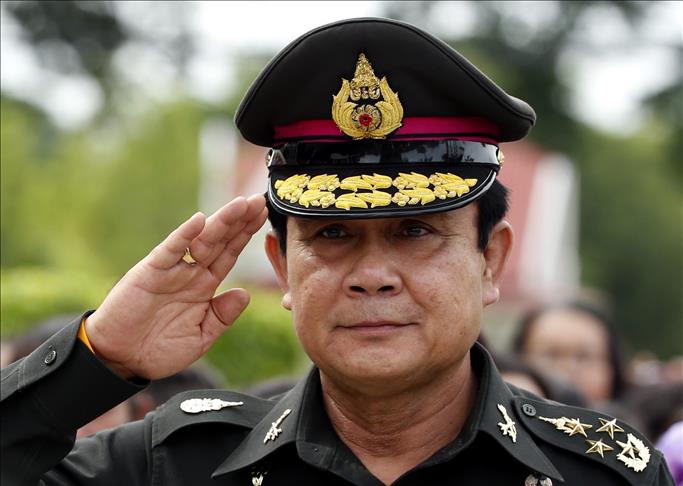
Thailand's army chief has said that junta chief and Prime Minister Prayuth Chan-ocha “might" be interested in talks with the country's one-time Prime Minister Thaksin Shinawatra.
Any such move would be the first sign of reconciliation with the deeply divisive figure who many blame for the country's long-time political crisis, which the junta used as pretext for its May 22, 2014 coup.
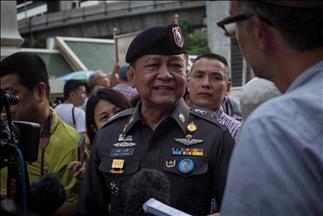
General Udomdej Sitabutr said Monday that Chan-ocha “might consider” talking to the military's nemesis, who has been living in exile since a 2008 corruption conviction but is still widely popular with those living in the north and northeastern parts of the country.
“I cannot speak for General Prayuth, but I can only say that the [talks] proposal might be considered by him,” said Sitabutr, while answering questions from local media.
His answer comes on the heels of a proposal Sunday by Wanchai Sornsiri, a National Reform Council member, who has called for reconciliation dialogue between the country’s warring political factions.
It was the first time the issue of such talks has been raised since the coup -- which overthrew the government of Yingluck Shinawatra, a sister of Thaksin, and installed a military government. Thaksin himself was removed in a previous coup in 2006.
Sornsiri said that Chan-ocha should meet with Thaksin in order to organize talks with representatives from all political factions in order to achieve reconciliation.
He has called for the Puea Thai party -- the Shinawatra clan's political vehicle, the Democrat Party, the People’s Democratic Reform Committee movement -- which protested against Yingluck’s government prior to the May 22 coup -- and the Red Shirts -- supporters of the Shinawatra clan -- to all be involved in the dialogue.
The proposal followed calls from Red Shirt leader Kwanchai Praipana for Chan-ocha to play the role of moderator in talks between opposing political sides.
Praipana has said that an amnesty for all those sentenced and under trial as consequences of the political conflict -- bar the leaders of opposite factions -- should be included in the talks.
An amnesty proposal discussed by Yingluck’s government in 2013 -- and then withdrawn -provoked the anti-government demonstrations that paralyzed Bangkok from October 2013 onwards.
Protesters primarily took to the streets because the amnesty would have included Thaksin --who had been sentenced to two years in jail in absentia for abuse of power in 2008 -- while he was already in exile.
The demonstrations led to the May 22 coup.
In the two days prior to the coup, Chan-ocha -- then army chief -- moderated two sessions of talks between the warring factions’ leaders, but the talks went nowhere and he seized power.