BANGKOK
A day after declaring a coup, the Thai military tightened its control over the country Friday, army chief Prayuth Chan-ocha appointing himself prime minister and extending restrictions on the media to the Internet.
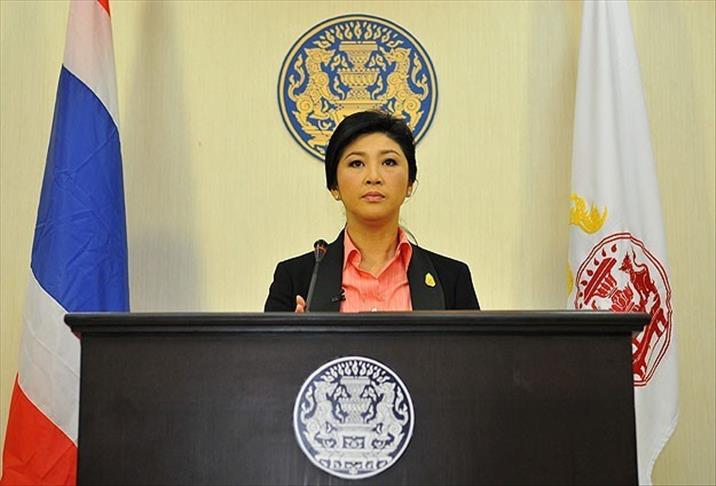
Chan-ocha's military council ordered ministers from the overthrown government and around 120 politicians from all sides and civil society leaders to report to the country's new leaders at an army base in the Thai capital. Among those summoned was deposed prime minister Yingluck Shinawatra, whose elder brother, Thaksin, many see as instrumental in the country's troubles.
According to a report in local newspaper Naew Na quoting a senior army source, Yingluck -- removed from her role as head of the Thai parliament by the Constitutional Court on May 7 -- was kept for several hours at the base, and then driven to a military facility north of Bangkok, where she will be held for a period of at least three days.
Army chief Gen. Prayuth Chan-ocha also met key officials, telling them reform must come before any elections.
All of those summoned have been banned from leaving the territory. Ex-premier Thaksin was deposed in coup in 2006, and then fled in 2008 after being charged with corruption and is now living in exile, mostly in Dubai.
Meanwhile, the first significant anti-coup demonstration took place late Friday afternoon around Siam elevated train station, in the main commercial area of Bangkok.
Despite gatherings of more than five people being banned, several hundred protesters took part.
A group of about 15 soldiers armed with M16 automatic rifles stood near the demonstration, and five activists were later detained.
Late Thursday, Chan-ocha declared himself prime minister, announcing that he would remain in the position until a "suitable person" could be found to "take over the position full-time." Names of high-ranking civil servants have been circulating as possible candidates for the position, and local media say a new premier could be appointed within "days."
The military council on Friday summoned numerous Internet service providers and ordered them to block any content that could "create confusion" and "affect national security."
The order, however, did not seem to be particularly efficient as numerous critiques of the coup could still be seen on social networks and information websites Friday. Since the announcement of the coup mid-afternoon Thursday, all TV and radio programs in the country have been suspended.
Small gatherings denouncing the coup have also been taking place across the country.
A prominent Thai journalist took a stand in Bangkok on Friday by masking her mouth with red tape and standing beside fully armed soldiers -- a gesture to denounce the crackdown on the media. Elsewhere, other protesters confronted military by brandishing sheets of paper carrying the words "we oppose the coup" and "we want to protect democracy."
Thailand's political crisis began in November when Yingluck faced a wave of opposition protests when her government pushed through an amnesty that would have lifted the 2008 corruption conviction against her brother. Confronted by massive demonstrations, the government withdrew the bill, but the opposition alleged corruption by the government and Shinawatra family.
Yingluck dissolved the parliament December 9 and called February 2 elections, which were disrupted by the anti-government movement -- the People’s Democratic Reform Committee -- who want an unelected "people’s council" to run Thailand until the political system is reformed.
She was then herself removed by the Constitutional Court on May 7 in relation to the transfer of a high-ranking civil servant in 2011.
Although military coups are relatively common in Thai society -- the latest being the 19th since the overthrow of the absolute monarchy -- the army has remained remarkably subdued since the "latest" crisis began.
www.aa.com.tr/en