ISTANBUL
The world's youngest country, South Sudan, is preparing to celebrate its third anniversary on Wednesday amid debates over oil-export pipelines and domestic issues arising from ethnic clashes which have threatened the fledgling state with possible civil war.
Having declared independence from Sudan in 2011 by referendum, the youngest country in the world – with an estimated population of 8.3 million – is a strong oil producer but landlocked, remaining dependent on Sudan dependent on its northern neighbor's export pipelines and processing facilities.
South Sudan claims to rank among the largest oil states in Sub-Saharan Africa with over 1.14 billion barrels oil in proven reserves and an average production of 326,000 barrels/day; the country's embassy in Washington DC calls on countries to 'invest on oil' in South Sudan.
After the 2011 referendum, South Sudan voluntarily shut all of its oil production because of a dispute with Sudan over oil transit fees in early 2012, which hit the economy of the new country.
A 2012 analysis from the University of Michigan claimed that "South Sudan is one of the world's least developed nations and it is the most oil-dependent economy in the world [...] depending on oil transfers for 98 percent of its revenue (about US$2 billion)."
Speaking to Anadolu Agency, Hasan Ozturk, an Africa expert at Turkey's BILGESAM think tank, says that Sudan first required US$36 from South Sudan per barrel of oil but decreased this to US$10, "which the countries agreed on but [it] was still too high as most of the countries exported it to 80 cents or one US$".
Ozturk says that the problems between Sudan and South Sudan did not appear after independence but had existed throughout the history; cultural differences were also part of the disintegration.
"Before the referendum, the Arabic culture was dominant in the northern part of the country, whereas the south was more African," he stresses, adding the problem was due to Sudan never being able to start a nationalization process to unite all parts of the country.
Ozturk claims that the main problem for South Sudan is not now with Sudan but with its own domestic divisions due to the 'allocation of resources' between the strongest tribes: Dinkas and Nuers.
The largest of all tribes in South Sudan, the Dinkas make up almost a quarter of the population; the Nuer tribe is one of the next largest ethnic groups in the historic provinces of Bahr al Ghazal and Upper Nile.
"Although a second ceasefire was signed in the country, clashes continue between the tribes," BILGESAM's Ozturk says: "The main problem is about the allocation of resources because if someone from the Dinkas becomes a high official in the government, his people from the same tribe would become his workfellows. It's the same for the Nuers, too. So, I don't believe that the problem can be solved easily."
Ufuk Tepebas, Africa coordinator at the Turkish Asian Center for Strategic Studies, admits that a dislocation has taken place from international to domestic problems.
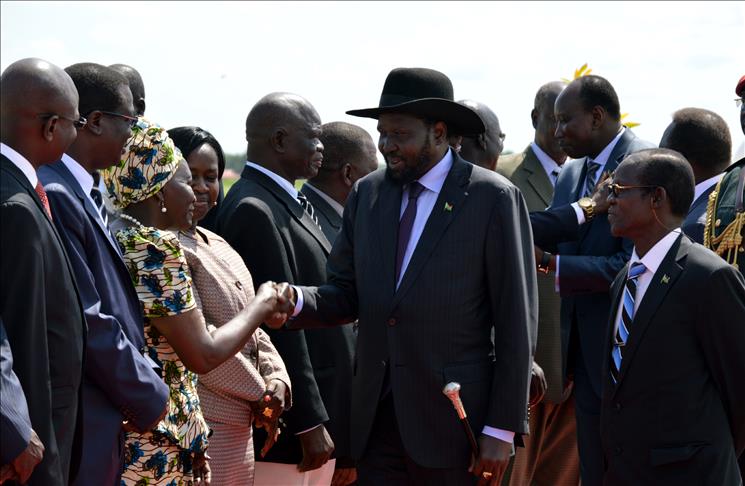
Tepebas gives the example of tension between South Sudanese president Salva Kiir Mayardit, who had corruption issues with several of his high-level officials last year and Riek Machar, vice president from independence until his dismissal in 2013 – accused by Kiir of attempting to stage a coup.
Kiir comes from the Dinka community whereas Machar is a prominent Nuer.
Stressing that the last year was a process full of tensions leading to a 'civil war' in South Sudan and causing thousands of people to die, Tepebas added although talks had started in the Ethiopian capital Addis Ababa with contributions from the U.N., African Union and neighboring countries, no permanent solution has been found.
Although there was solidarity between the people of South Sudan before the referendum – when 98.4 percent voted for secession – Tepebas says this changed as the ethnic groups began clashing. This conflict badly affected both the operation of the government and oil investment funds received from countries like the U.S. and China.
Despite all the tension in the country, Turkey's foreign trade volume with South Sudan has increased from US$253.1 million in 2011 to US$290.9 million in 2012, according to Turkey's Economy Ministry.
This is unsurprising given Turkey's recent foreign policy swing to Africa reflected by the increased number of official visits to the continent, new embassies throughout Africa and more air routes with Turkish Airlines.
Getting ready to turn three on Wednesday, South Sudan has been tottering and getting injured since its foundation. The country has sought stability by promoting its financial reserves. However, the overall view of the experts is that no permanent peace can take place in the coming years as long as international actors fail to play a key role.
The hope for South Sudan is with its international big brothers.
www.aa.com.tr/en