BANGKOK
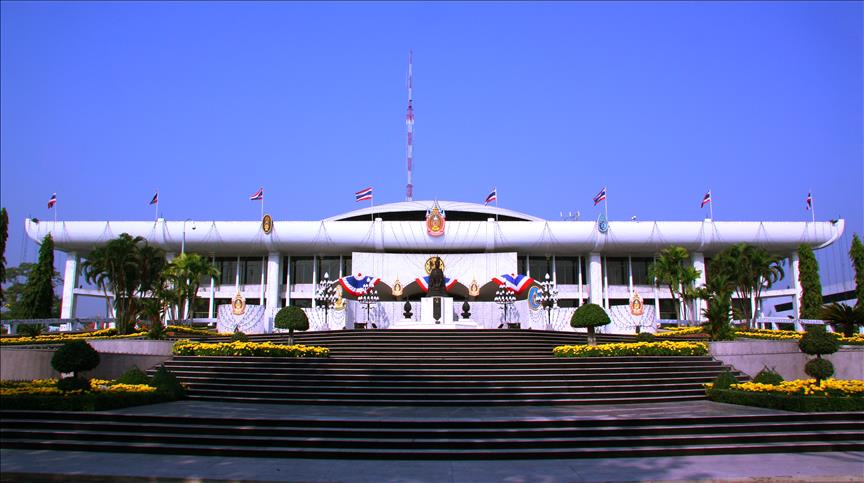
Thailand's national legislative assembly has voted to impeach house and senate speakers in place prior to the May 22 coup, claiming that their decision to make the house more democratic opened the door to corruption.
The two are accused of having breached the 2007 constitution by facilitating a charter amendment process earlier this year which would have made the Thai senate fully-elected -- a move the country's anti-corruption commission, which launched the impeachment process in March, saw as lessening the senate's checks and balances.
With the former civilian government of ex-premier Yingluck Shinawatra enjoying electoral dominance prior to the coup, opponents -- many of whom belonged to the conservative and royal-household-supporting establishment -- were concerned the move to a fully-democratic house would see Yingluck and her family in control. For them, having half of the Senate appointed by judges and the heads of independent agencies was a way to counterbalance the pervasive power of the Shinawatra clan.
On Thursday, the National legislative assembly, composed mostly of representatives from the conservative bureaucratic and military establishment, voted 87 to 75 in a closed session to accept the impeachment bid against former house speaker Somsak Kiatsuranon and former senate speaker Nikhom Wairatpanich, while 15 assembly members abstained.
This came as a surprise as most analysts had predicted that the legislative assembly's 131 military-affiliated members were likely to oppose the bid in order to facilitate political reconciliation.
Prior to the vote, Bangkok Post columnist Nattaya Chetchotiros wrote: "The junta is reluctant to punish anyone without clear evidence of corruption."
Since the coup, the junta and military-appointed government has made the fight against corruption a top priority. They consider "corrupt politicians" to have perverted the Thai democratic system to enrich themselves. A staple of the junta's reforms is the prevention of vote buying prior and during elections.
The impeachment -- if successful -- will see the house and senate speakers banned from all political activities for a period of five years, and open the possibility of another impeachment process against 308 house and senate members of the former government party, Puea Thai.
It will also serve a severe blow to Yingluck who will next Wednesday face a vote by the same legislative assembly on an impeachment bid against her for negligence of duty in relation to a failed rice subsidies scheme, which has caused losses of over $20 billion to the State.
The military seized power after seven months of massive demonstrations led by opponents of the pro-Shinawatra government after which the government and parliament were dissolved and the constitution abolished.
Martial law was imposed across the country. Hundreds of political activists, journalists and academics were summoned and detained for up to seven days in order that their political attitude be "adjusted" -- according to junta terminology -- so political divisions within the country could be healed.
The junta appointed a legislative assembly, a government, and a reform council, and announced elections by the end of 2015. But on October 15 Prime Minister -- and junta chief -- General Prayuth Chan-ocha told reporters that elections would not take place until 2016.
www.aa.com.tr/en