04 February 2016•Update: 06 February 2016
By Todd Crowell
TOKYO
Less than one month since North Korea’s latest nuclear test, Pyongyang is rattling its long-range, inter-continental ballistic missiles, setting off yet another crisis in Northeast Asia.
In the minds of many in Japan and the West, the two -- the missile and the test -- are connected.
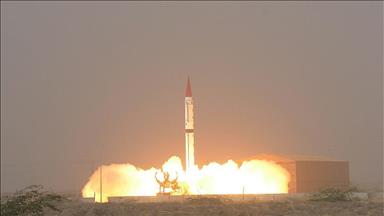
On Tuesday, Pyongyang officially notified the UN that it planned to launch a weather observation satellite sometime from Feb. 8-24 from its missile test center on North Korea’s west coast.
Anyone living in Japan might be forgiven in believing that the country was going on a war footing.
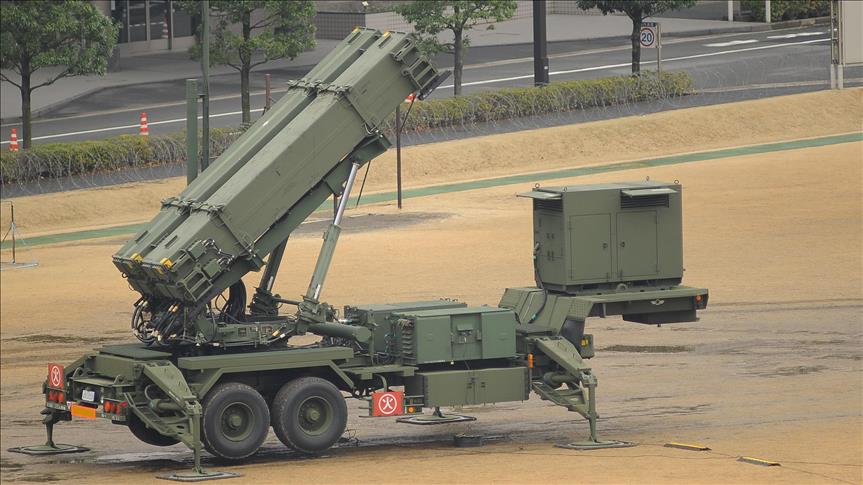
Aegis destroyers equipped with SM-3 anti-missile set out to sea, while army units moved Pac-3 missile defenses in several locations near Tokyo.
“I have ordered them to shoot down any threat,” said Defense Minister Gen Nakatani.
To a large degree though, these movements are mostly for show.
The North Korean missile will not pass anywhere near Tokyo, and Japan has no intention of actually shooting down the missile warhead -- an act of war.
Since Pyongyang opened its Dongchang-ri missile test site on the country’s west coast, the missiles’ trajectory has been due south, avoiding Japanese air space -- save for a momentary passage over the Sakishima islands in the country’s extreme southwest.
The missile test poses potentially a greater threat to the Philippines than Japan as the second stage of the three-stage rocked is projected to land in the Pacific Ocean off the coast of Luzon island.
That wasn’t always the case.
In earlier ballistic tests, North Korea launched missiles from its east coast with the flight path passing over northern Honshu and falling in the North Pacific near Alaska.
In those tests as well, Tokyo mobilized the Self Defense Forces, stationing Pac-3 batteries around Japan.
But they were only authorized to blast the second stage of the rocket out of the sky if it looked like it would fall onto Japanese territory.
The last North Korean ballistic missile test in Dec. 2012 was considered a success, as it managed to put a satellite into earth orbit.
An earlier version had blown up shortly after leaving the launching pad, embarrassing the new leader Kim Jong-un.
Unlike with nuclear tests, Pyongyang is obliged to announce missile tests in advance, so they have occasionally had to reveal failures.
North Korea’s nuclear program and its ballistic missile program have been proceeding along separate but parallel paths, raising suspicions that the country is feverishly working on perfecting a bomb that could fit on the head of a missile.
The Taepodong-2 rocket used in the most recent tests has a range of more than 6,000 kilometers (3,728 miles).
That means it could hit any of the North’s neighbors, and as far away as the U.S. bases at Guam in the Pacific and the western part of Alaska.
The defense ministry concluded in its 2015 white paper that if North Korea develops long-range ballistic missiles using technologies tested in the launches, “the missiles could have ranges that potentially reach the central, western and other areas of the U.S. mainland.”
The planned tests brought forth a chorus of complaints from countries already highly agitated over North Korea’s Jan. 6 test.
The White House called it another “destabilizing provocation”, while Russia condemned Pyongyang’s “outrageous disregard for universally recognized norms of international law”.
South Korea’s leader warned the North “will have to pay a severe price”.
The projected launch might persuade the South to build an anti-missile defense system called THAAD, or Terminal High Altitude Area Defense.
While Washington has been pushing its ally to take part in the program, Seoul has resisted for fear of irritating China.
For its part, Pyongyang’s spokesperson said North Korea was simply exercising its “sovereign right” to pursue a space program by launching an earth satellite.