Nigeria: President presents $30.8 billion budget
Budget makes large allocations to infrastructure development and social interventions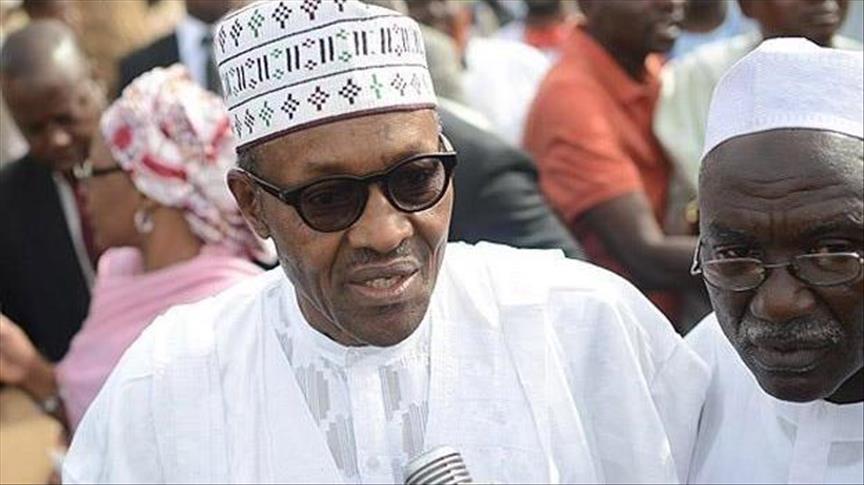
By Rafiu Ajakaye
LAGOS, Nigeria
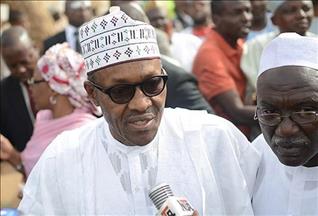
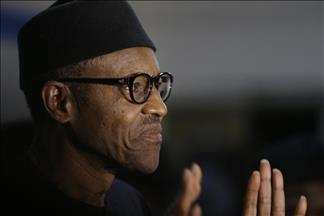
Nigeria's President Muhammadu Buhari on Tuesday presented a N6.08 trillion ($30.8 billion) budget for the 2016 fiscal year, committing 30 percent of the funds to infrastructure development and rolling out a large number of social interventions.
Buhari said the social programs are required to help the poor as well as it addresses rising unemployment.
"This Budget represents a major step in delivering a new opportunity for Nigeria. It demonstrates our confident optimism that, despite the challenging times, we have the will, resourcefulness and commitment to deliver prosperity to our people," Buhari said in his budget speech before a joint sitting of the parliament in Abuja.
"To deliver our development objectives, we have increased the capital expenditure portion of the budget from N557 billion ($2.8 billion) in the 2015 budget to N1.8 trillion ($9.5 billion), in the 2016 budget. Distinguished and honourable members of the National Assembly, for the first time in many years, capital expenditure will represent 30 percent of our total budget. In future years we intend to raise the percentage allocation for capital expenditure," Buhari said.
"This is a fulfillment of our promise to align expenditure to our long-term objectives, and a sign of government’s commitment to sustainable development. This increased capital expenditure commits significant resources to critical sectors such as public works, power and housing," he said.
Significant allocations are to be made to transport, special intervention programs, defense and the interior, Buhari explained. These investments in infrastructure and security are meant to support our reforms in agriculture, solid minerals and other core job creating sectors of our economy, Buhari said.
He announced that 500,000 teaching jobs would be created for unemployed graduates, school feeding made available for primary school pupils, conditional cash transfers for the poorest, loans to market women and traders as well as free education for science, technology and education students.
"This budget proposal, the first by our government, seeks to stimulate the economy, making it more competitive by focusing on infrastructure development, delivering inclusive growth, and prioritizing the welfare of Nigerians," the president said, noting that while "tough decisions" must be taken in the face of the current realities, his administration will ensure that the poor are not made to suffer.
"We believe that this budget, while helping industry, commerce and investment to pick up, will, as a matter of urgency, address the immediate problems of youth unemployment and the terrible living conditions of the extremely poor and vulnerable Nigerians," Buhari said.
"In the medium to long term, we remain committed to economic diversification through import substitution and export promotion. This will build resilience in our economy. It will guarantee that the problems we have today will not confront our children and their children. This shall be our legacy for generations to come."
With the oil price hitting a record low -- hovering at between $32 and $40 -- Buhari said the budget would be funded mainly through revenue from independent sources such as increased taxes on companies, blocking leakages as well as borrowing to fund capital projects.
"After reviewing the trends in the global oil industry, we have set a benchmark price of $38 per barrel and a production estimate of 2.2 million barrels per day for [budget estimates] in 2016. We have focused on non-oil revenues by broadening our tax base, and improving the effectiveness of our revenue collecting agencies," the president said.
"The deficit, which is equivalent to 2.16 percent of Nigeria’s GDP, will take our overall debt profile to 14 percent of GDP. This remains well within acceptable fiscal limits. Our deficit will be financed by a combination of domestic borrowing of N984 billion ($8.1 billion), and foreign borrowing of N900 billion ($7.6 billion) totaling N1.84 trillion ($9.3 billion). Over the medium term, we expect to increase revenues and reduce overheads, to bring the fiscal deficit down to 1.3 percent of GDP by 2018, Buhari said.
"In 2016, oil related revenues are expected to contribute N820 billion ($4.12 billion). Non-oil revenues, comprising Company Income Tax, Value Added Tax, Customs and Excise duties, and Federation Account levies, will contribute N1.45 trillion ($8.9 billion). Finally, by enforcing strict compliance with the Fiscal Responsibility Act, 2007 and public expenditure reforms in all MDAs, we have projected up to N1.51 trillion ($9.1 billion) from independent revenues."
He said efforts are also being made to significantly reduce debt and to prune recurrent spending, noting that the country's borrowing in 2016 will be principally to fund capital projects; and while the sums of N113 billion ($568 million) and N1.3 trillion ($8.1 billion) are set aside for a sinking fund and service of foreign and domestic debt respectively.
The president said the efforts to diversify the economy would go side by side with restructurings in the oil and gas sector.
The administration has also made a commitment to ensure macroeconomic stability by achieving GDP growth rate of 4.37 percent and managing inflation.
Addressing national tension about possible fuel price hike ahead 2016, Buhari ruled out jerking up the pump price of petrol from N87 ($0.44) "for now."
Buhari also restated his commitment to fight corruption, and to restore public confidence in government, adding: "the sheer scale of corruption and impunity of the past explains, in part, the economic challenges we now face. On these initiatives, and the many more to come, we shall not be deterred. We will pursue the recovery of everything that belongs to the people of Nigeria. No matter where it is hidden. No matter how long it will take."
Buhari said Nigeria is ready to do business with foreign and local investors but would do so without sacrificing the interest of its citizens.
"We are carefully assessing our exchange rate regime, keeping in mind our willingness to attract foreign investors, but, at the same time, managing and controlling inflation to levels that will not harm the average Nigerian," he said.
"Nigeria is open for business. But the interest of all Nigerians must be protected. Indeed, tough decisions will have to be made. But this does not necessarily mean increasing the level of pain already being experienced by most Nigerians.
Some analysts have raised flags about a few parts of the estimates which they say have left the market "confused," while others said Buhari is pursuing a socialist agenda.
" The budget speech was good, but falls short of what most analyst were expecting. Yes. Investors are happy Nigeria will be spending big on infrastructure, but beyond that, unresolved fiscal issues abound. Nigeria wants a clear direction on the wasteful subsidy regime. The President left the market confused," Atiku Samuel of BudgITng, Nigeria's leading civic tech organisation promoting public accountability, told Anadolu Agency on Tuesday.
"Clearly, no provision was made for fuel subsidy. The president claims the price of petrol will remain at N87 per liter. Are we going to continue with the subsidy regime or not? Why regulate pricing if we are thinking deregulation?" Samuel asked.
"The president talks about recruiting 500,000 new teachers. Who will pay the salaries of the teachers? How will the payment be made? Personnel cost remains relatively within the same threshold. That is confusing. Financing approximately 42 percent of the deficit with foreign borrowing: That is confusing. Adding up massive currency risk at a time when the foreign investor sees Nigeria as a more risky environment is (also) worrying," Samuel said.